

September 28, 2026
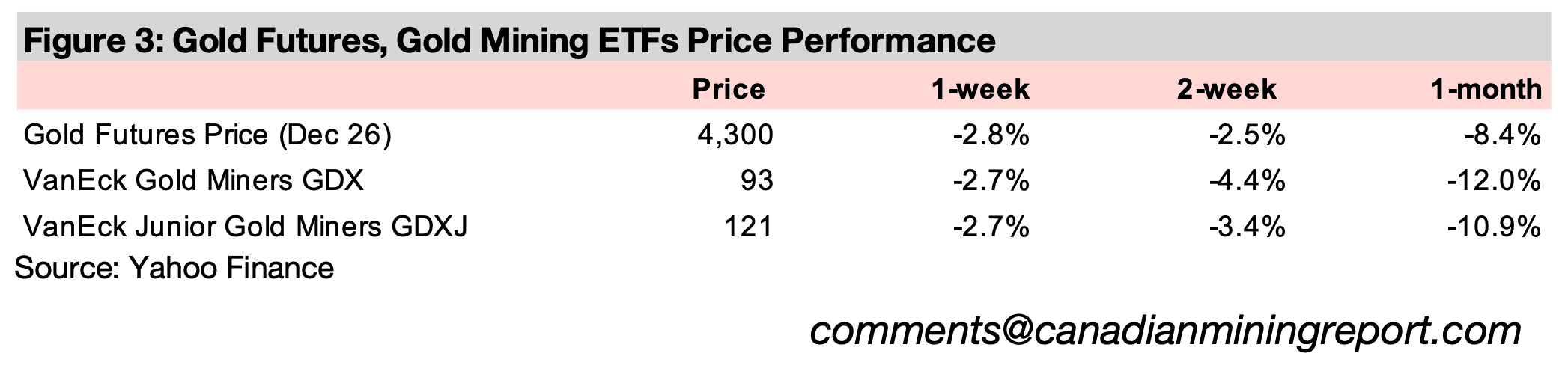
The gold price fell -2.8% to US$4,300/oz, as bond yields and the US$ jumped, with the US 10-year real yield surging to its highest levels in almost twenty years, which was not offset by a rise in geopolitical risk as the US rejected Iran’s peace proposal.
The gold stocks declined, with the GDX and GDXJ down -2.7%, near the drop in the metal, while large cap equities gained with the S&P 500 up 0.7% and Nasdaq rising 1.3% driven by tech, although the small cap Russell 2000 was down -1.3%.


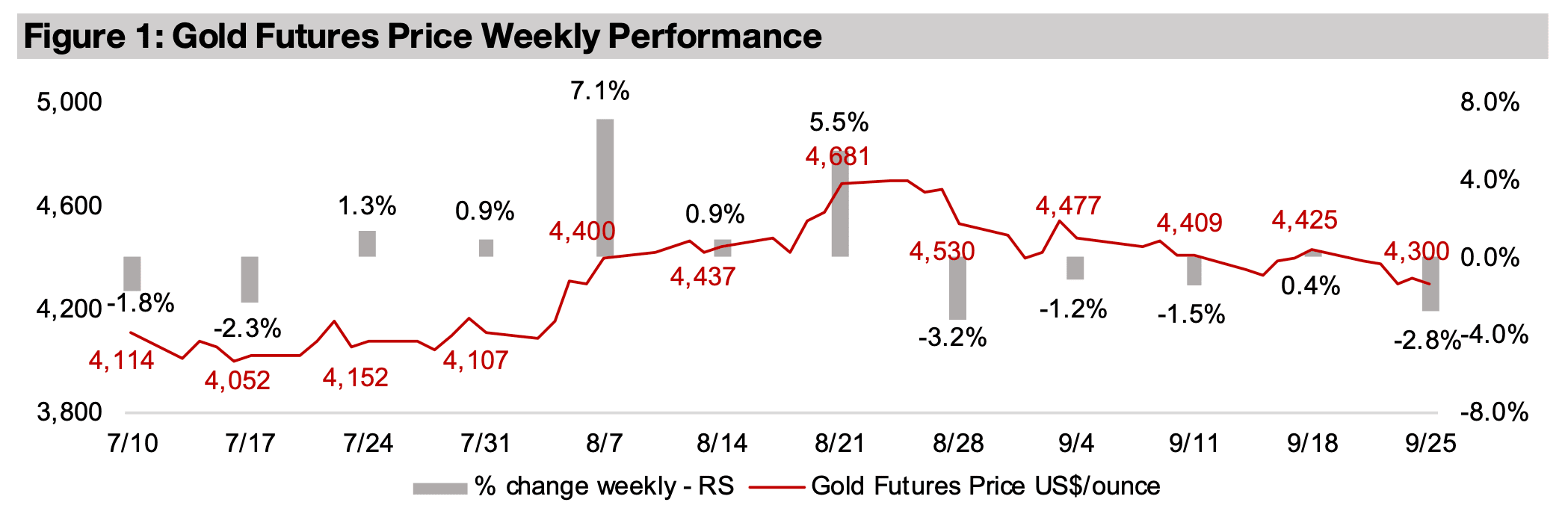
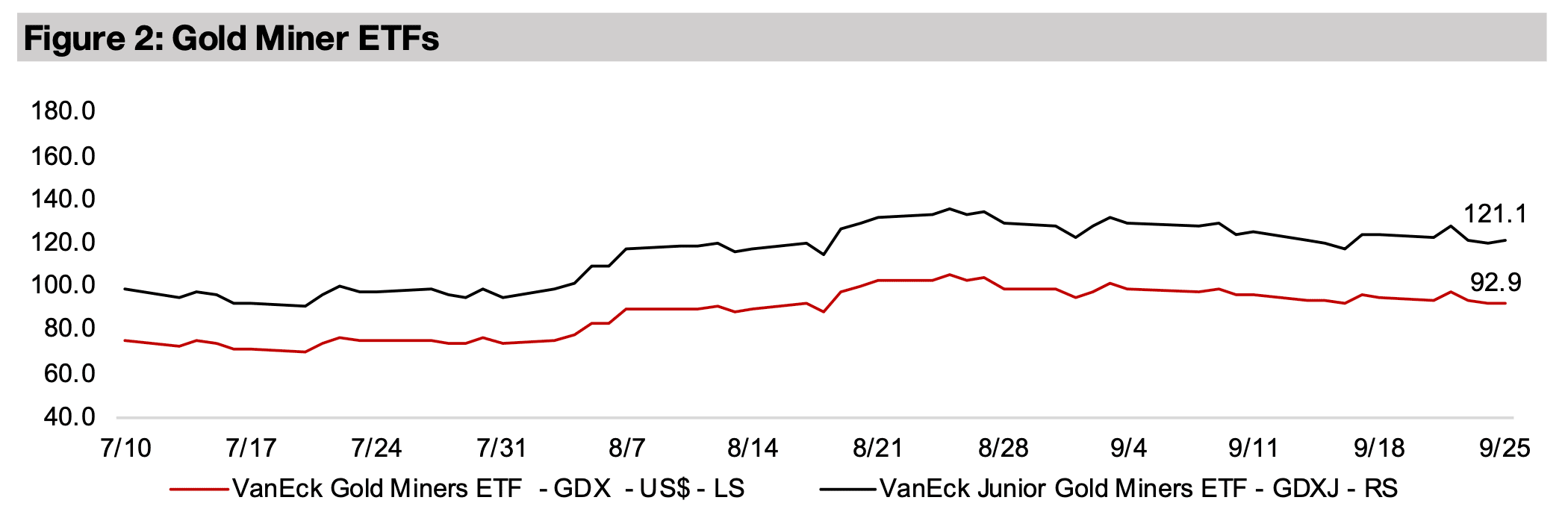
The gold price was down -2.8% to US$4,300/oz, which seems to have been driven
by an increase in bond yields and the US$, with other economic data releases unlikely
to have a major effect on the metal. This was not offset by a generally negative shift
in the geopolitical outlook, especially in the Middle East as the US rejected a peace
proposal by Iran, with the increased risk likely supportive of the metal price. The US
10-year saw a significant jump to 5.21% from 4.99% at the end of last week, and the
US index rose to 101.1 from 100.2. This has driven up the US 10-year real yield, which
is key for gold, as it moves inversely to the metal price, to 2.83%, its highest level
since Nov 2008, when it surged to 2.89% on the financial crisis.
There has been a substantial breakout in the US 10-year real yield from around June
2026, after it averaged just around 2.0% from 2024 to May 2026, ranging between
1.79%-2.23%, and there has been a similar surge in yields in many global markets.
The large cap equity markets still gained even under the pressure of rising yields, with
the S&P 500 up 0.7% and the Nasdaq rising 1.3%, supported by gains for tech, which
jumped 2.5%, even given still extremely elevated valuations for the sector. However,
the Russell 2000 declined by -1.3%, showing higher rates are driving risk-off for
smaller companies, as might be expected.
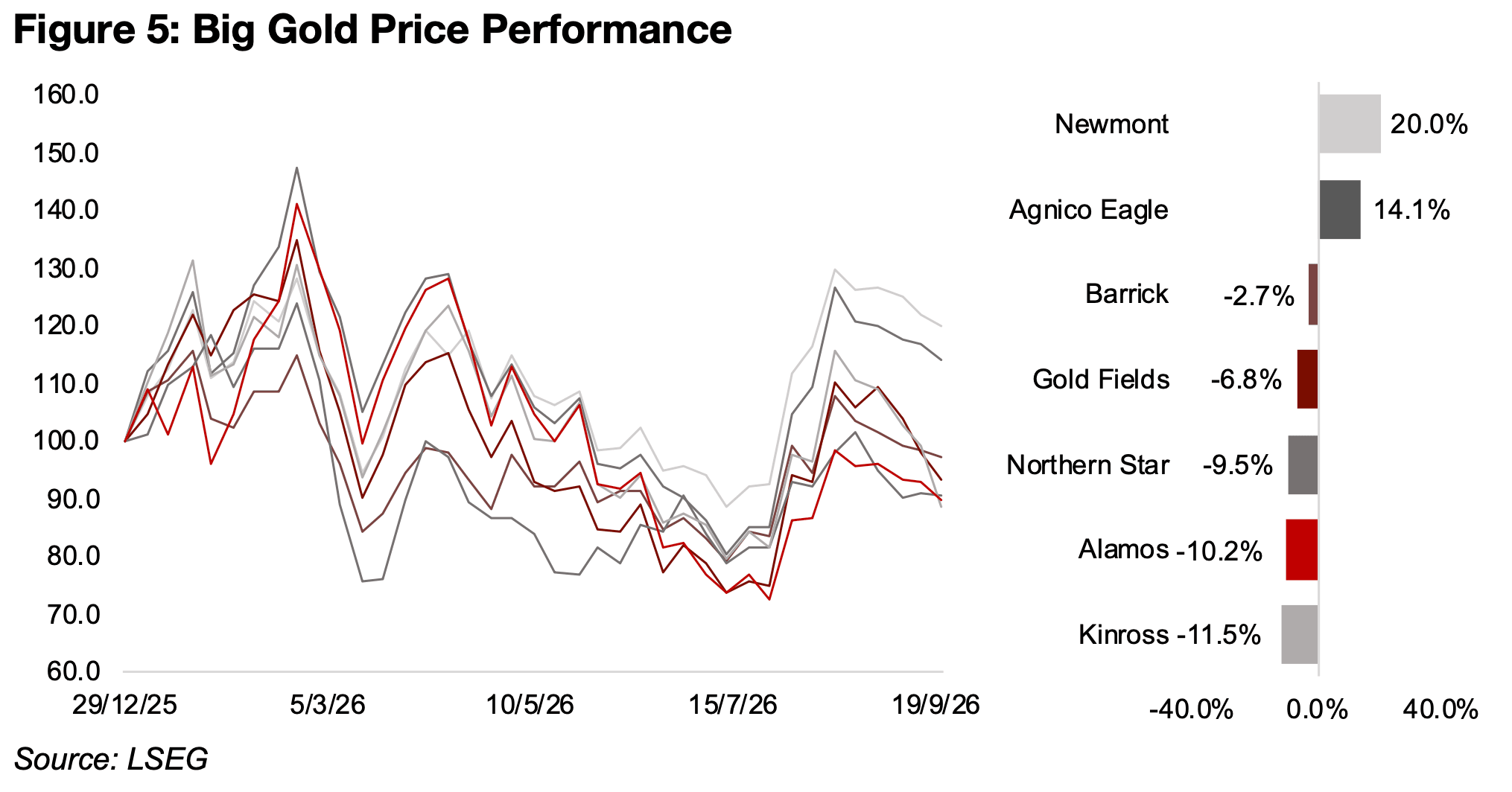
The pressure on gold from rising real yields could continue to keep the prices of most of the Big Gold stocks in negative territory, with limited support from a metal price performance which has been flat overall since the start of the year. Only the two largest by market cap, Newmont and Agnico Eagle, have seen substantial gains this year, up 20.0% and 14.1%, respectively, while the third largest, Barrick, is down - 2.7% (Figures 4, 5).
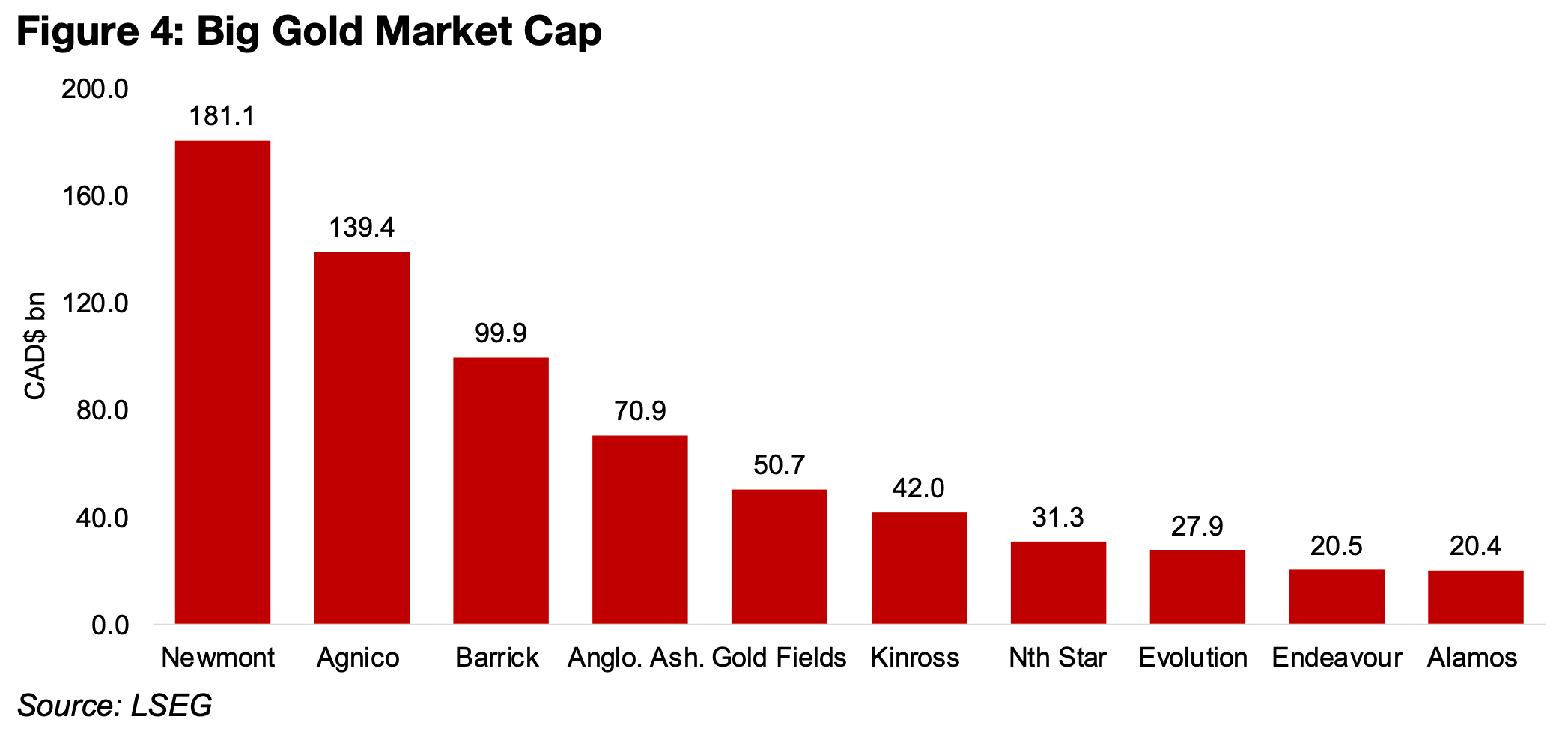
This indicates that the 8.3% gain in the GDX ETF of major producers this year has mainly been supported by Newmont and Agnico Eagle, given their very high weights in the fund, with both at 11.0% of the net assets. The mid-tier companies have all declined more than -5.0%, with Gold Fields, Kinross and Northern Star down -6.8%, -11.5% and -9.5%, with Alamos losing -10.2%.
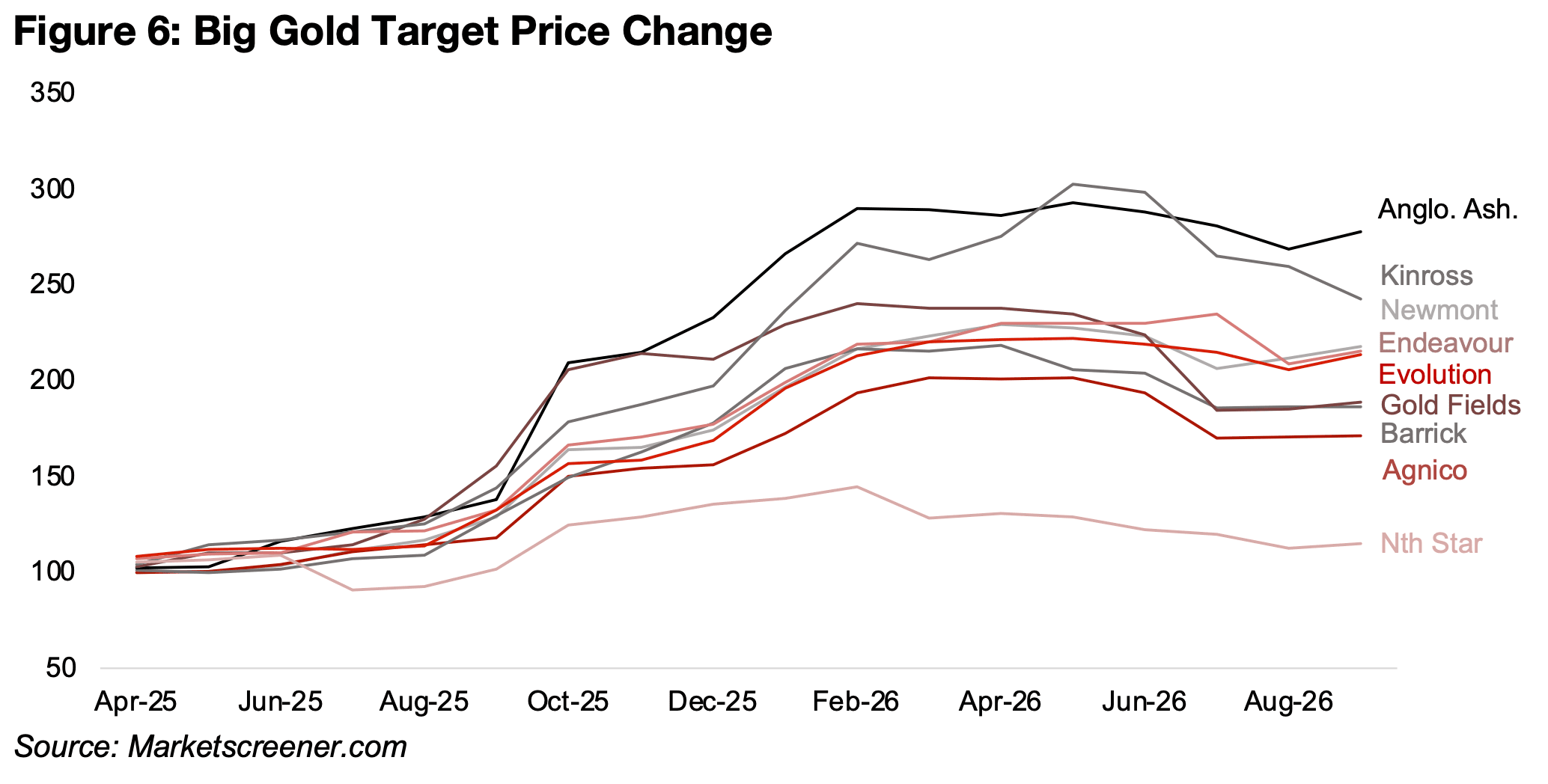
After a substantial increase especially in late 2025, Big Gold consensus price targets
have been downgraded by the market substantially, a trend which began around April
2026 as the pull back in the metal price had already persisted for two months (Figure
6). However, there has been signs of a rebound for the targets of some of the stocks
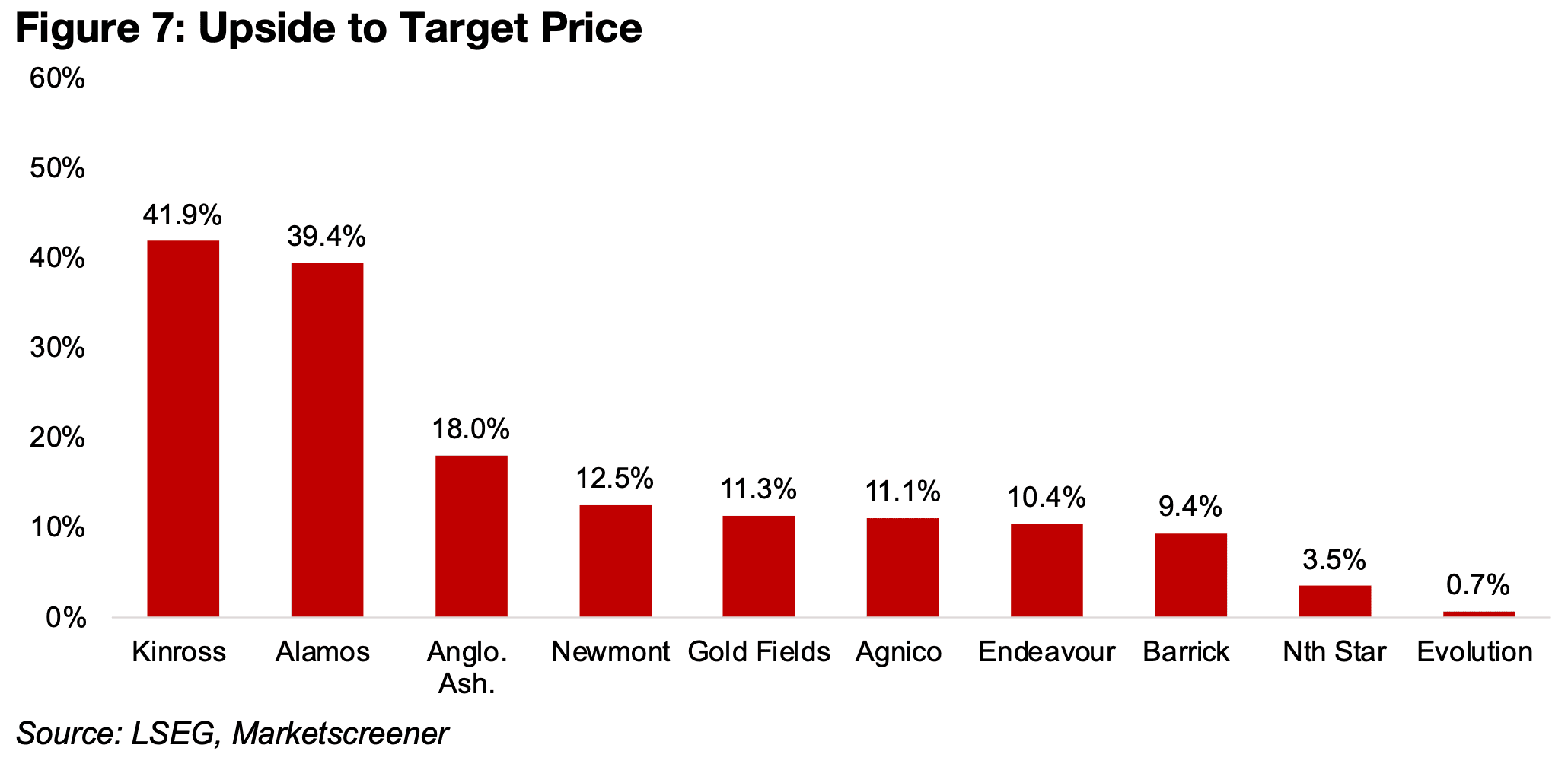
especially over the past month. This has left over half of the sector with only moderate
upside, of around 12.0% or less, with significant gains only targeted for Kinross and
Alamos, at around 40.0%, and Anglogold Ashanti at 18.0% (Figure 7).
A huge upside to consensus targets is not necessarily always good, as it can indicate
the either market prices have slumped, while targets not been reduced to reflect this
yet, or that consensus is pricing in growth that is too far in the future. An overly bullish
market becoming increasingly detached from the fundamentals can have very
negative consequences for share prices, as we saw in the gold sector slump from
March to May 2026 that following the increasingly speculative boom from December
2025 to February 2026. While the current market outlook is more conservative, it is
also likely more grounded around current gold prices rather than extrapolating out
major gains. This can leave room for upside surprises and upgrades if the gold price
starts to rise again, and is also less likely to lead to substantial negative surprises.
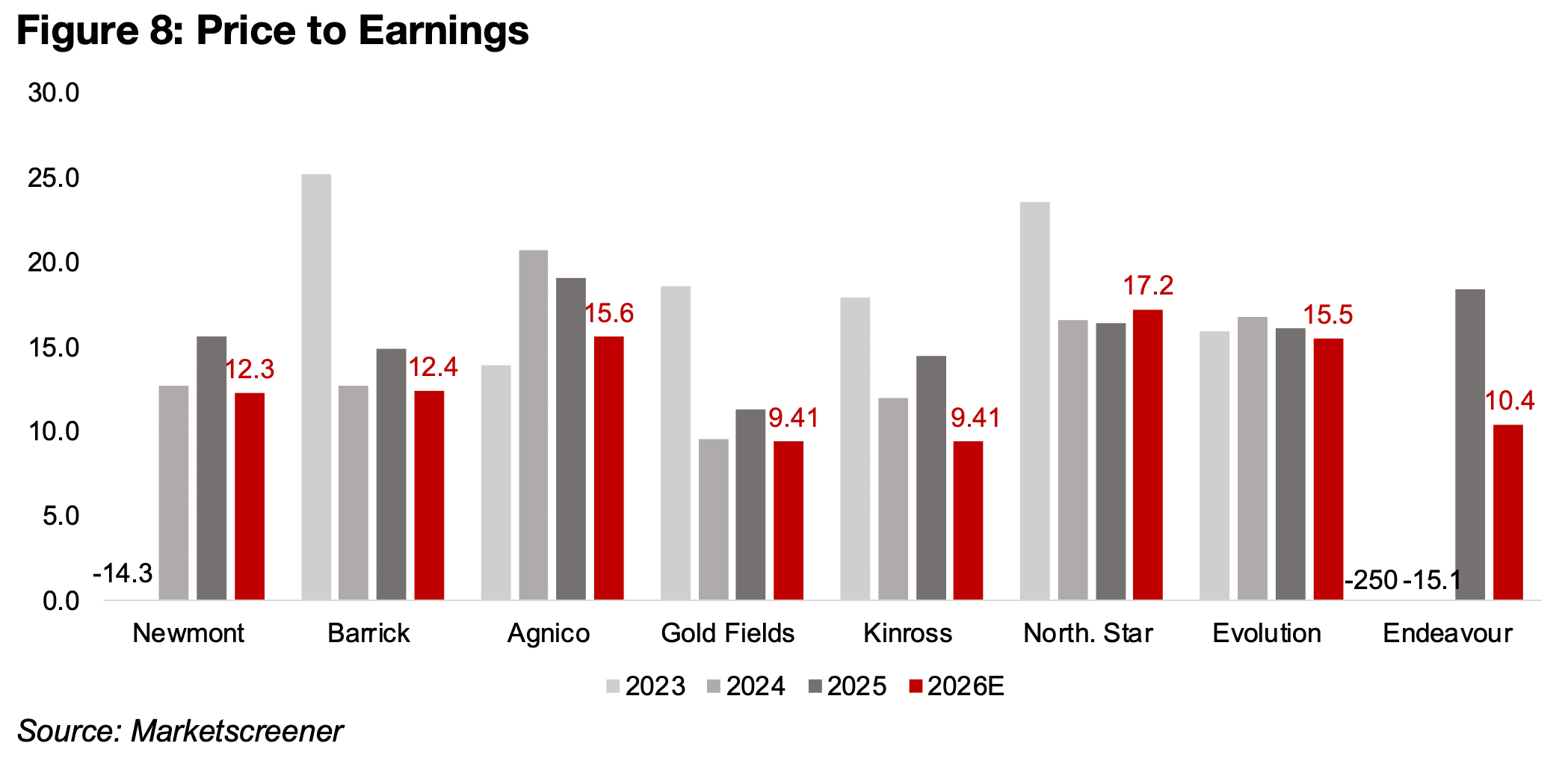
Big Gold’s valuations have declined overall in 2026E from 2025, but still remain
somewhat elevated if we expect only moderate gains in the metal price over the next
few years, and an average not substantially above current levels, as seems to be
priced by the market for most of these stocks. However, if gold rebounds and starts
pricing in US$5,000/oz averages for the next few years, these multiples would very
likely decline significantly. Price to earnings multiples are down from last year, and
still substantially below their highs for several of names (Figure 8). This is partly
because net income in the ratio can turn heavily negative from extraordinary items,
as was the case for Newmont in 2023 and Endeavour in 2023 and 2024.
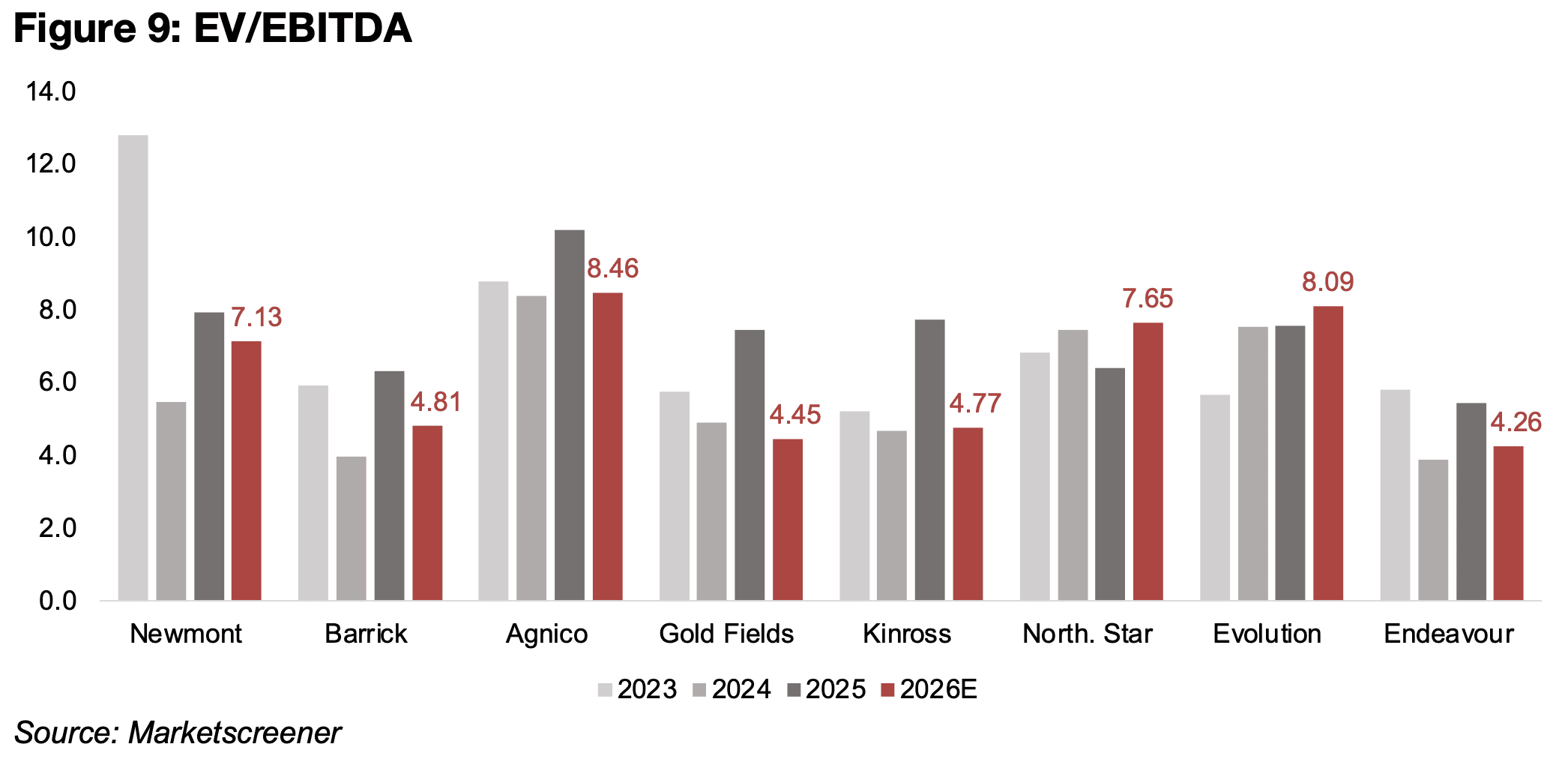
The EV/EBITDA measure compares the value of the combined equity and net debt
versus operating earnings and therefore excludes these extraordinary items. Using
this measure, for most of the Big Gold, there is a peak in the ratio in 2025 and decline
in 2026, although for two companies this year has been the highs (Figure 9).
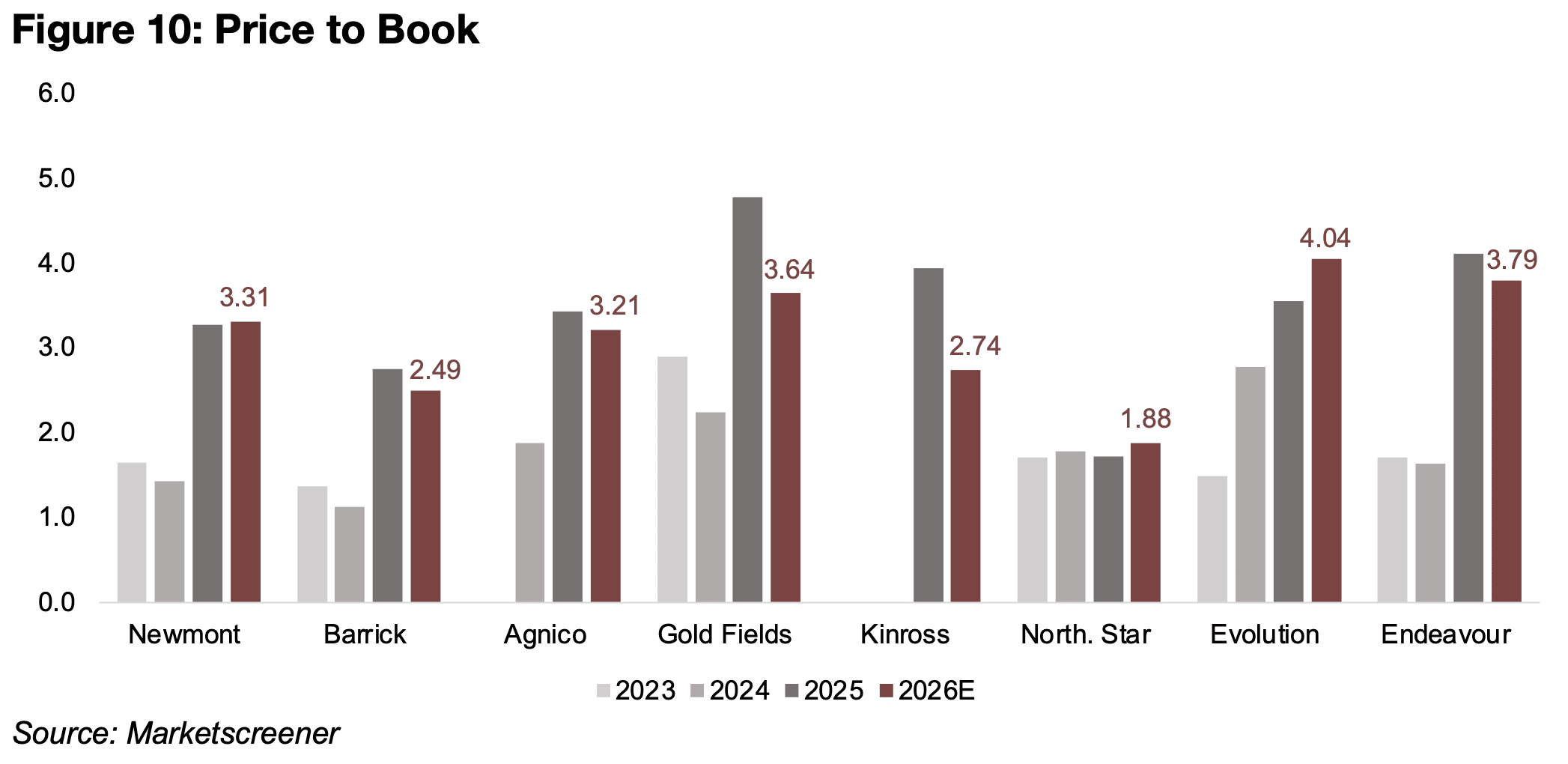
The price to book multiples for the sector have increased the most overall of these
valuations, with the companies seeing major jumps from quite low levels in 2023 and
2024. The major gains were in 2025, and the P/B ratios for most of the group have
pulled back for 2026E, although two companies have seen a continued rise this year
(Figure 10).
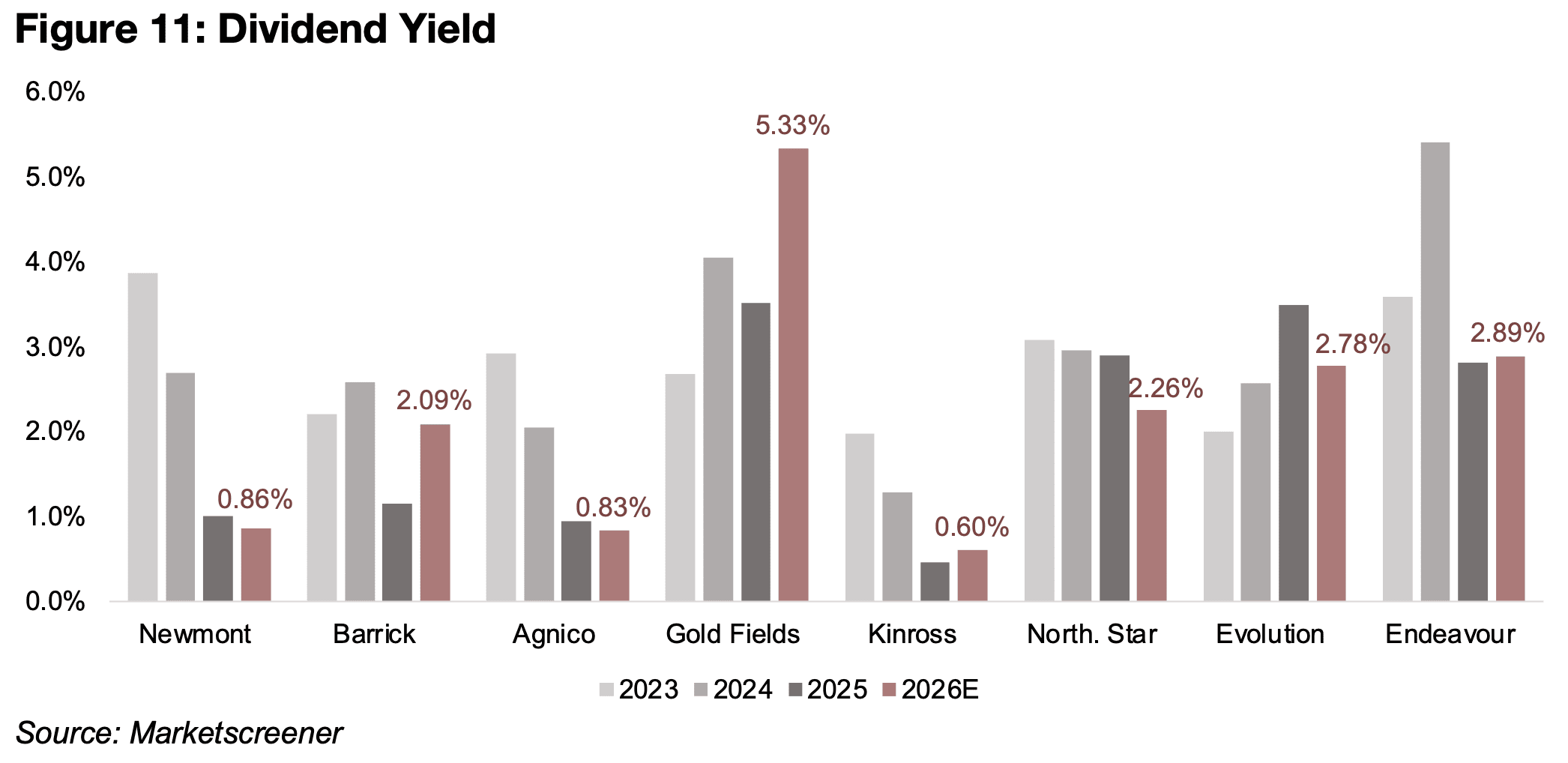
The dividend yields of most of the largest gold companies are quite low with
Newmont, Agnico Eagle and Kinross below 1.0%, although Gold Fields looks
relatively attractive at 5.33% (Figure 11). The rest of group have yields ranging from
around 2.0%-3.0%, which are moderate, but still only about half the level of US longterm bond yields.
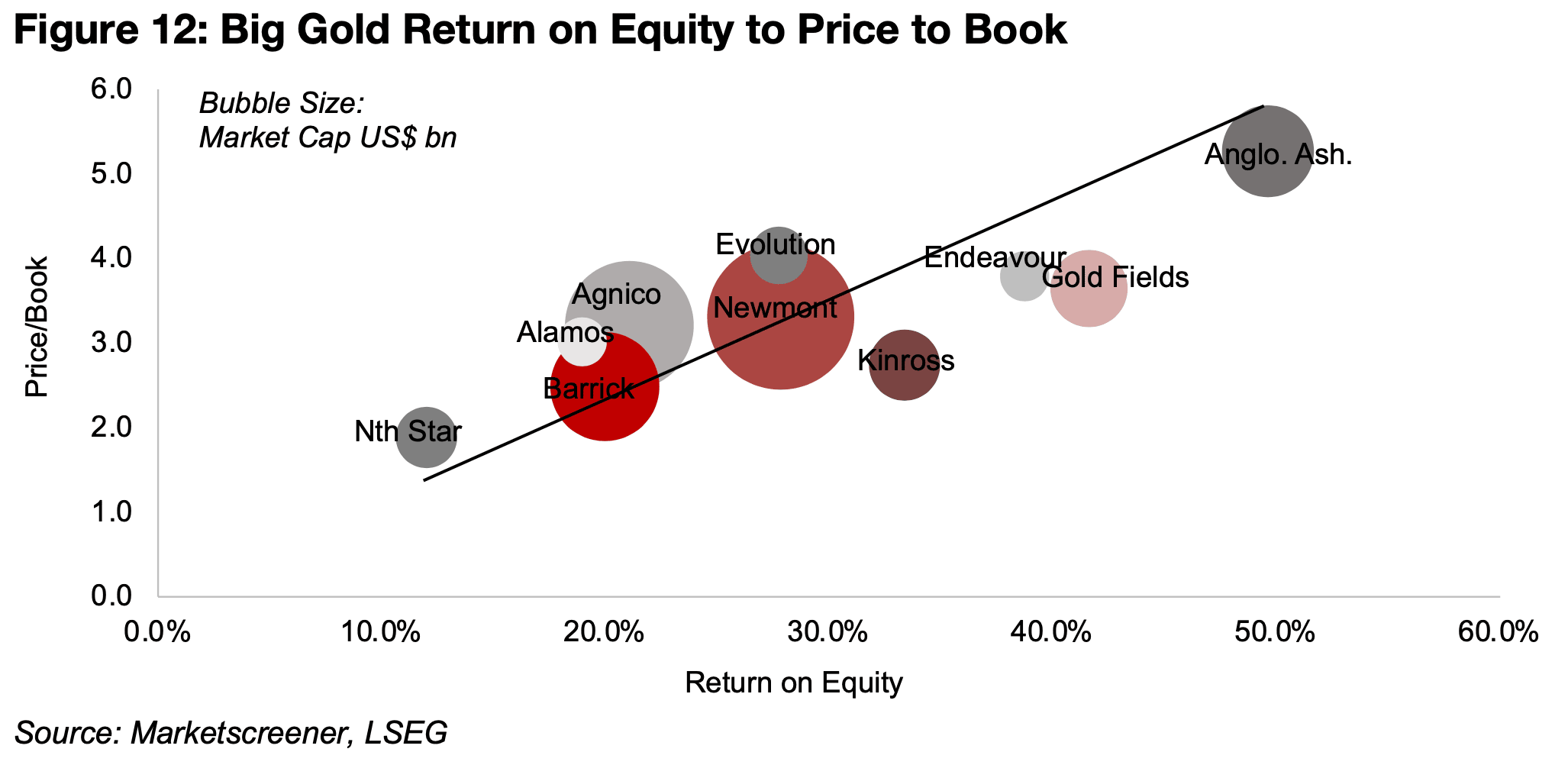
On a return to equity versus price to book valuation we expect the market to pay higher P/B multiples for a higher ROE, and companies above or below the market cap weighted valuation line can indicate a degree of over or undervaluation (Figure 12). Overall there the divergence from the line is not extreme for the group, which does not suggest severe relative mispricing overall.
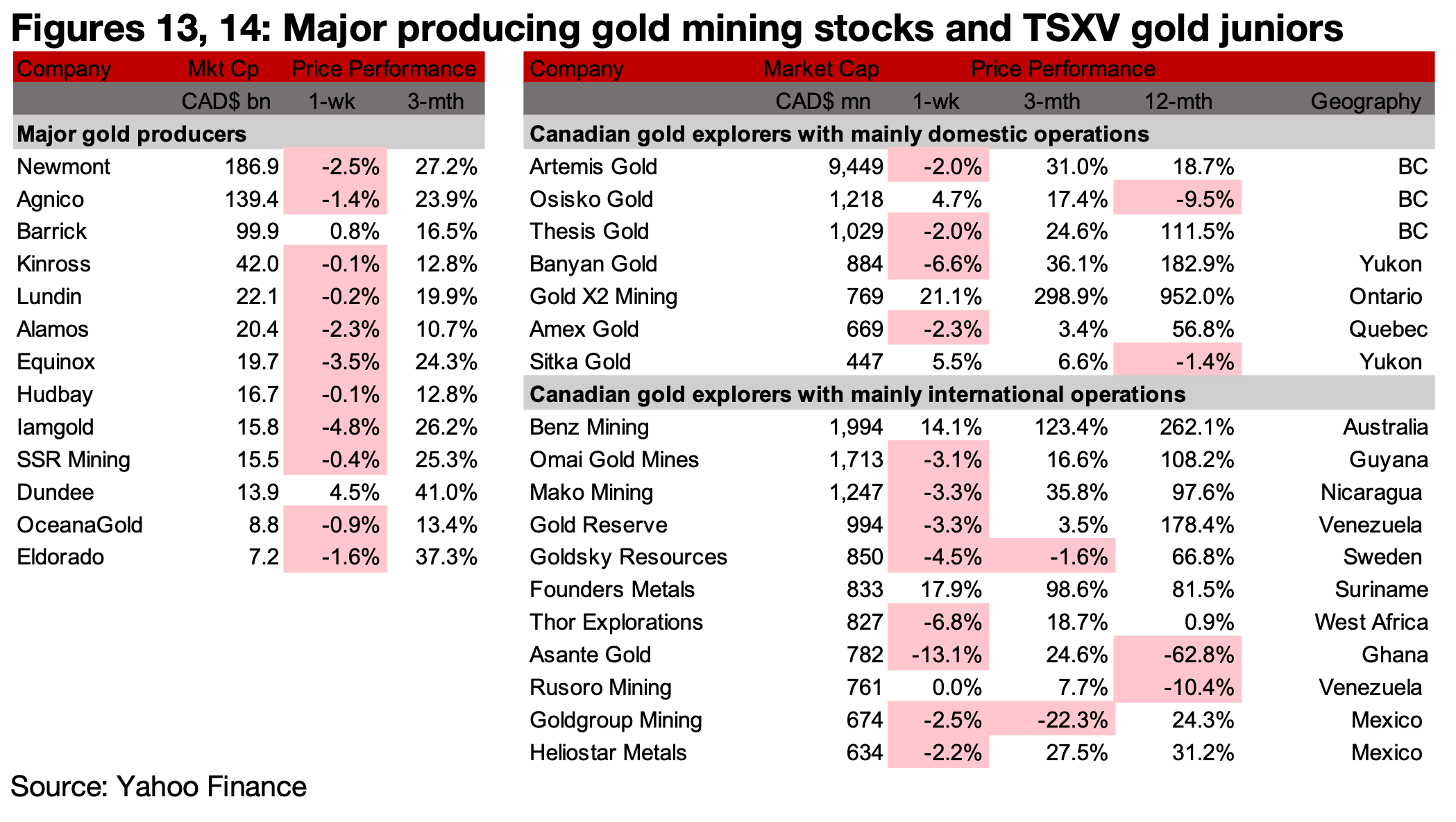
The major producers and TSXV gold mostly declined on the drop in the metal price
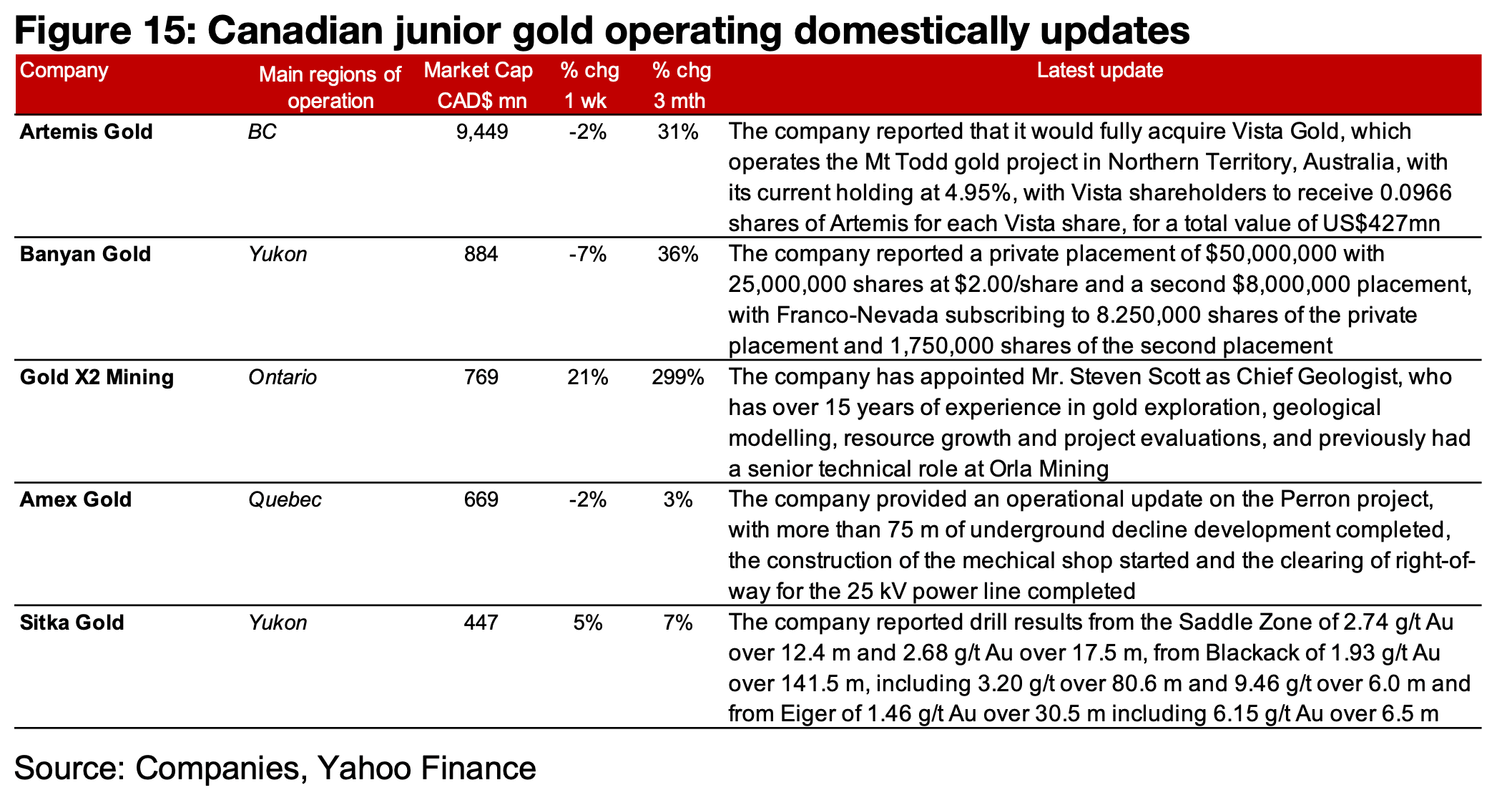
(Figures 13, 14). For the TSXV gold companies operating mainly domestically Artemis
reported that it would acquire Vista Gold, which operates the Mt. Todd project in
Australia, Banyan Gold reported two placements of $50mn and $8mn with
participation from Franco Nevada, Gold X2 appointed Mr. Steven Scott as Chief
Geologist, Amex provided and operation update on Perron and Sitka Gold reported
drill results from the RC Gold project (Figure 15).
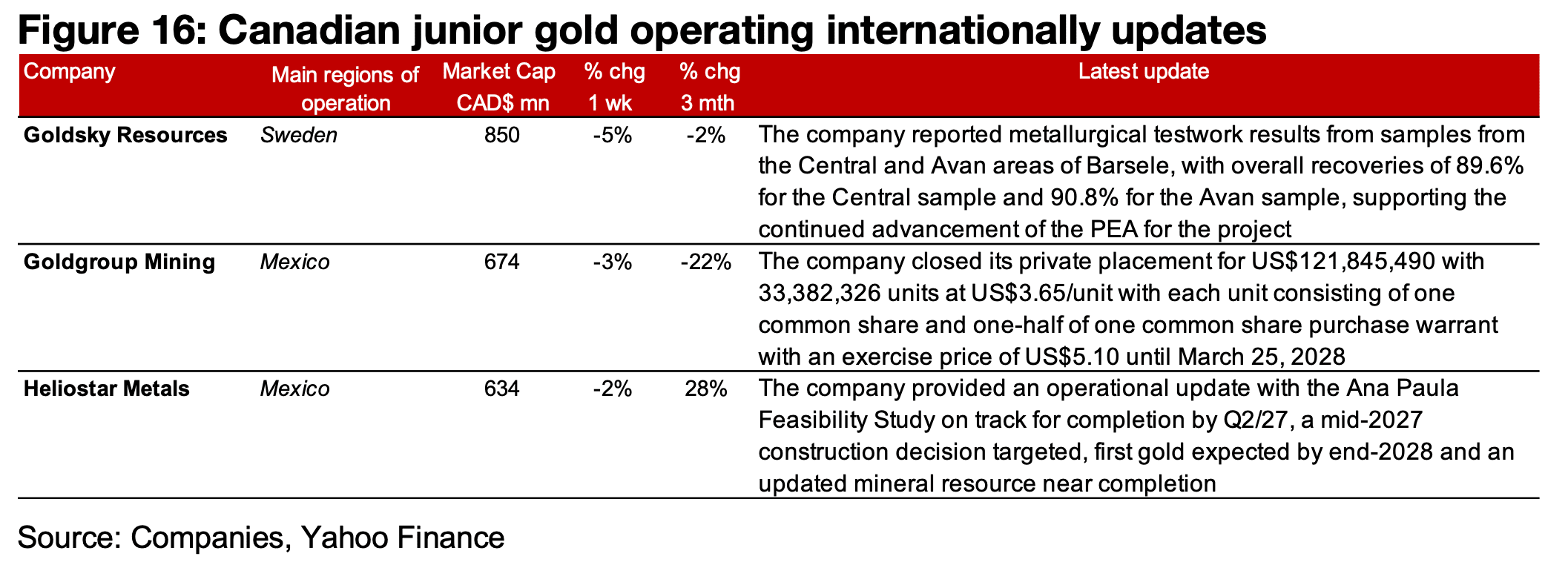
For the companies operating mainly internationally, Goldsky Resources reported
metallurgical testwork results from samples from the Central and Avan areas of
Barsele with recoveries of 89.6% and 90.8%, Goldgroup closed its US$121,845,490
private placement, with 33,382,326 units at US$3.65/unit and Heliostar provided an
operational update on Ana Paula, with the Feasibility Study expected to be completed
by Q2/27, a mid-2027 construction decision targeted and first gold expected by end2028 (Figure 16).
Disclaimer: This report is for informational use only and should not be used an alternative to the financial and legal advice of a qualified professional in business planning and investment. We do not represent that forecasts in this report will lead to a specific outcome or result, and are not liable in the event of any business action taken in whole or in part as a result of the contents of this report.
Author
Ben McGregor authors the Weekly Roundup at CanadianMiningReport.com, providing sharp analysis of the metals and mining sector. With a talent for spotting trends, Ben distills complex market shifts into clear, engaging insights on TSXV junior miners. His weekly updates cover gold, copper, uranium, and more, blending data-driven perspectives with a knack for identifying opportunities. A vital resource for investors, Ben’s work navigates the dynamic junior mining landscape with precision.