

August 03, 2026
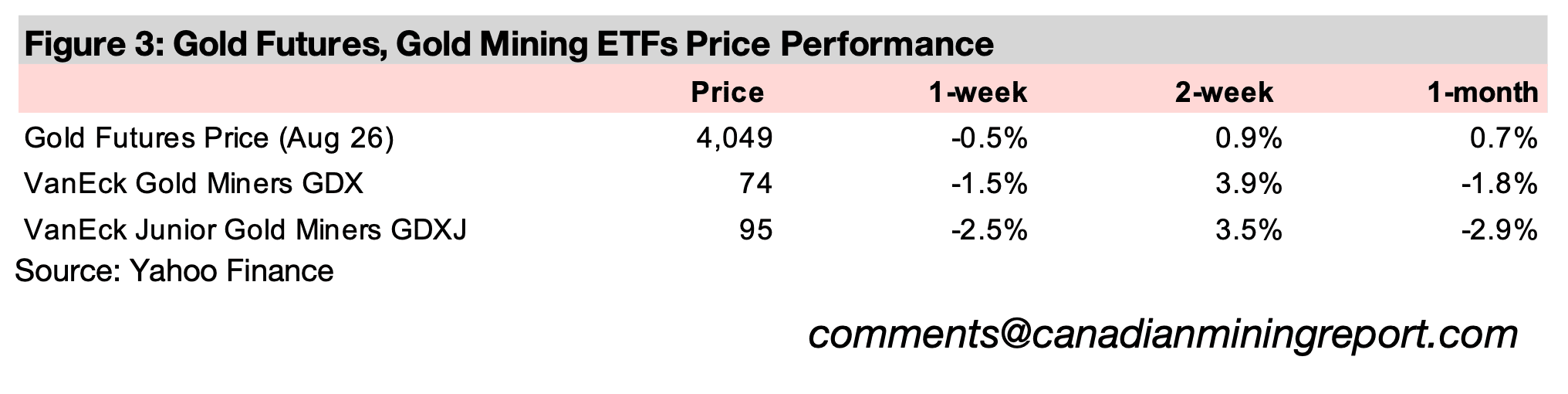
The gold price declined -0.5% to US$4,049/oz, as the US Fed maintained rates after the market saw a reasonable probability of a rate hike, with a higher interest rate widely expected by the end of this year given the continued high inflation.
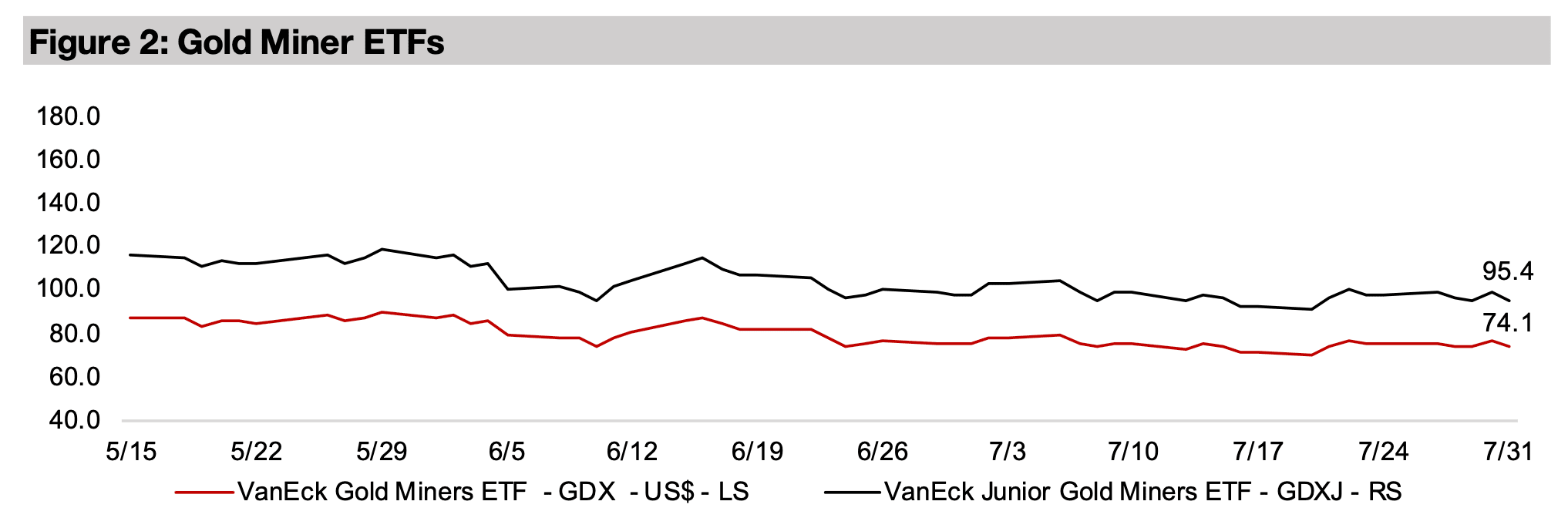
The gold stocks declined on the drop in the metal price, with the GDX down -1.5% and the GDXJ losing -2.5%, while the overall equities markets were mixed, with the S&P 500 up 0.3%, the Nasdaq gaining 1.0% and the Russell 2000 down -0.5%.


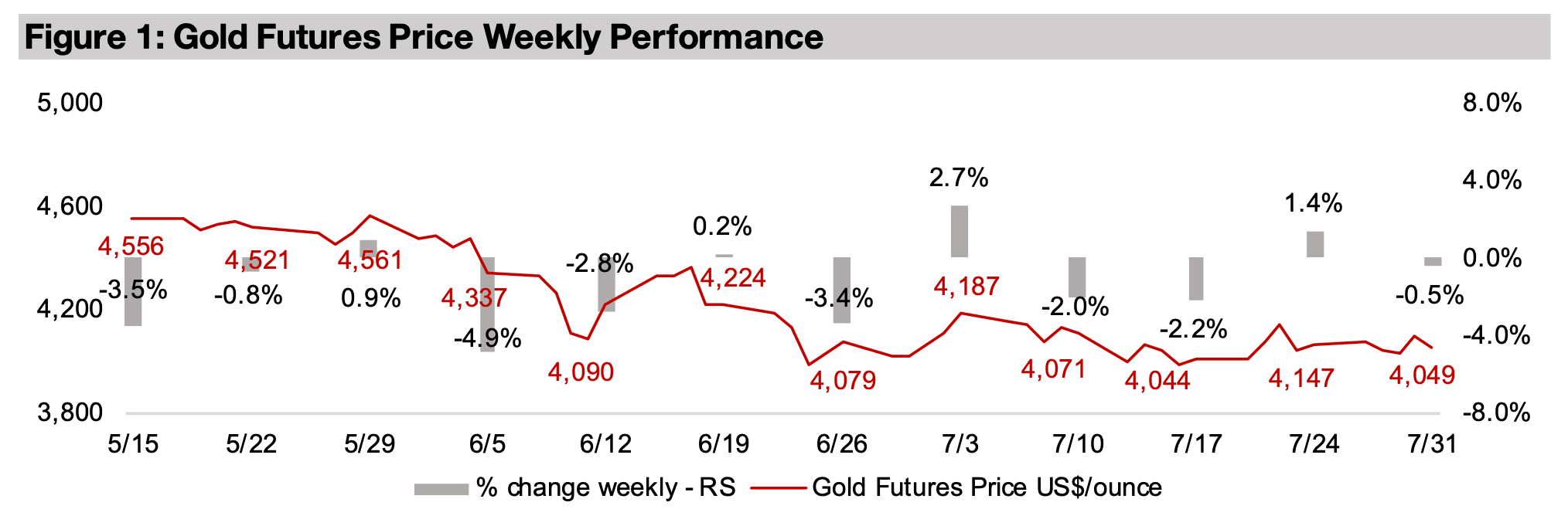
The gold price declined -0.5% to US$4,049/oz, with the key economic driver the US
Fed’s decision to keep interest rates on hold at its meeting last week. The markets
had seen some chance that the Fed could have hiked rates, given high inflation and
a strong jobs markets, and the Central bank’s dual mandate to control prices and
maximize employment. There were a relatively high three of the nine Fed board
members that actually dissented on the decision, and voted to increase interest rates
by 0.25%. The market is widely expecting a rate hike by the end of the year, however,
with the probability of a hike at the September 2026 meeting at 65%, for the October
2026 meeting at 75% and by the December 2026 meeting at 86%.
This had gold continuing to trade in the range of around US$4,000/oz-US$4,200 that
has held for over the past two months, and seems to indicate that the large pullback
in the price that drove out a wave of speculation in early 2026 may now be over. The
equity markets were mixed on the news, with the S&P 500 up 0.3%, the Nasdaq
gaining 1.0% and Russell 2000 down -0.5%, likely on expectations that the Fed
decision may have only delayed a rate hike by a few months. Gold stocks saw
moderate declines, with the GDX down -1.5% and GDXJ losing -2.5%.
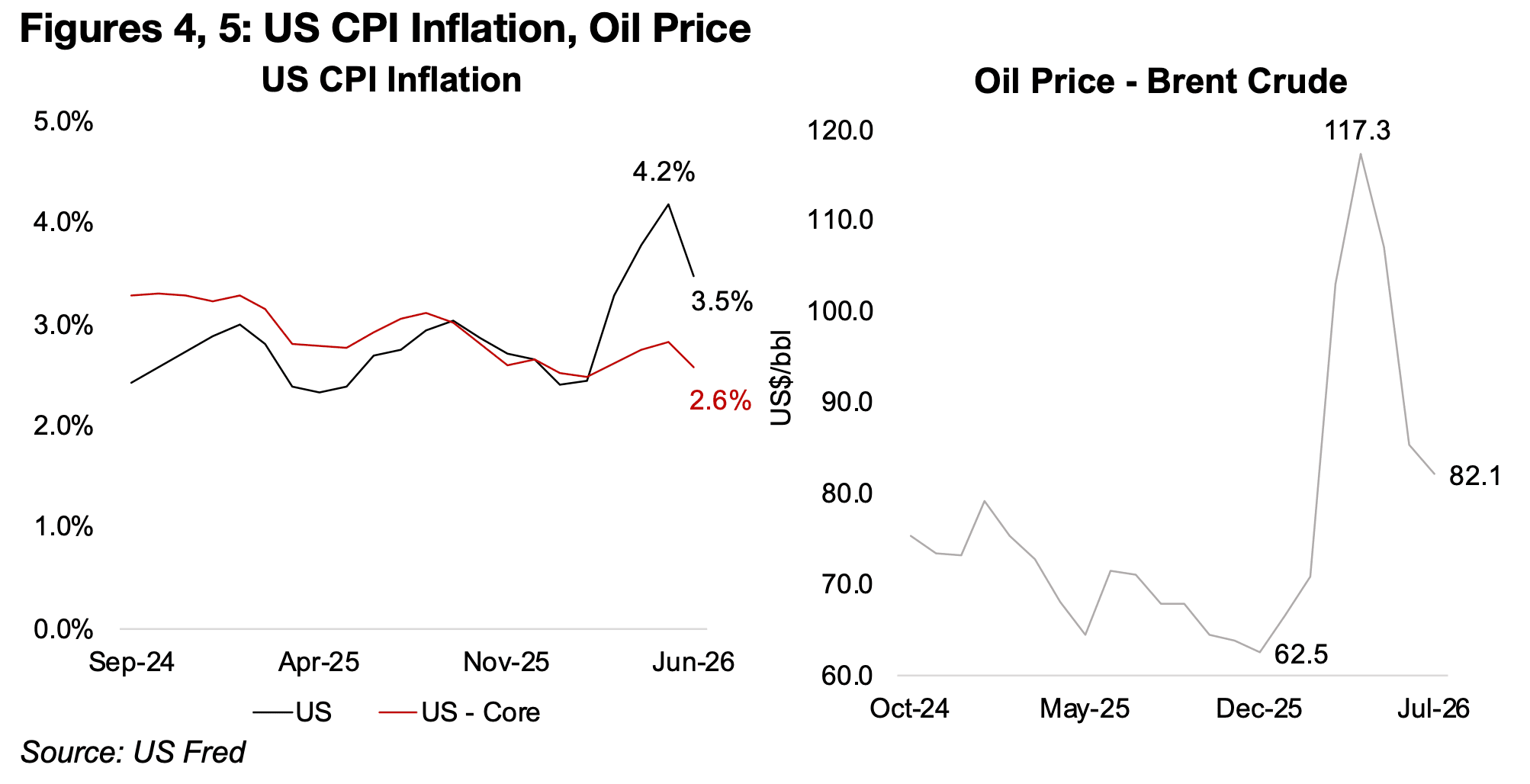
The most recent inflation data and oil prices appear to continue to support an
eventual Fed hike this year. US headline inflation pulled back in June 2026 to 3.5%
from its peak of 4.2% in May 2026, which is still quite high, and while the Fed focuses
more on core inflation, even that looks elevated at 2.6%, and is still above the 2.0%
target (Figure 4). While the oil price, which has been the major driver of this inflation,
has dropped significantly, with Brent Crude at US$82.1/bbl, off a US$117.3/bbl peak
in April 2026, this is still 19% above the average for 2025 of US$69.1/bbl (Figure 5).
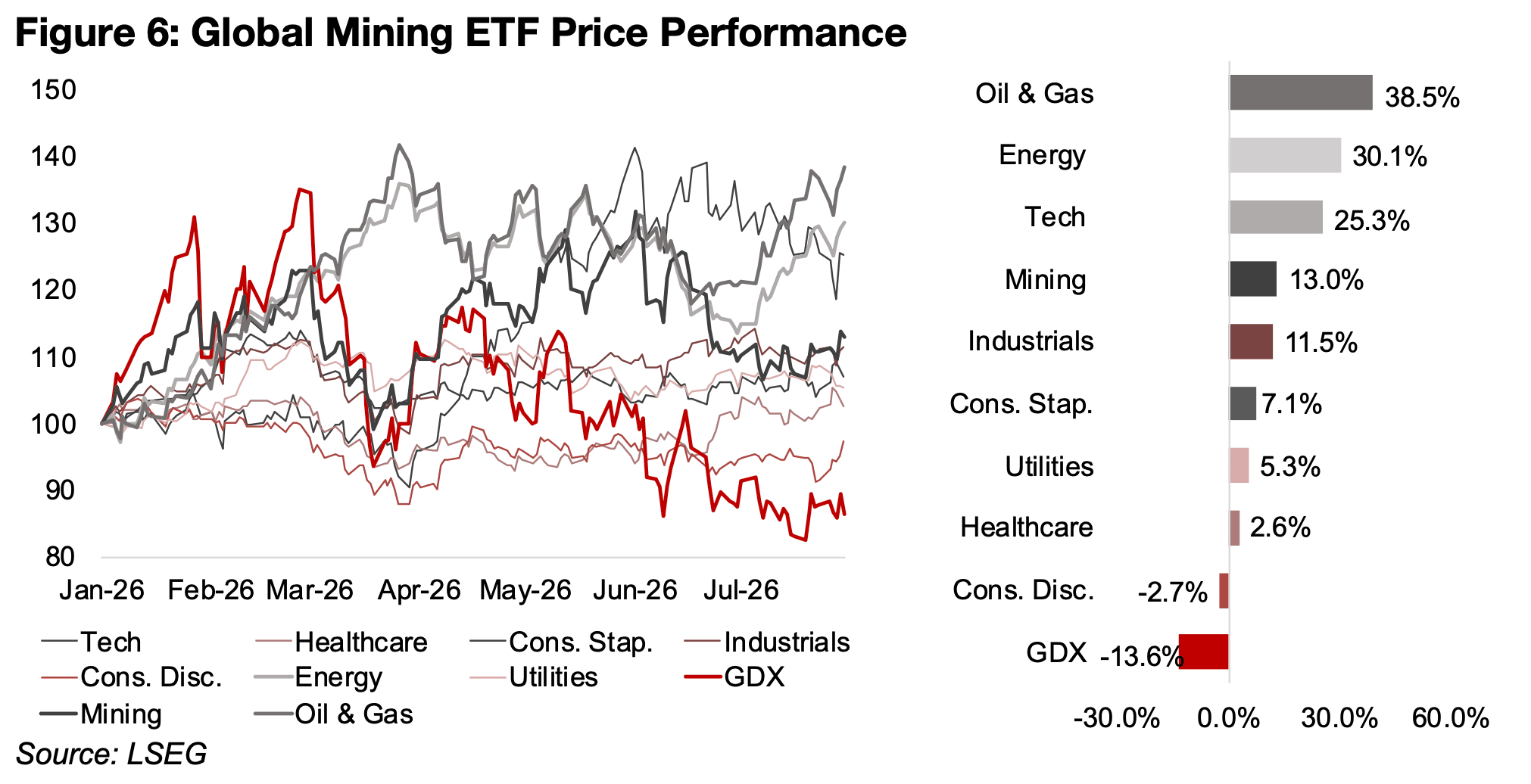
The oil and gas and energy sectors have continued to lead the global markets in 2026,
even with the pullback in the oil price, up 38.5% and 30.1% this year, and their
valuations still remain low (Figure 6). This contrasts with the very high multiples for
global tech, which has gained 25.3% for the year, even after the recent severe decline
in the semiconductor stocks in South Korea. The mining sector overall has actually
done quite well this year, with the MSCI Metals and Mining ETF up 13.0%, from its
high exposure to copper and iron ore, with the former especially strong this year, with
a lower contribution from gold. The gold producers have plunged from the strong
global sector in early 2026 to the worst performer, with the GDX declining -13.6%.
However, with the speculative excesses from earlier this year now over, the gold price
maintaining a new average still more than enough to drive strong earnings, and
valuations at more moderate levels, we view the gold sector as much more balanced
and earnings more sustainable than at the start of the year. This contrasts with the
recent extreme volatility in some tech stocks, and extremely high expectations from
the market for earnings, which leaves the sector looking reasonably precarious.
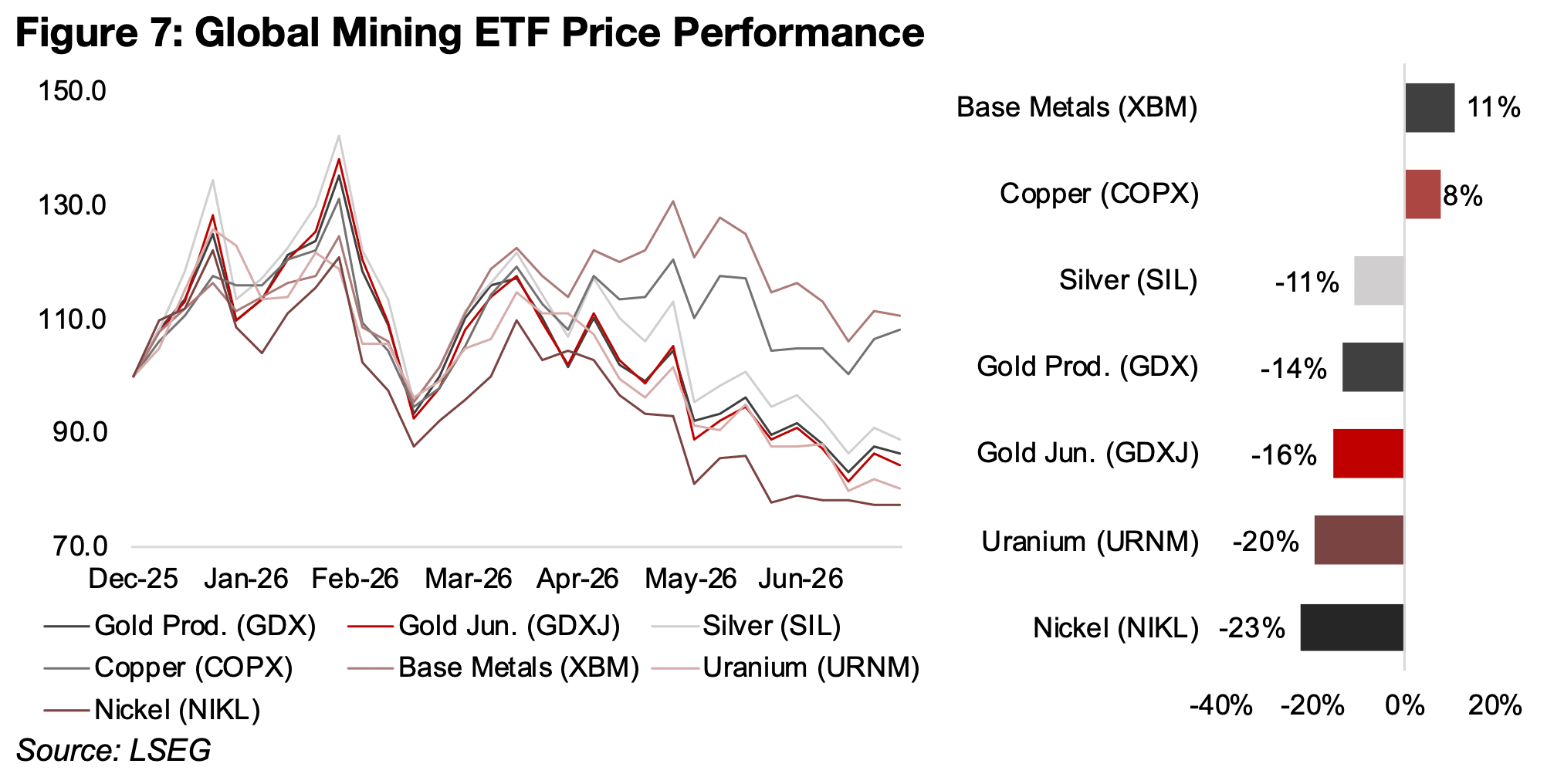
The GDX’s decline is actually towards the middle of the price performance for the major mining ETFs this year, with major drops especially for the uranium and nickel stocks, down -20% and -23%, respectively (Figure 7). The performance of the gold juniors, which tends to be very correlated with the gold majors, has been just slightly behind the producers this year, with the GDXJ down -16%. The SIL ETF of silver stocks has slightly outperformed this, down just -11.0%, while the COPX ETF of copper stocks has gained 8.0%, with this sector in turn the major driver of the 11.0% gain in the base metals stocks (Figure 7).
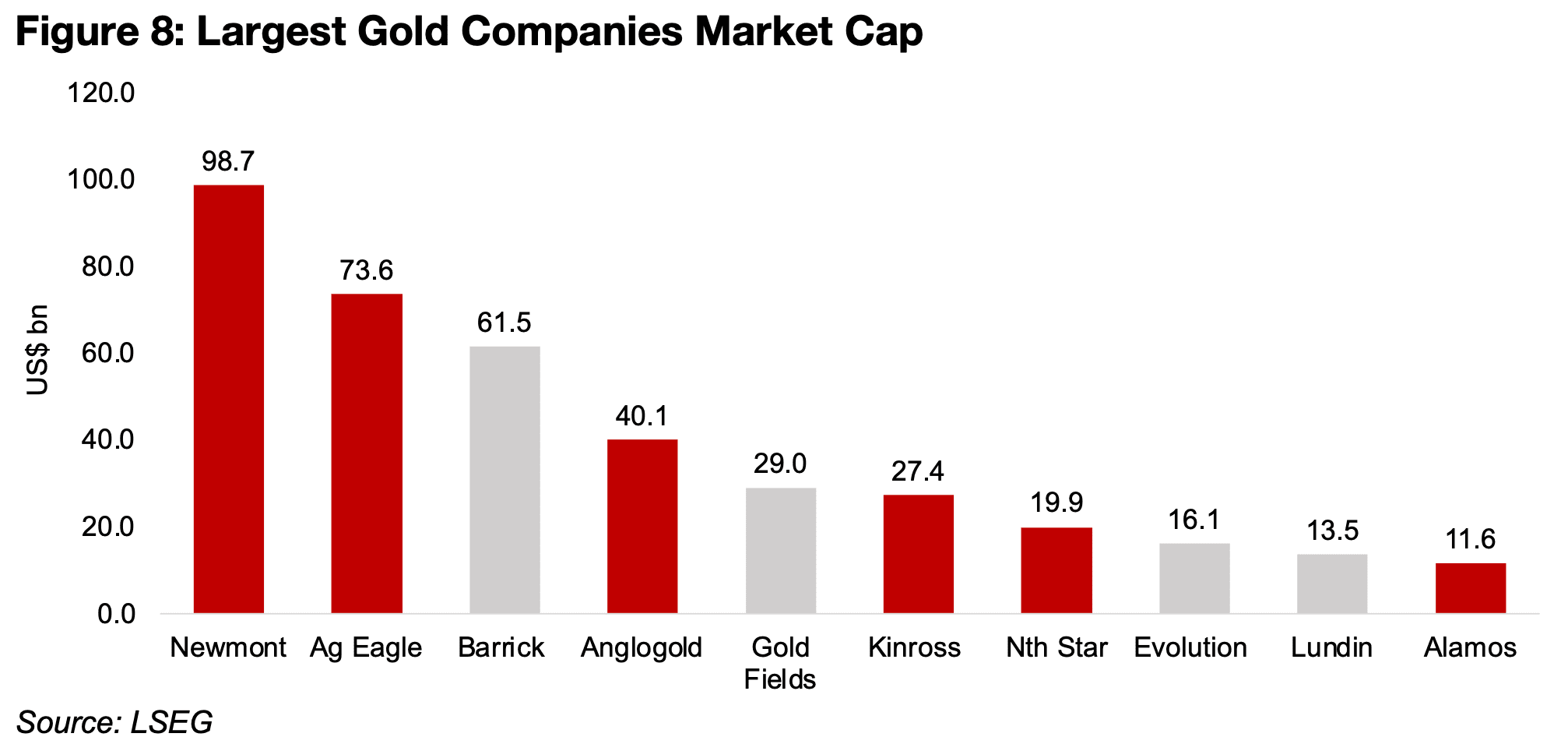
Most of the Big Gold companies have now reported their Q2/26 results, with Lundin to follow this week, Barrick’s out early next week, and Gold Fields and Evolution reporting relatively late, towards the end of this month (Figure 8). The group overall continues to see strong growth, driven a gold price which was still up significantly yoy to above the US$4,000/oz level, even given the substantial decline from its peak early this year well above US$5,000/oz. This has offset an overall decline in production for these majors, which all face the issue of an ongoing depletion of reserves, which also provides a major opportunity for the juniors in terms of discovering new deposits. There has also been major increases in costs especially on the surge in energy prices.
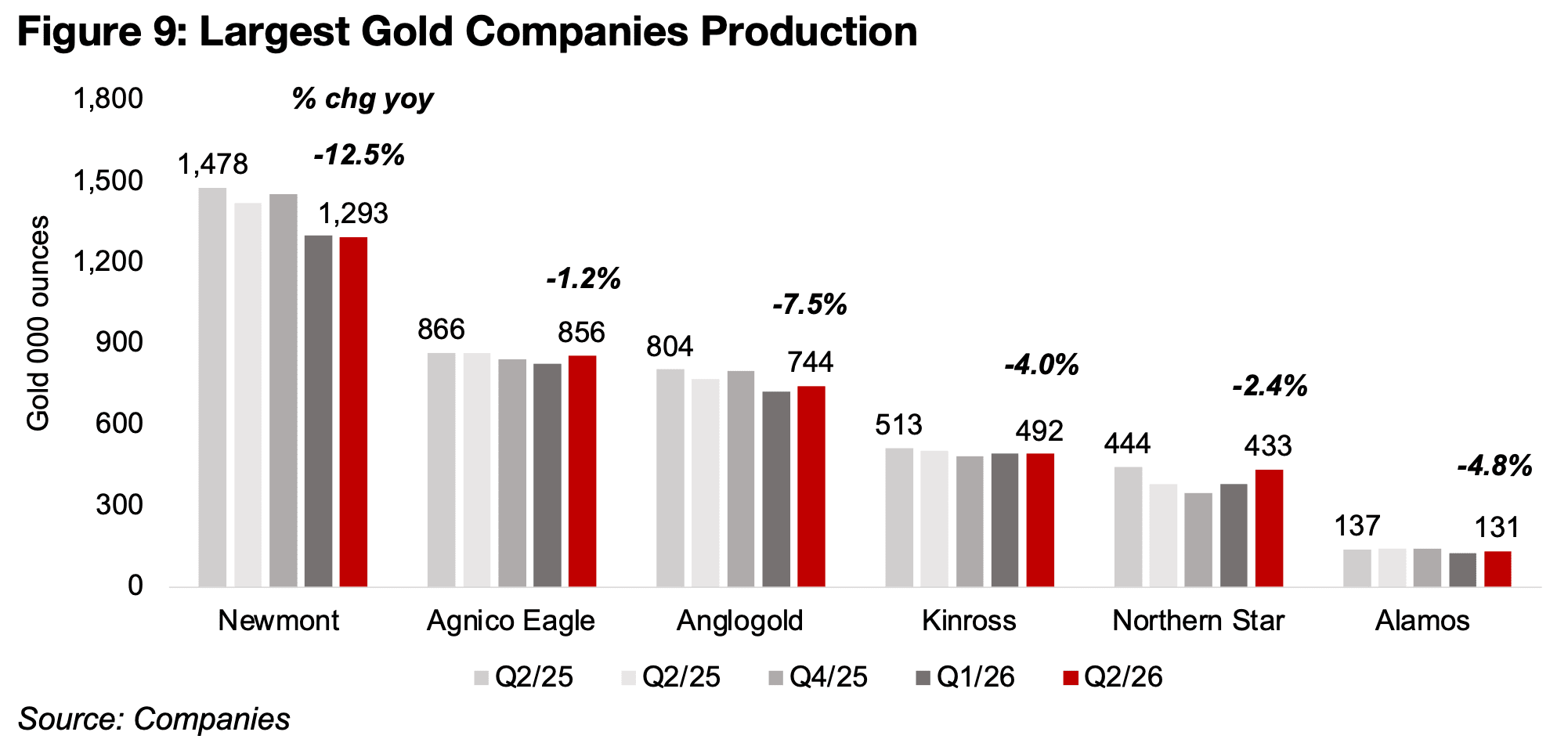
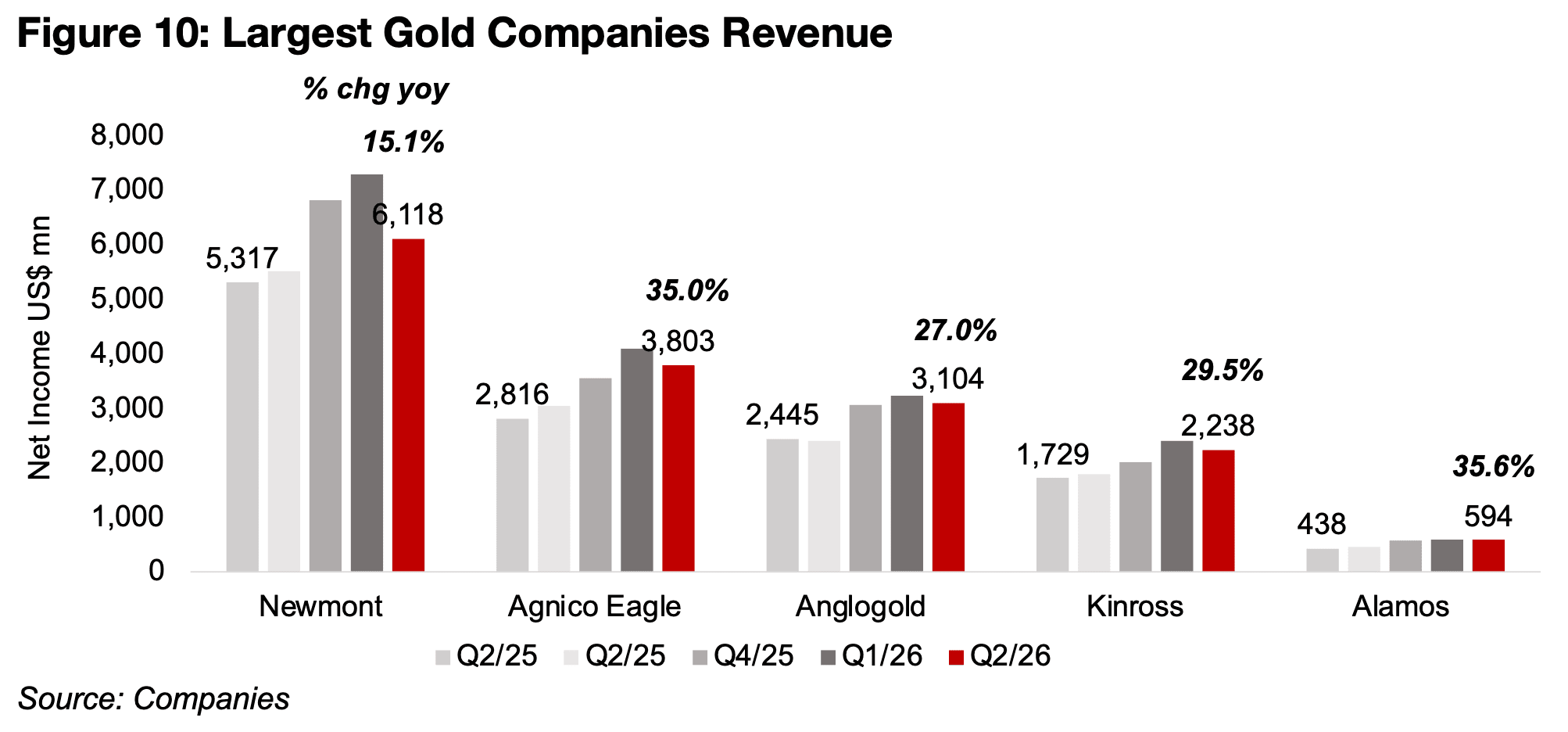
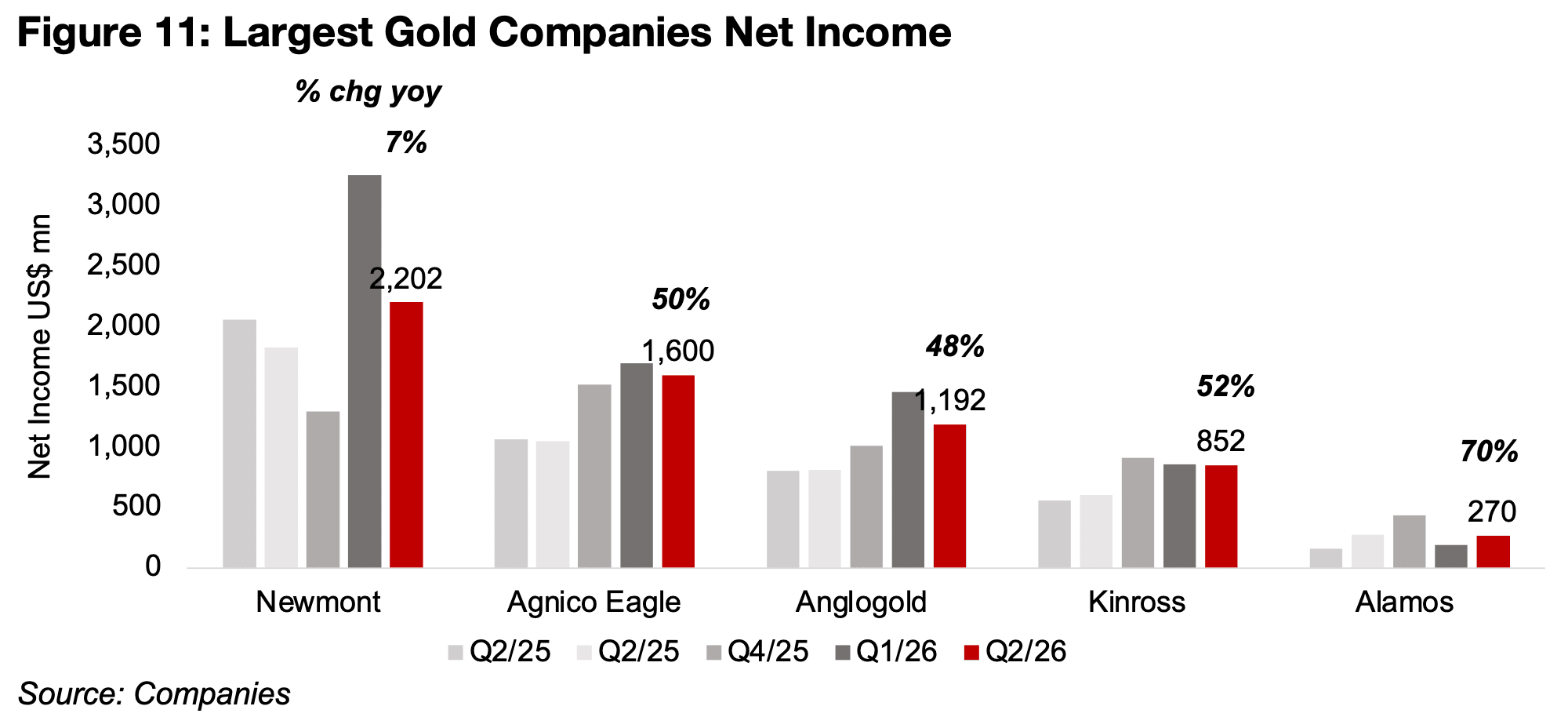
There have been substantial declines in production yoy for all of the group, with the largest drops from Newmont and Anglogold Ashanti, down -12.5% and -7.5% (Figure 9). The gold output of both Kinross and Alamos was down by similar levels of -4.0% and -4.8%, with more muted declines for Agnico Eagle and Northern Star, off by - 1.2% and -2.4% yoy. However, revenue still increased substantially for all the companies as the declines were far offset by the rising gold price, with Newmont still up 15.1% yoy even given the more significant decline in output. The rest of the group saw much higher gains, with Agnico Eagle, Anglogold, Kinross and Alamos up 35.0%, 27.0%, 29.5% and 35.6%, respectively (Figure 10). Net income surged yoy for most of the group, with Agnico Eagle, Anglogold and Kinross up around 50% and Alamos’ 70% gain the strongest, although Newmont had a relatively muted 7% increase, given that it had by far the most severe decline in production.
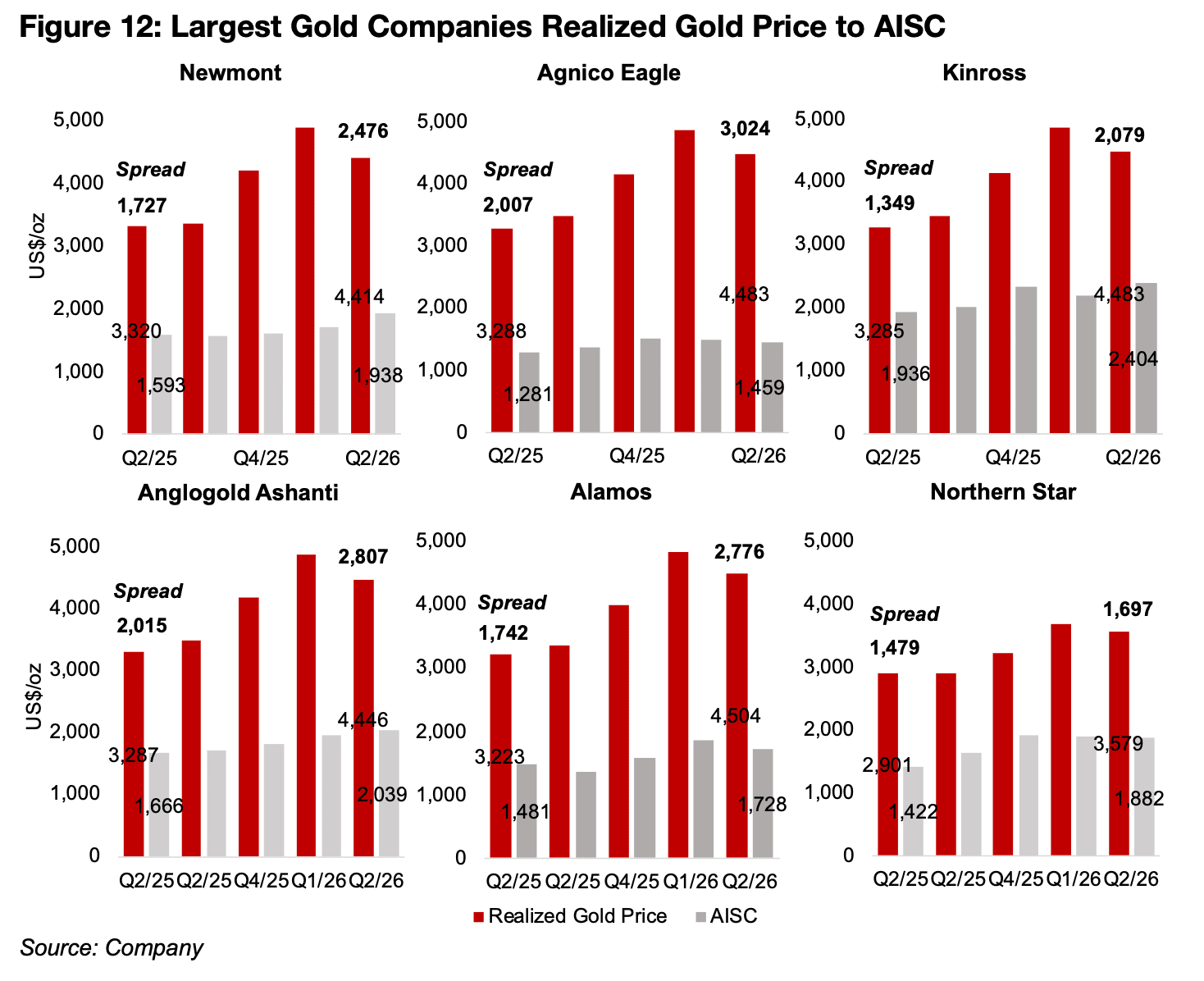
While Big Gold’s earnings growth remains strong on the high gold price, costs have
surged on rising energy costs. The AISC in Q2/26 for Kinross and Northern Star
jumped by almost US$500/oz yoy, increasing US$468/oz and US$460/oz, which
would have been seen a major squeeze in margins for the companies in any period
before the H2/25 surge in the gold price. While the increase has been moderately
lower for Anglogold Ashanti and Newmont, at US$373/oz and US$345/oz, this is still
a significant surge in costs. The rise in AISC has been the lowest for Alamos and
Agnico Eagle, but they still saw increases of US$247/oz and US$178/oz.
The issue now is whether high costs will continue, given that they are mainly driven
the jump in energy prices, which do tend to be volatile, and could actually revert
rapidly if there are peace deals in the Middle East that hold. There has again been
announcements of a ceasefire in the region with talks to be held this week, but this
has happened already several times over the past few months. While the probability
that oil jumps back to well above US$100/bbl appears relatively low, it does seem
likely there will be enough risk in the region that oil price could remain elevated for
the rest of the year, and up versus last year.
The pressure from both the decline in the gold price since the start of the year and
these rising costs have driven down valuations for the large gold companies to
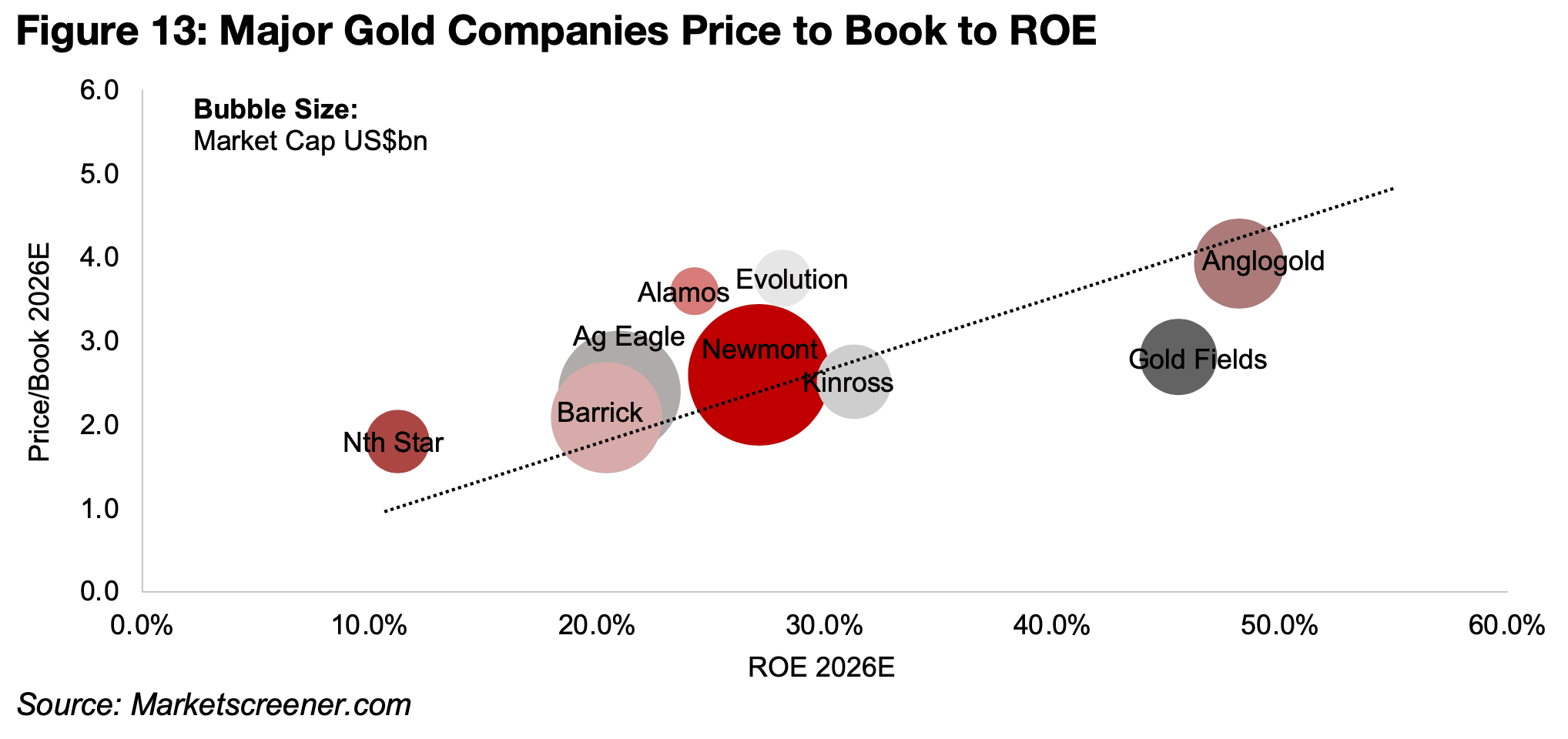
moderate levels. A price to book to return on equity valuation for the sector does not
indicate significant over or undervaluation for the largest companies by market cap,
Newmont, Agnico Eagle, Barrick, Anglogold Ashanti and Kinross, which all trade very
close to the valuation line (Figure 13). While Northern Star, Alamos and Evolution
trade moderately above the line and Gold Fields trades below it, they do not appear
to be severe outliers.
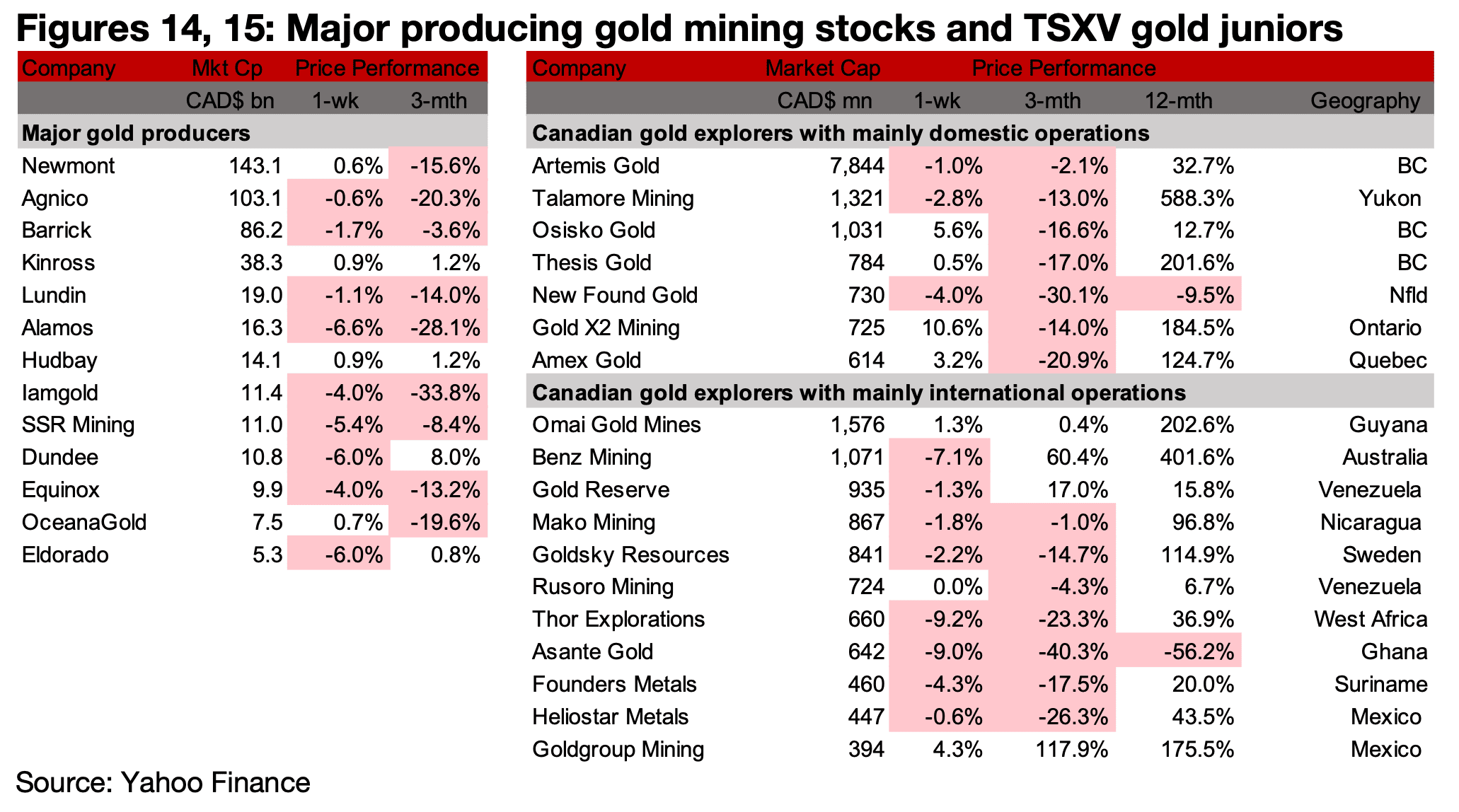
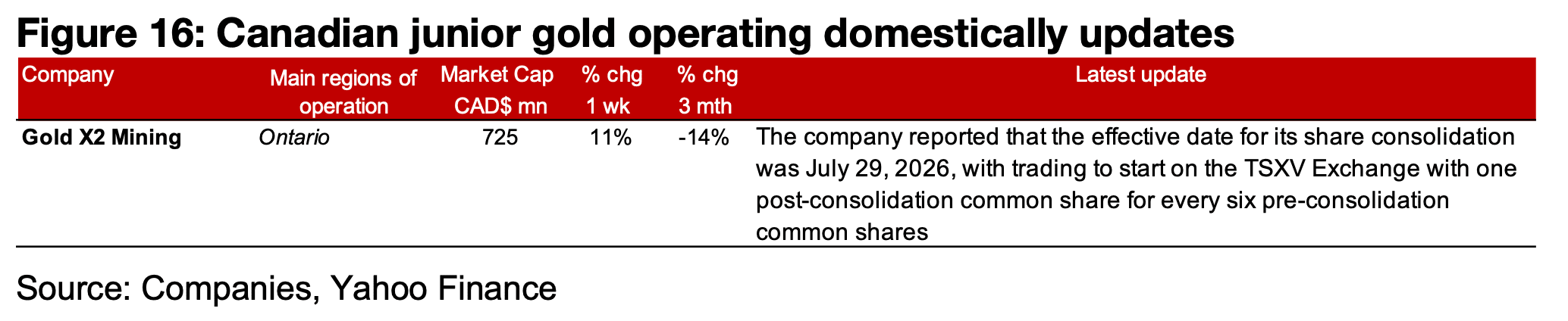
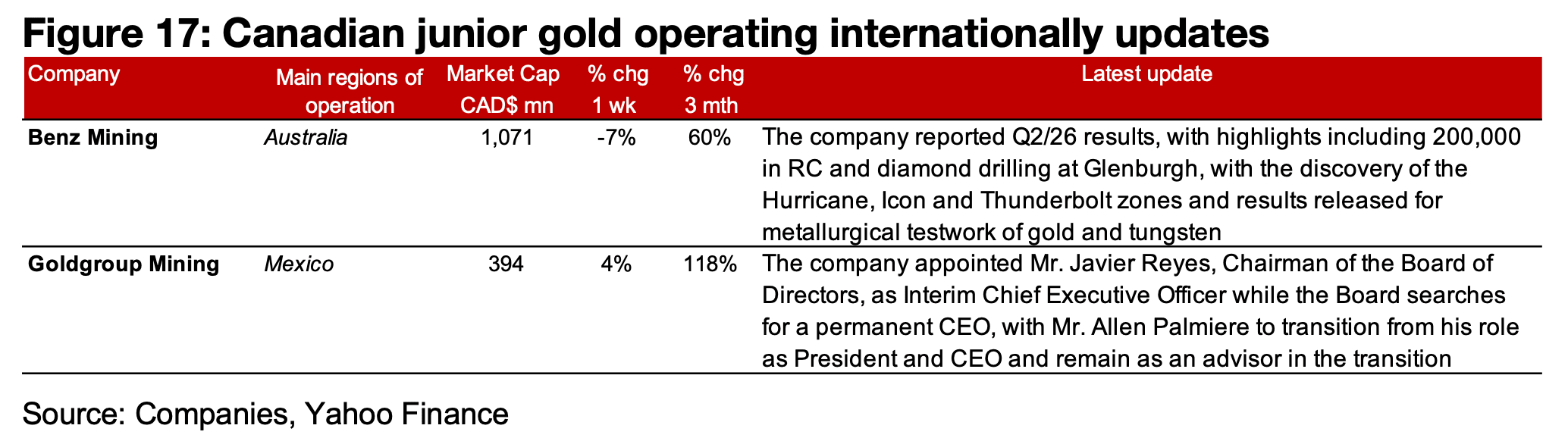
Most of the major producers and TSXV gold were down as the metal price declined (Figures 14, 15) For the TSXV gold companies operating mainly domestically, Gold X2 Mining completed its share consolidation (Figure 16). For the TSXV gold companies operating mainly internationally, Benz reported Q2/26 results and Goldgroup appointed an interim CEO (Figure 17).
Disclaimer: This report is for informational use only and should not be used an alternative to the financial and legal advice of a qualified professional in business planning and investment. We do not represent that forecasts in this report will lead to a specific outcome or result, and are not liable in the event of any business action taken in whole or in part as a result of the contents of this report.
Author
Ben McGregor authors the Weekly Roundup at CanadianMiningReport.com, providing sharp analysis of the metals and mining sector. With a talent for spotting trends, Ben distills complex market shifts into clear, engaging insights on TSXV junior miners. His weekly updates cover gold, copper, uranium, and more, blending data-driven perspectives with a knack for identifying opportunities. A vital resource for investors, Ben’s work navigates the dynamic junior mining landscape with precision.