

October 12, 2026
The major silver stocks have nearly all seen strong gains over the past year and valuations remain elevated even as the metal price has weakened, with inventories recently rising but the market deficit narrowing substantially over the past two years.
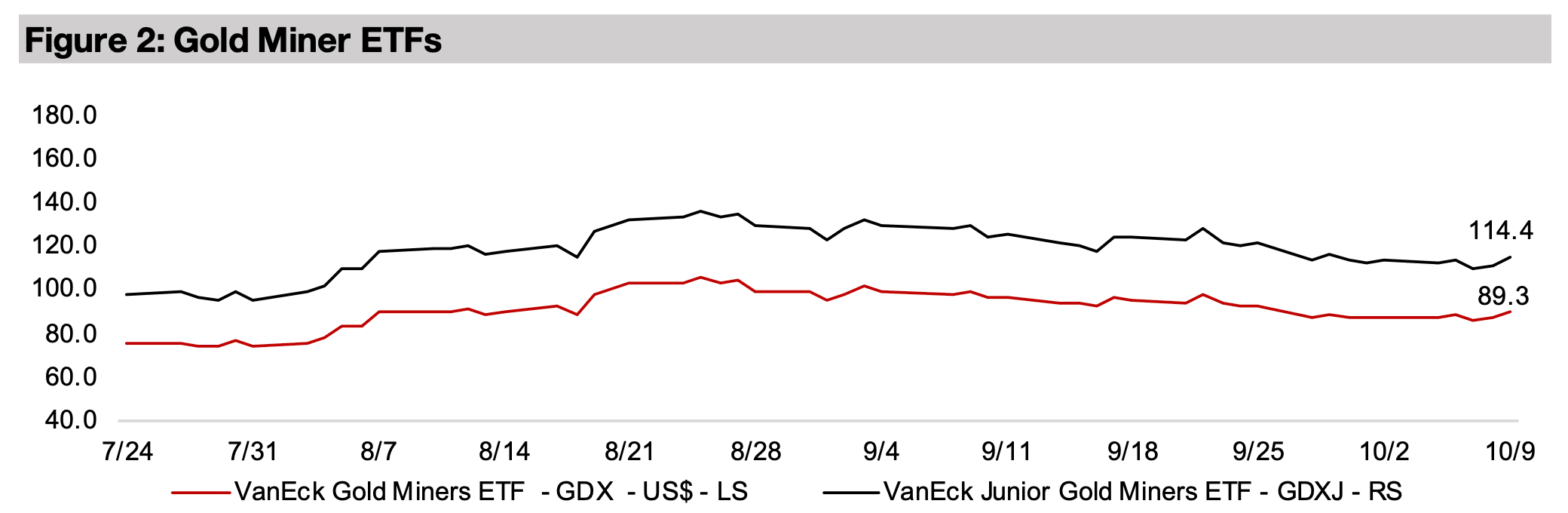
The gold stocks rose, with the GDX up 1.7 and GDXJ rising 0.7% as markets shifted back towards the metal, while overall equities were mixed with the S&P 500 up 1.0%, the Nasdaq gaining 0.5% and the Russell 2000 down -1.0%.


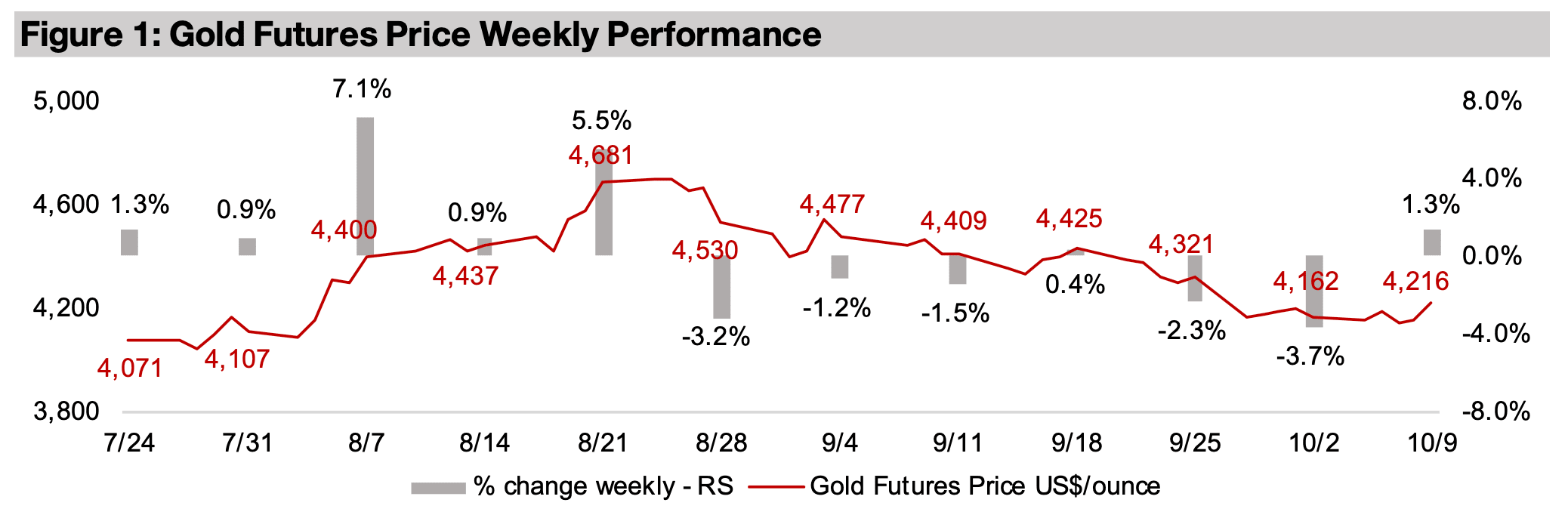
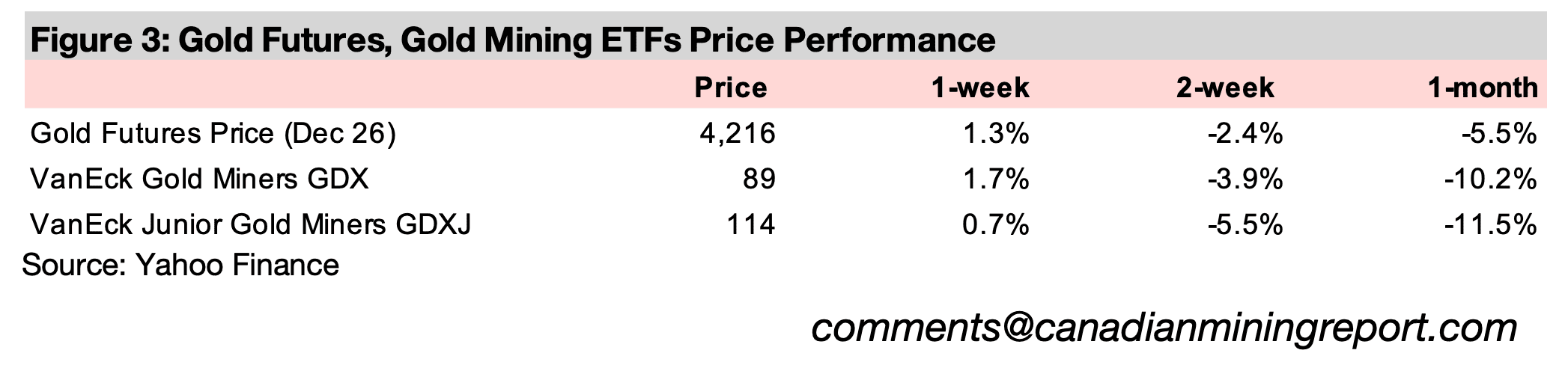
The gold price rose 1.3% to US$4,216/oz, after a two-week decline, even as the US 10-year yield rose as high as 5.34% before pulling back to 5.24% by the end of the week, and the US$ index rose. While we might have expected a decline in the gold price based on these drivers, they may have been offset by still extremely high broader economic and geopolitical risks. This could include a shift in the market towards a focus on the potential for demand destruction from higher oil prices over the concern that rising energy costs could drive higher inflation and boost the probability of a rate hike, that previously seemed to dominate.
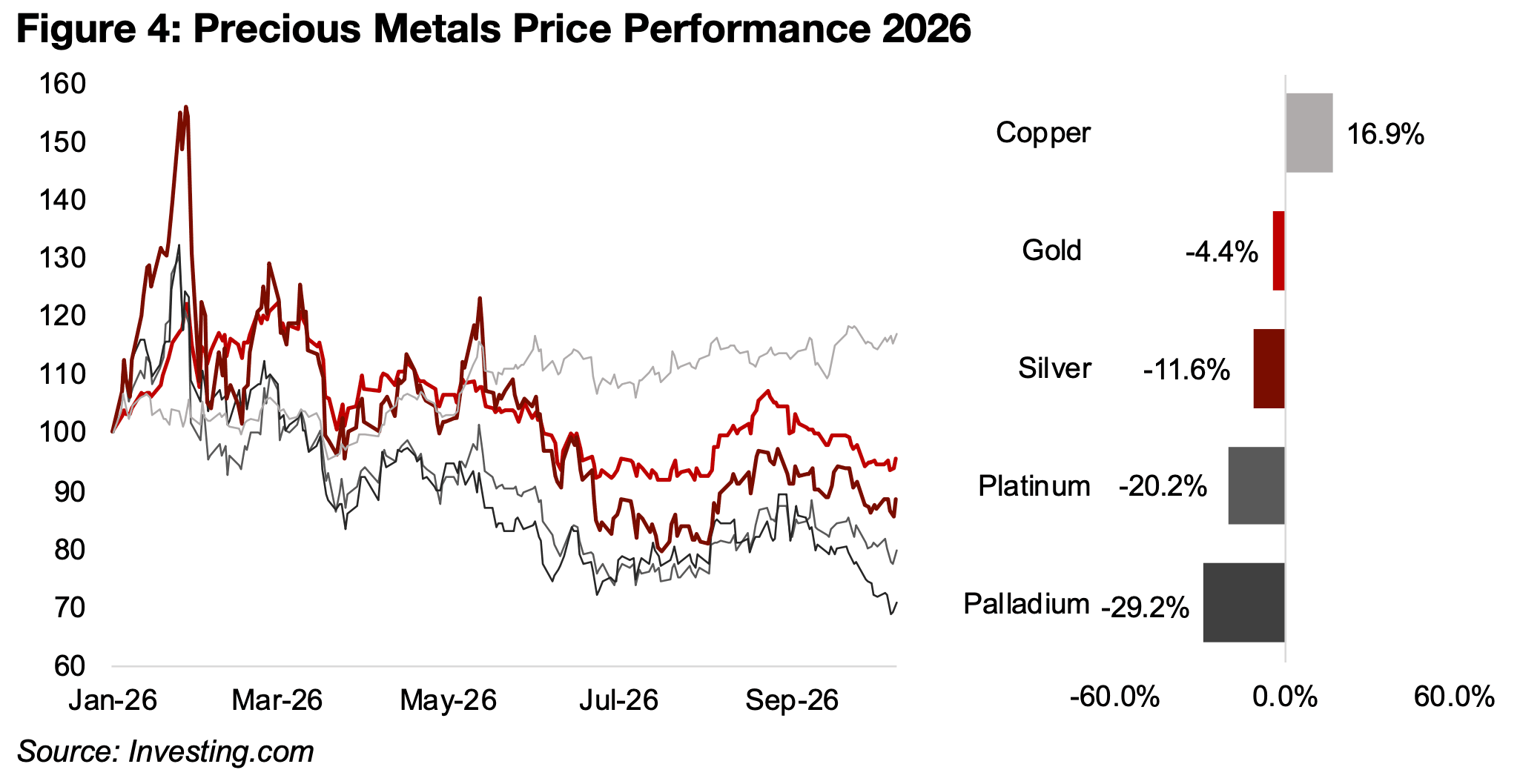
The relatively flat gold price performance so far this year, down just -4.4%, could
imply that markets see these two sets of forces as relatively balanced overall this year
(Figure 4). This subdued gain in gold combined with the 16.9% rise in copper this
year in a typical cycle would indicate an expansion that had not proved overly
inflationary. However, the copper price has been heavily distorted by a huge historical
imbalance in global inventories towards the US on tariff fears, with this exacerbated
by the major AI-boom driving up demand for the metal. There are growing market
concerns that both of these trends could reverse and drag down the metal.
The underperformance of the silver price, which is down -11.6% this year, also
implies that the gain in copper may not necessarily have been driven by balanced
underlying economic growth. With silver driven by a combination of monetary factors,
similar to gold, but also the industrial cycle, similar to copper, we might expect the
metal’s performance to be somewhere between these two, if the copper gains were
from a broad-based global expansion, rather than more metal-specific issues.
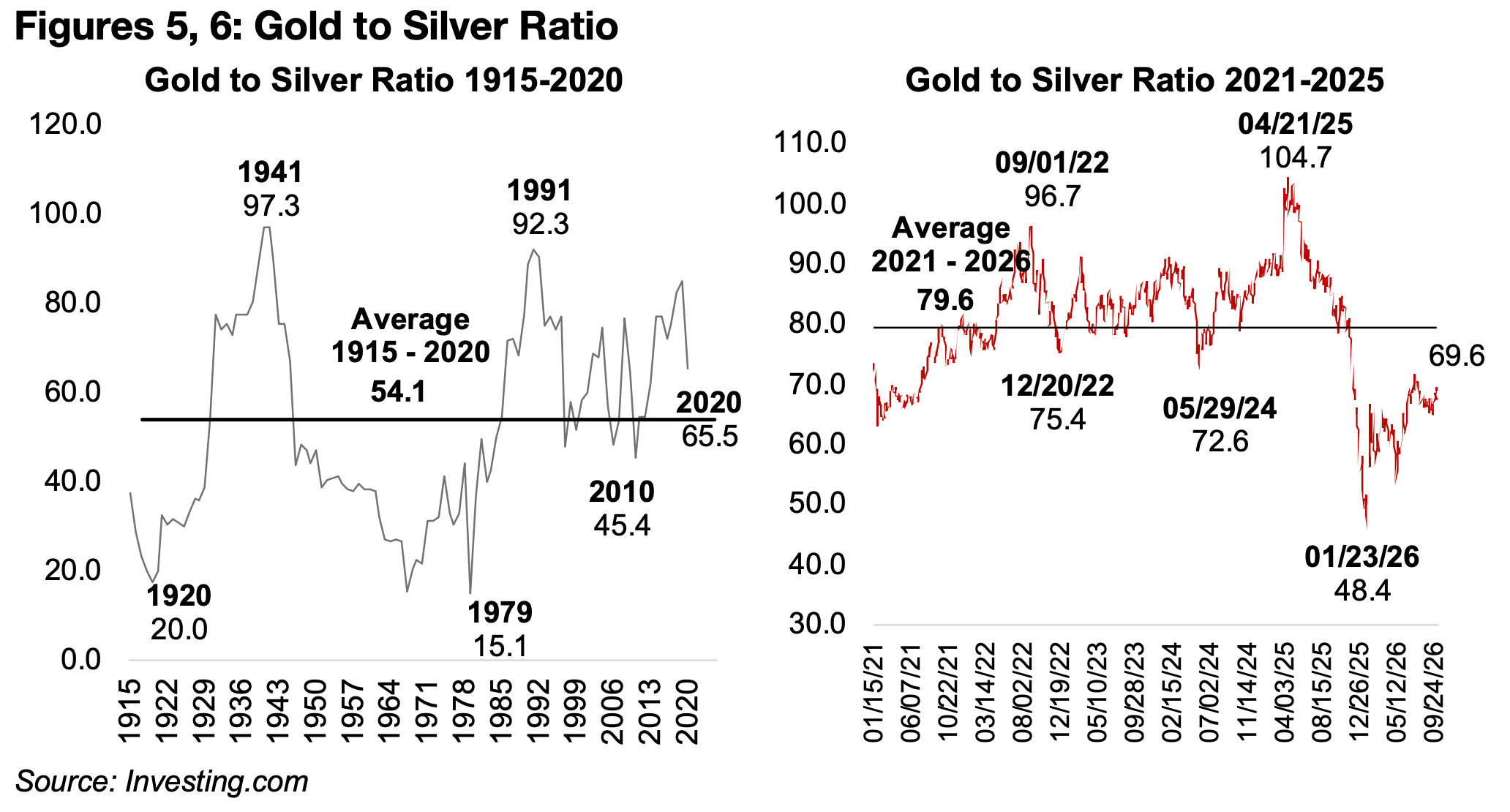
While some of silver’s underperformance will likely have been from lingering negative sentiment after a severe plunge from its heights early in the year, the downtrend has eased considerably over the past two months. The excesses earlier this year can be seen clearly in the gold to silver price ratio, which plunged to lows of just 48.4x in late January 2026 (Figure 6). This was not only far below the medium-term average from 2021-2026 of 79.6x, but also the long-term average from 1915-2020 of 54.1x, and near previous lows of 45.4 in 2010, implying a considerable overvaluation of silver relative to gold (Figure 5). However, with the underperformance of silver versus gold since, the ratio has risen to 69.6x, near the medium-term average and no longer implying a major mispricing between the two metals.
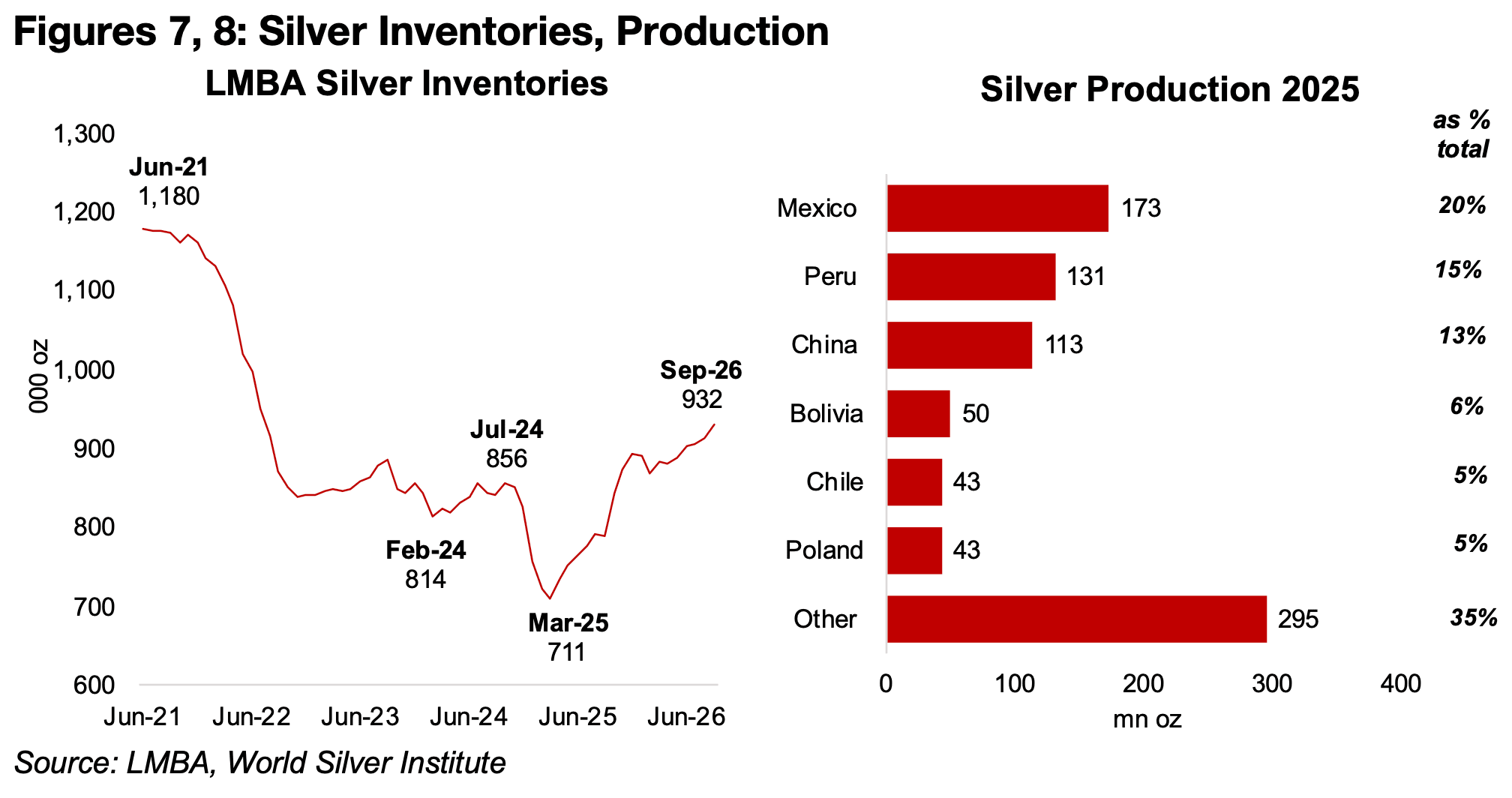
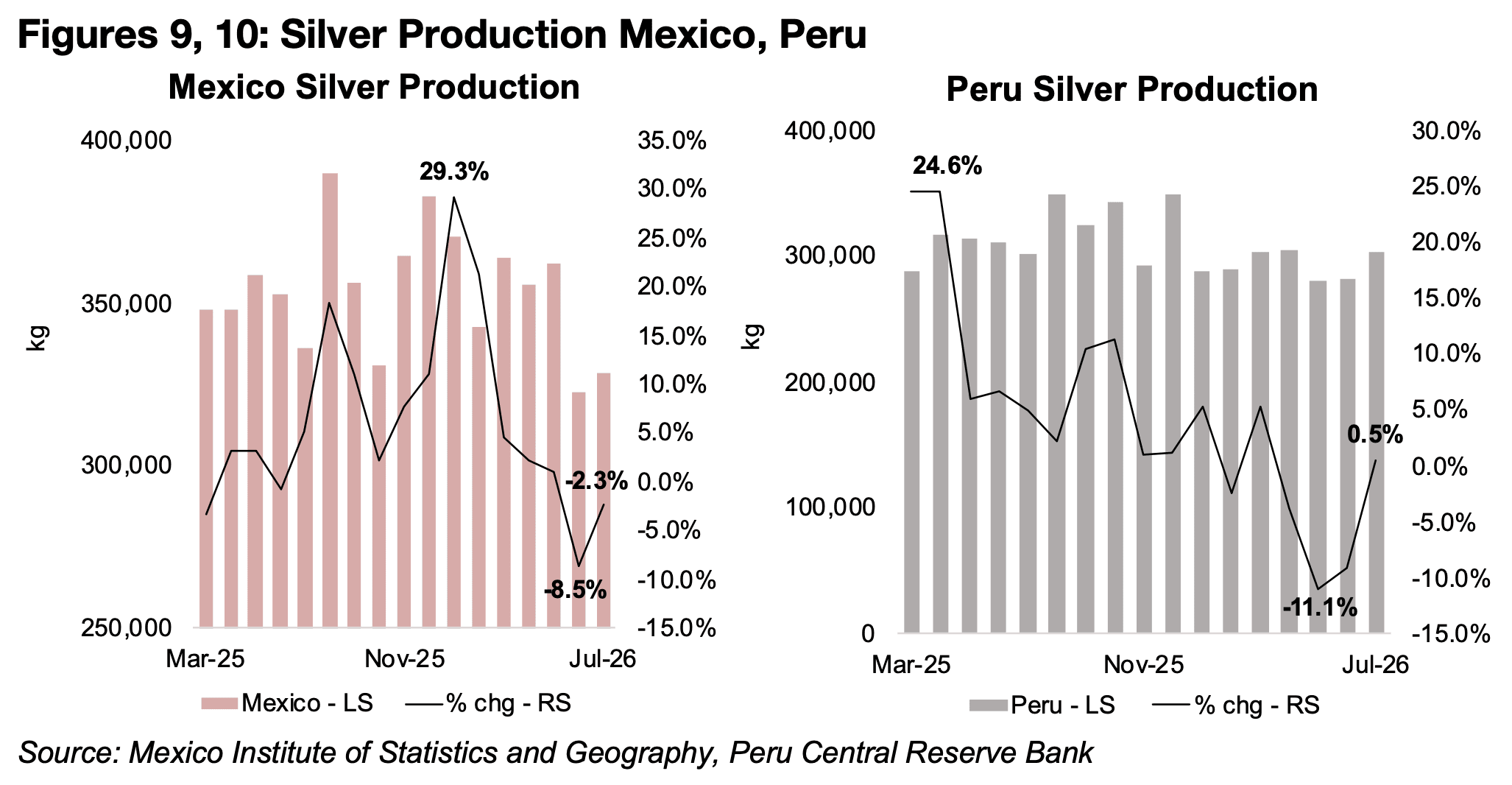
The most recent data from the silver industry seem to show a mixed outlook for the metal. The inventory levels at the LMBA have risen to 932k oz in September from lows of 711k oz in March 2026, which would be expected to be a moderate downward driver for the price (Figure 7). However, these levels are not particularly excessive and are still significantly below the 1,180k oz in June 2021. Monthly production data reported from two of the top three largest global producers, Mexico and Peru, shows a major decline in the rate of output growth, with the decline in supply an upward driver for the price (Figure 8). Mexico’s output growth had risen yoy through 2025 to a peak of 29.3% in January 2026, but has declined since to a contraction of -2.3% as of July 2026, although this is up from the lows of -8.5% in June 2026 (Figure 9). The output growth for Peru has trended down now for over a year from 24.6% in March 2025 to 0.5% in July 2026, although this is also up from lows of -11.1% in May 2026 (Figure 10).
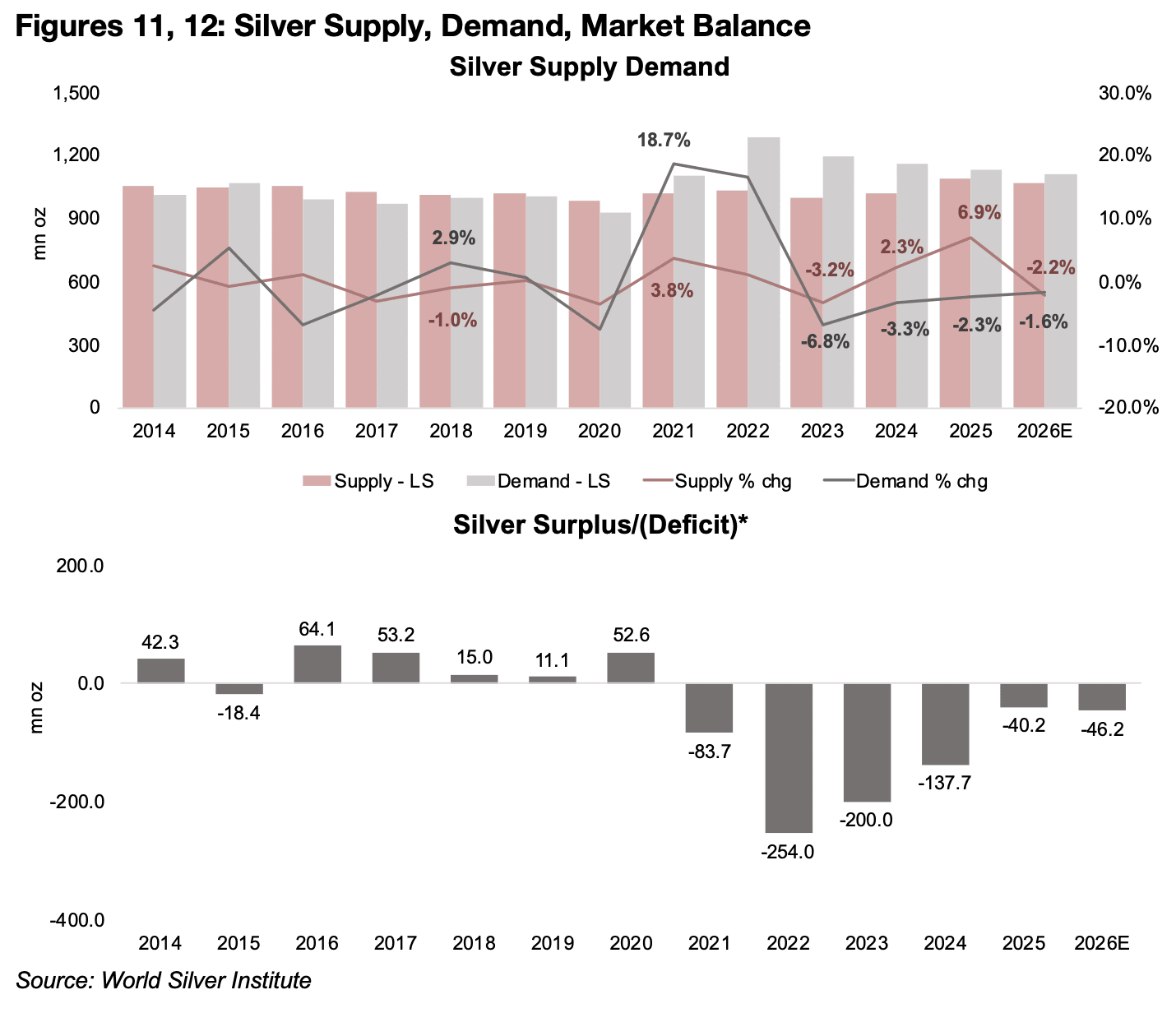
This decline in supply growth from these two major producers is inline with the estimates by the World Silver Institute for output of the metal to decline -2.2% in 2026. This is well down from the 6.9% expansion in 2025, although this rate of growth was a clear outlier given an average rise of just 0.4% from 2013-2026E (Figure 11). The growth in the demand for silver is expected to also contract in 2026 by -1.6%, although the rate of decline is lower than the declines in the previous three years. The deficit in the market is forecast to be -46.2 mn oz, roughly flat versus 2025, with a major contraction from the extremely high -254.0 mn oz, -200.0 mn oz and -137.7 mn oz of 2022, 2023 and 2024 (Figure 12).
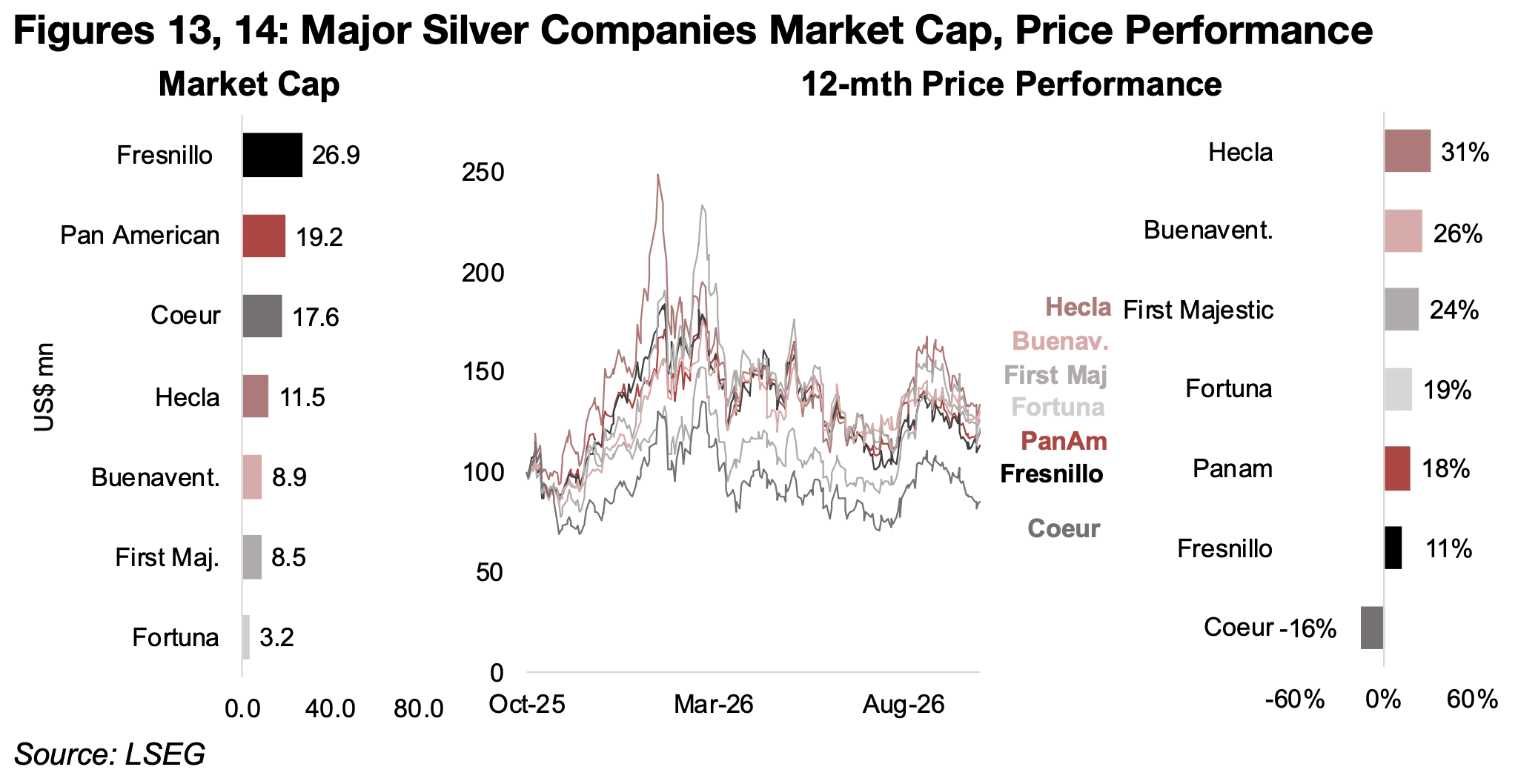
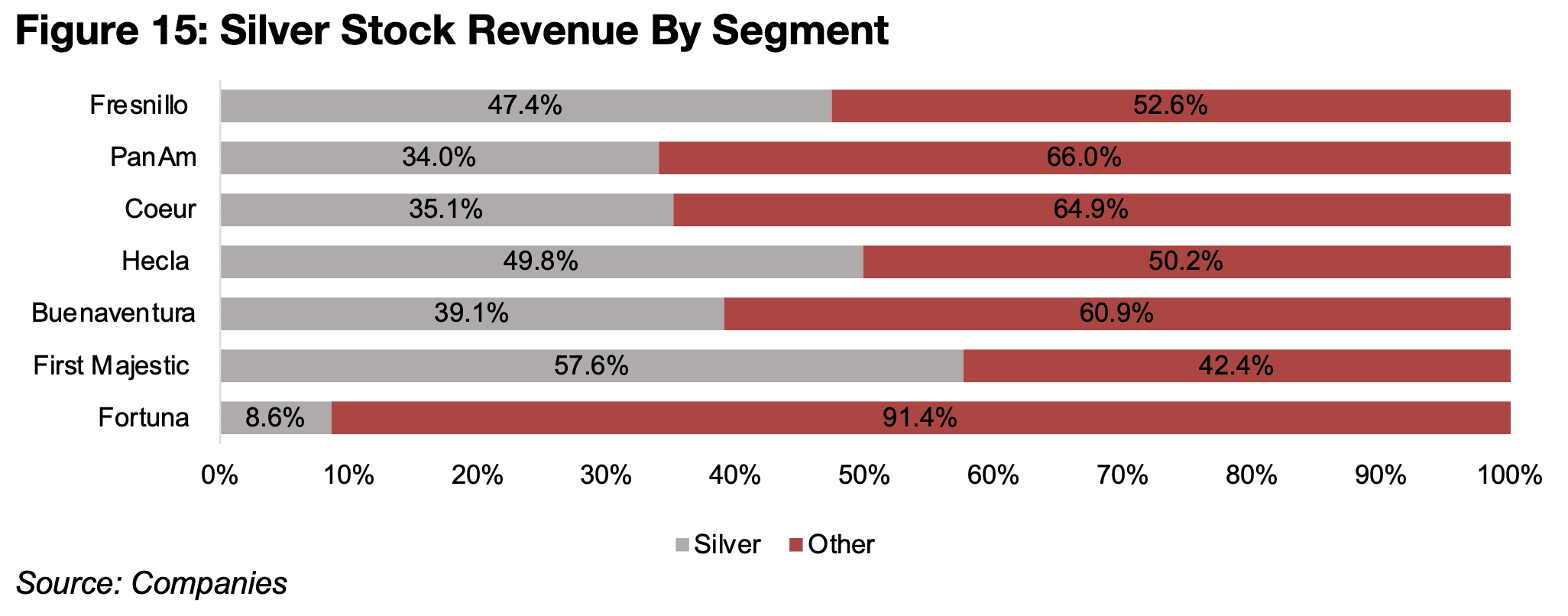
Even with the weakening metal price, the major silver stocks have nearly all still seen
substantial gains over the past year ranging from around 10% to 30%, with only
Coeur declining (Figures 13, 14). This is partly because the major silver companies
nearly all have less than 50% of their revenue from the metal, except for First Majestic,
at 57.6%, with most seeing major contributions especially from gold, but also other
metals (Figure 15).
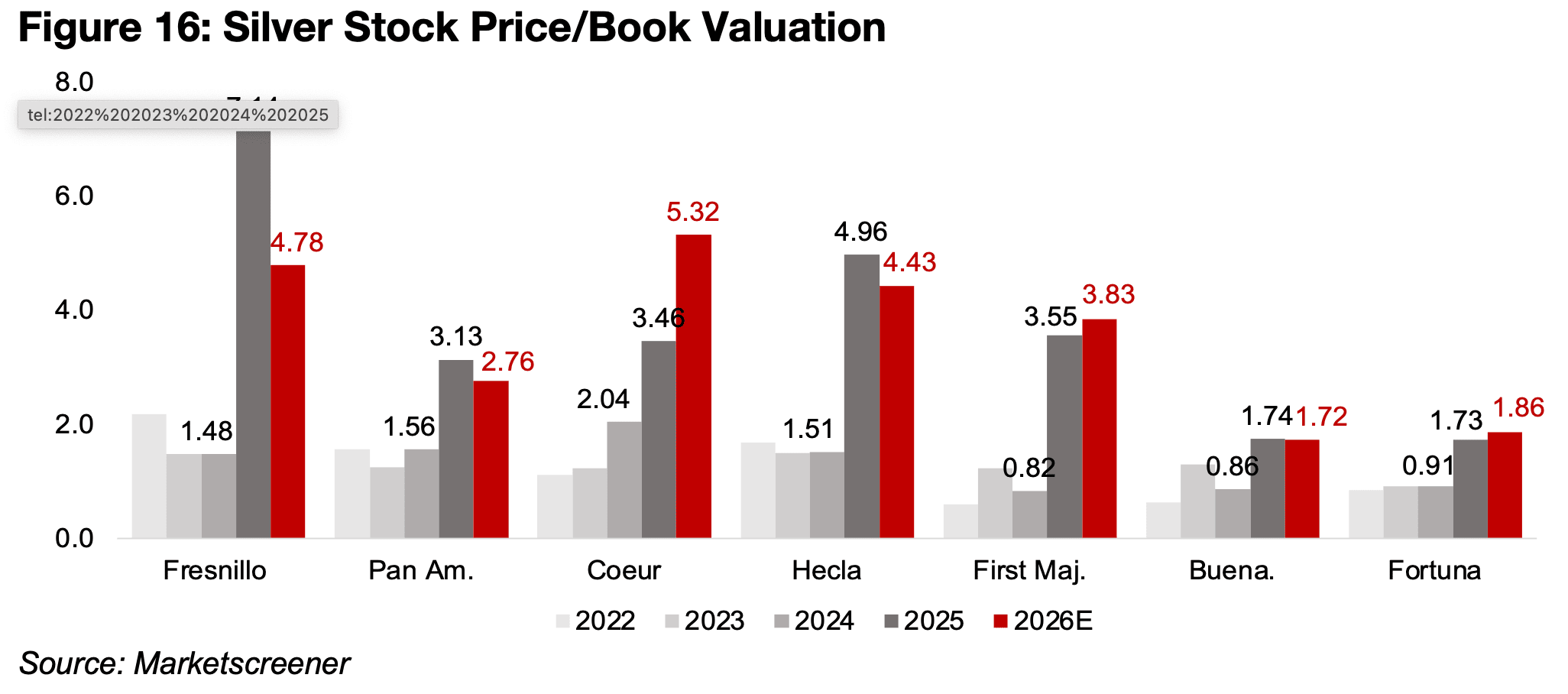
The valuations of the silver companies have remained quite elevated even given the
drop in the metal, even though most have seen a decline from the highs in 2025.
Fresnillo, Hecla, First Majestic and Coeur, with the latter at its highs of recent years,
and not having pulled back this year, are all trading on a price to book between 3.8x
to 5.3x, with levels below 3.0x generally considered moderate, and above this,
starting to become somewhat high (Figure 16). Pan American trades at a more
moderate 2.8x, and Buenaventura and Fortuna’s are relatively low at 1.7x and 1.9x.
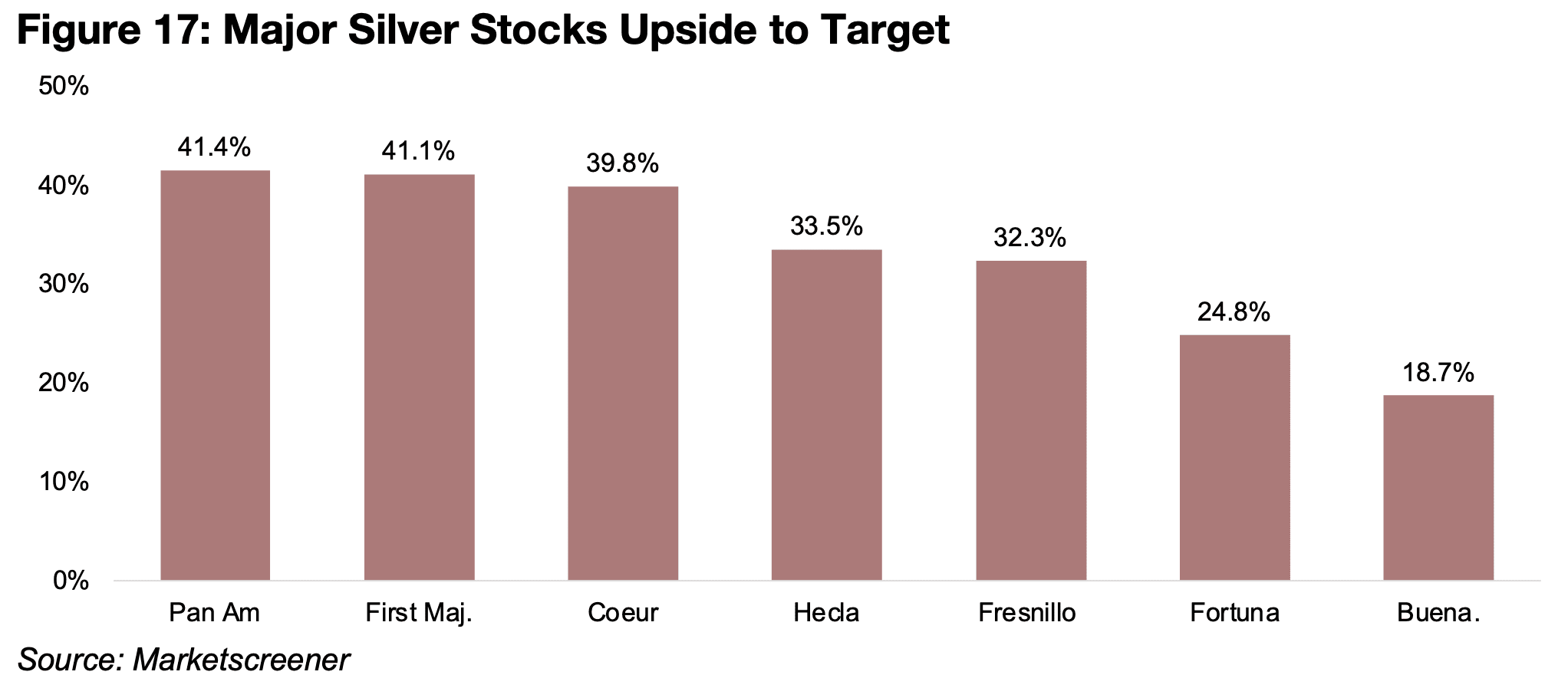
The companies all also have substantial upside to their target prices, ranging from 18.7% to 41.4% (Figure 17). This combination of high multiples and upside to targets suggests that the market may be pricing in strong silver prices in the medium to longterm, which drives up the overall value of the firm, but only moderate assumptions for the metal in 2026E. This could lead to relatively low book value assumptions for this year, but a high long-term price, and high price to book valuations, which could come down if silver prices surprise to the upside. We believe that both gold and silver prices likely have room to rebound given their relatively weak performance this year, and the potential for an economic slowdown to see the Fed and global central banks ease off on rate hikes.
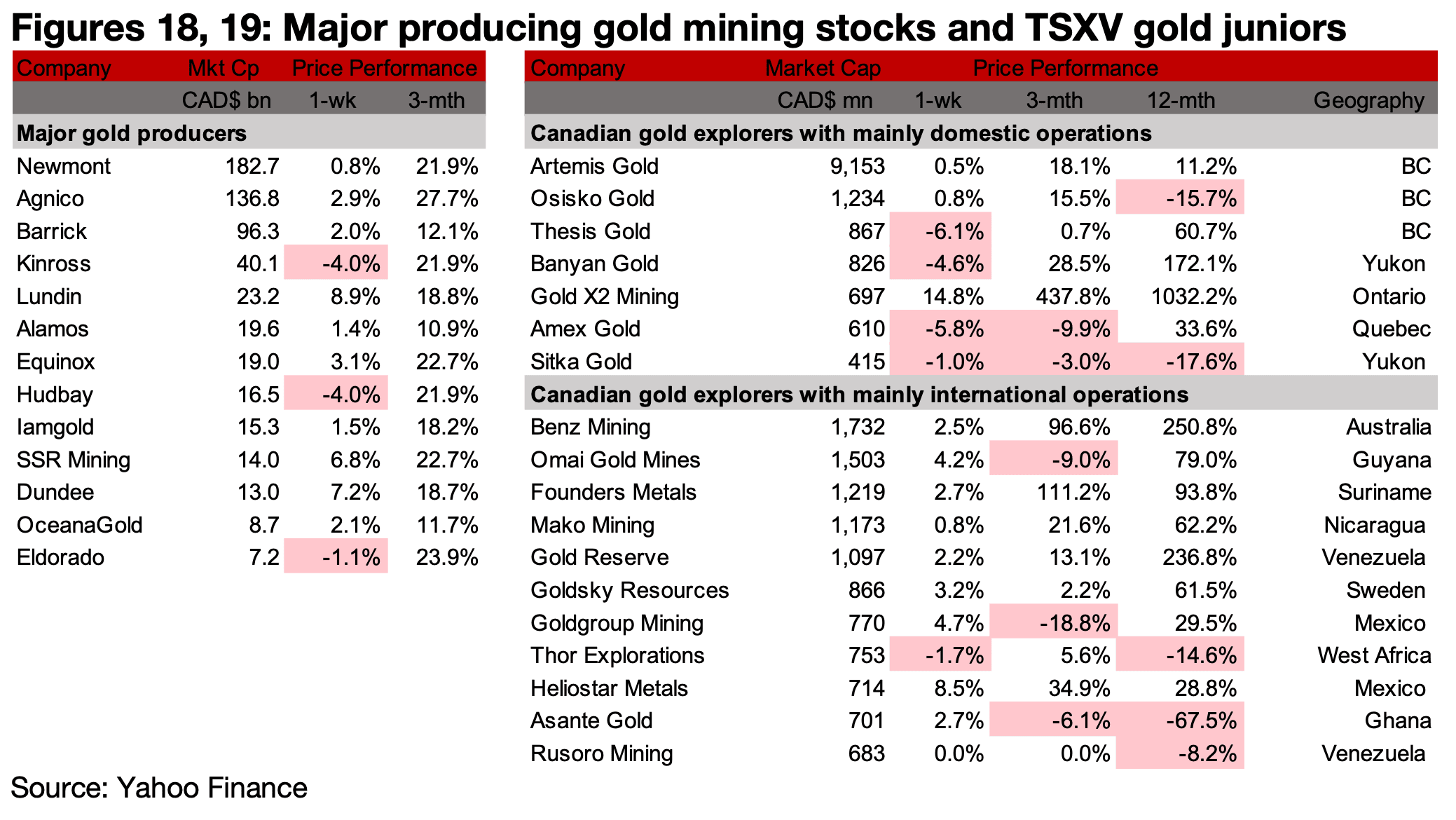
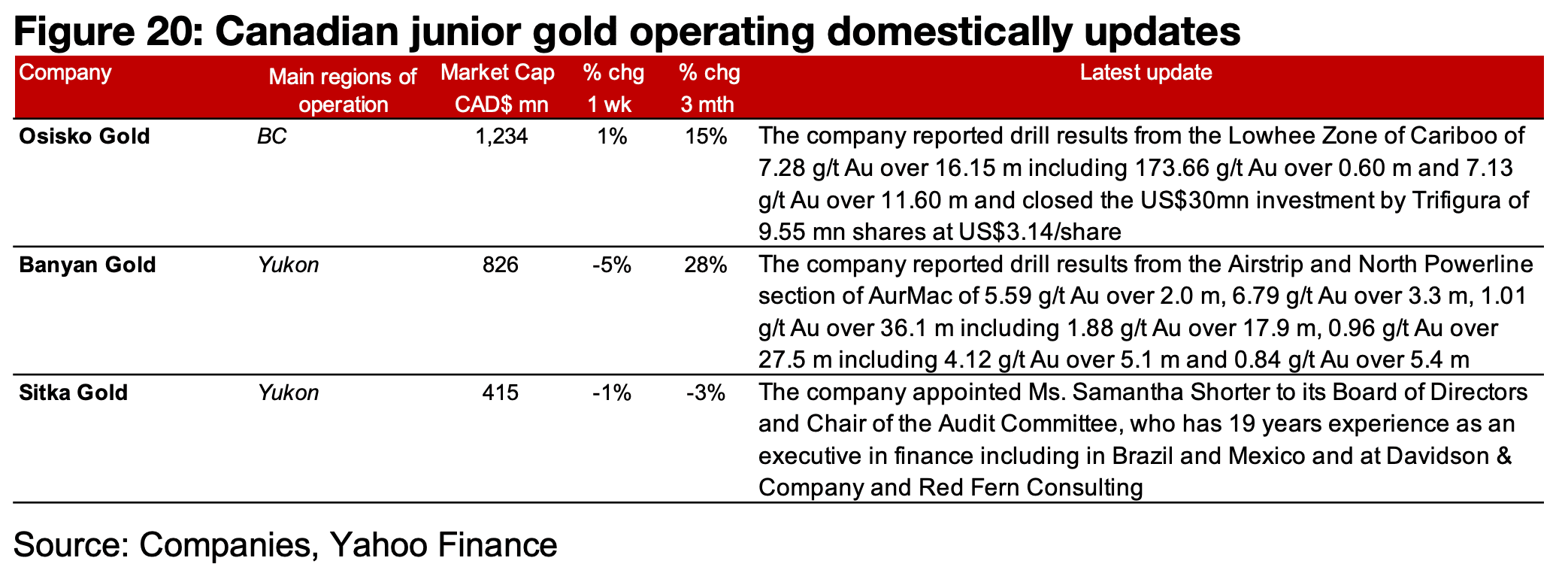
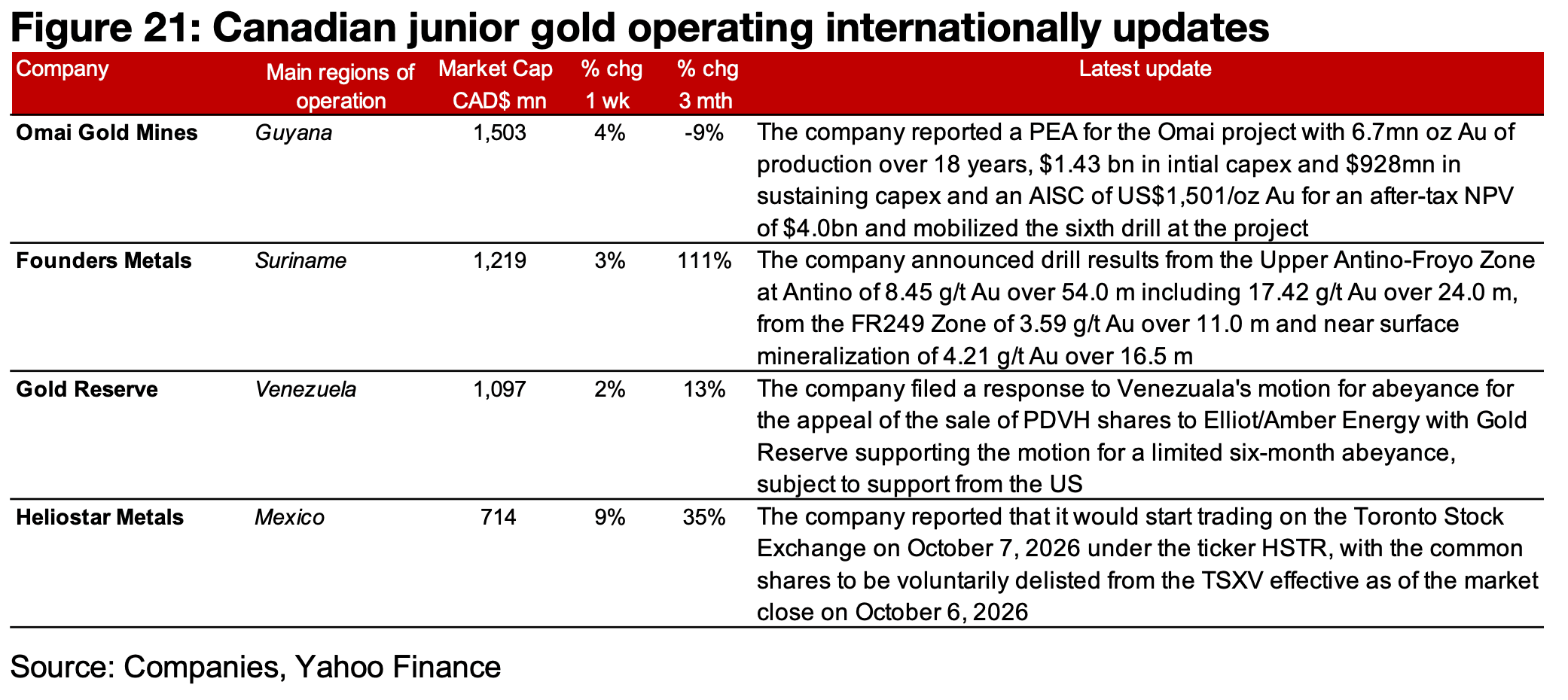
The major producers and TSXV gold mostly rose on the rebound in the metal (Figures 18, 19). For the TSXV gold companies operating mainly domestically, Osisko Gold reported drill results from the Lowhee Zone of Cariboo and closed the US$30mn investment from Trifigura, Banyan announced drill results from the Airstrip and North Powerline section of AurMac and Sitka appointed Ms. Samantha Shorter to its board (Figure 20). For the companies operating mainly internationally, Omai announced a PEA for the Omai project and mobilized a sixth drill, Founders reported drill results from the Upper Antino-Froyo zone of Antino, Gold Reserve responded to a motion from Venezuela for abeyance on the sale of PDVH shares and Heliostar started trading on the TSX (Figure 21).
Disclaimer: This report is for informational use only and should not be used an alternative to the financial and legal advice of a qualified professional in business planning and investment. We do not represent that forecasts in this report will lead to a specific outcome or result, and are not liable in the event of any business action taken in whole or in part as a result of the contents of this report.
Author
Ben McGregor authors the Weekly Roundup at CanadianMiningReport.com, providing sharp analysis of the metals and mining sector. With a talent for spotting trends, Ben distills complex market shifts into clear, engaging insights on TSXV junior miners. His weekly updates cover gold, copper, uranium, and more, blending data-driven perspectives with a knack for identifying opportunities. A vital resource for investors, Ben’s work navigates the dynamic junior mining landscape with precision.