November 09, 2026
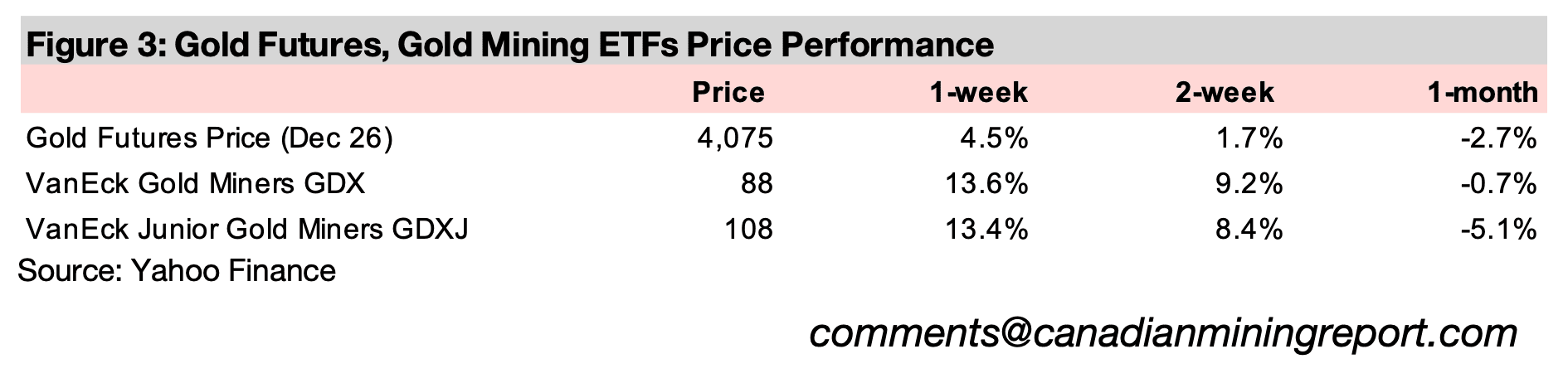
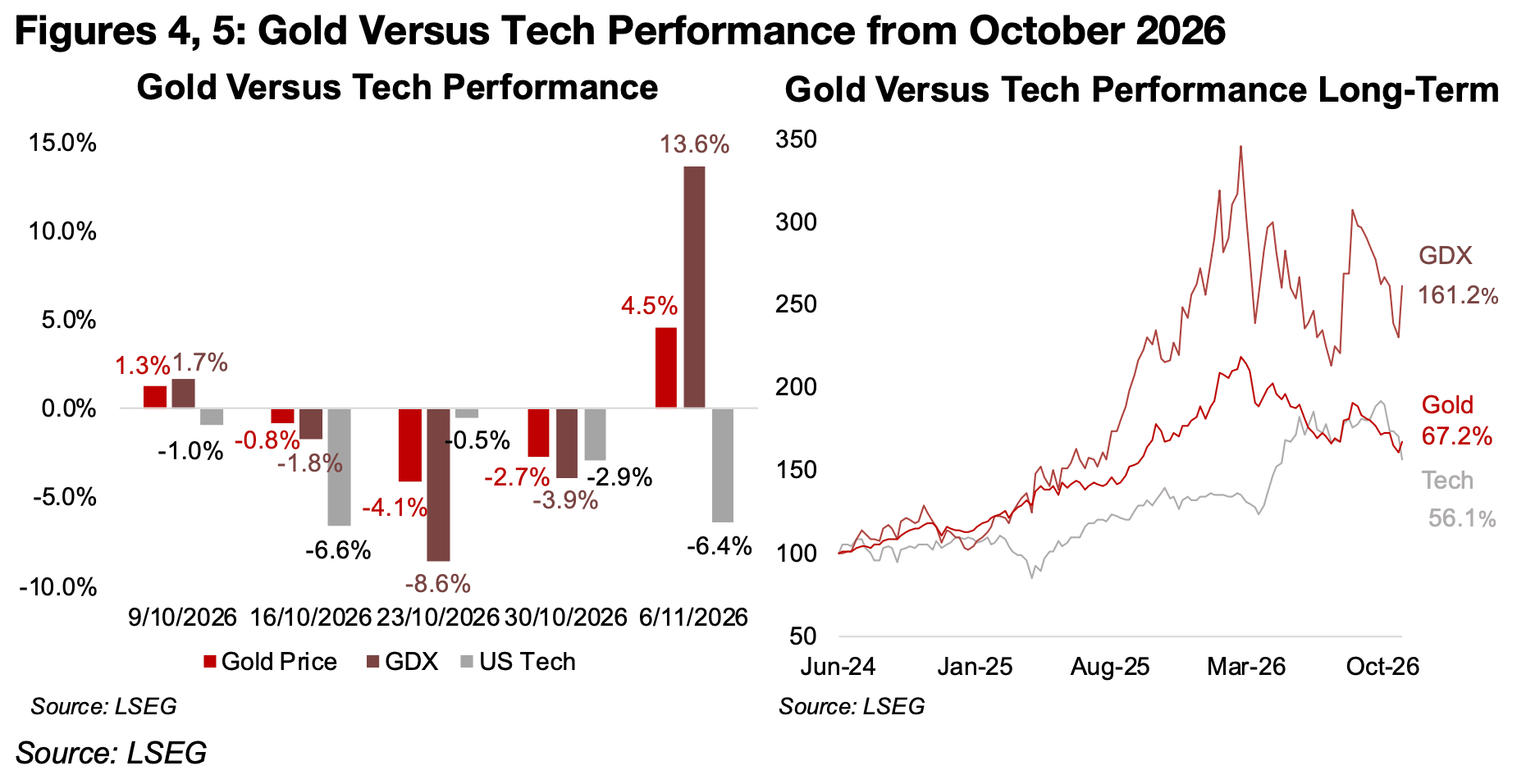
The gold price rose 4.5% to US$4,075/oz as a combination of lower yields and surging geopolitical and economic risk from the tech crash and US elections offset rate hike concerns from strong US jobs and broader margin-call driven pressure.
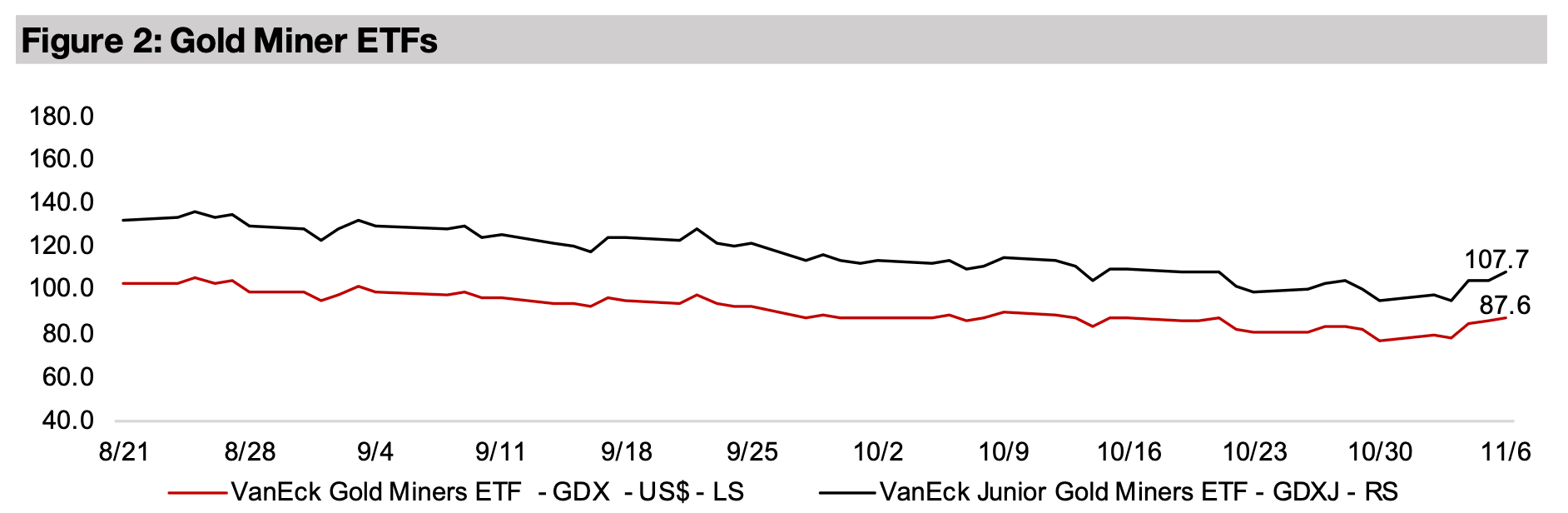
The gold stocks jumped with the GDX up 13.6% and the GDXJ gaining 13.4% on the rise in the metal and a continued move to defensives, as the -4.0% collapse in the Nasdaq dragged down the S&P 500 -3.1% and the Russell 2000 dropped -2.7%.


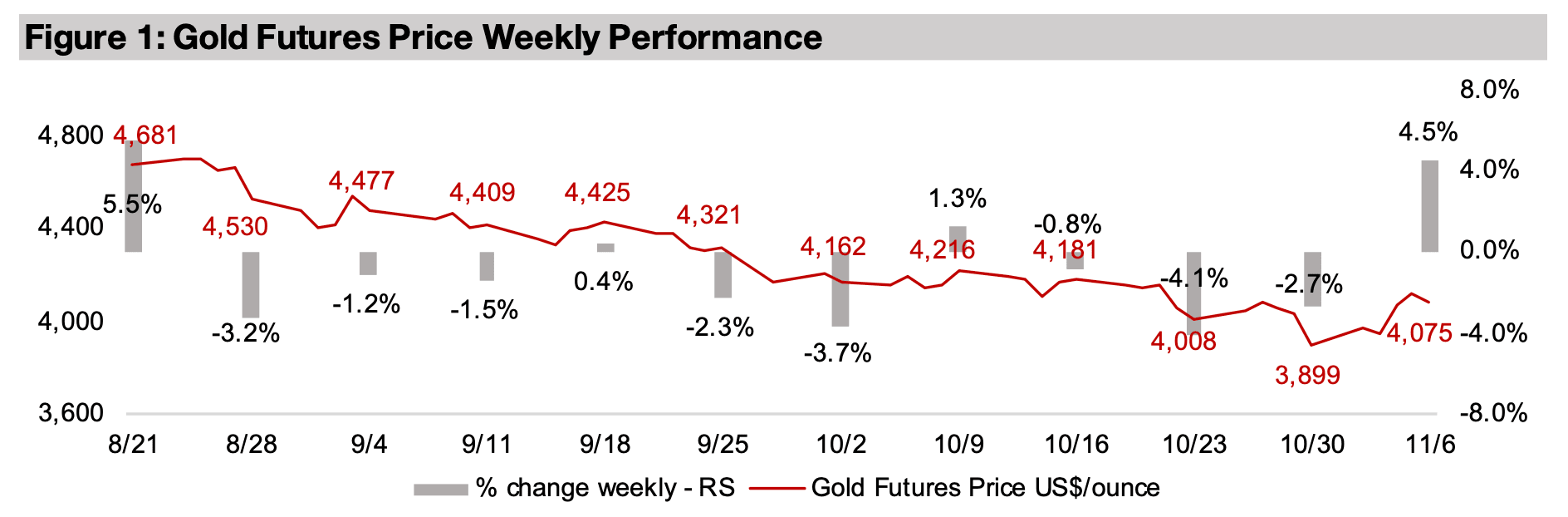
The gold price rebounded 4.5% to US$4,075/oz, finally getting its safe haven bid,
after declining through October 2026 even as several fundamental drivers seemed to
be supportive of the metal price. The drop last month appeared to have partly been
from forced liquidations of profitable assets by markets looking to cover major losses
from the ongoing tech crash. However, this week an explosion in risk from the US
election results, which indicated a likely surge in domestic and global political and
economic tension, and a worsening tech slump, seems to have far offset this trend.
The global tech sector plunged an additional -6.4%, after declining -2.9% and -6.6%
in the previous two weeks, while the rise in the metal price saw gold stocks surge,
with the GDX ETF of major producers up 13.6% (Figure 4). While the gains in the GDX
and the gold price since June 2024 of 161.2% and 67.2%, respectively, had likely
made them strong targets for profit taking last month, uncertainty rose so much this
week that moving heavily back into positions in the sector was suddenly viewed as
prudent by markets (Figure 5).
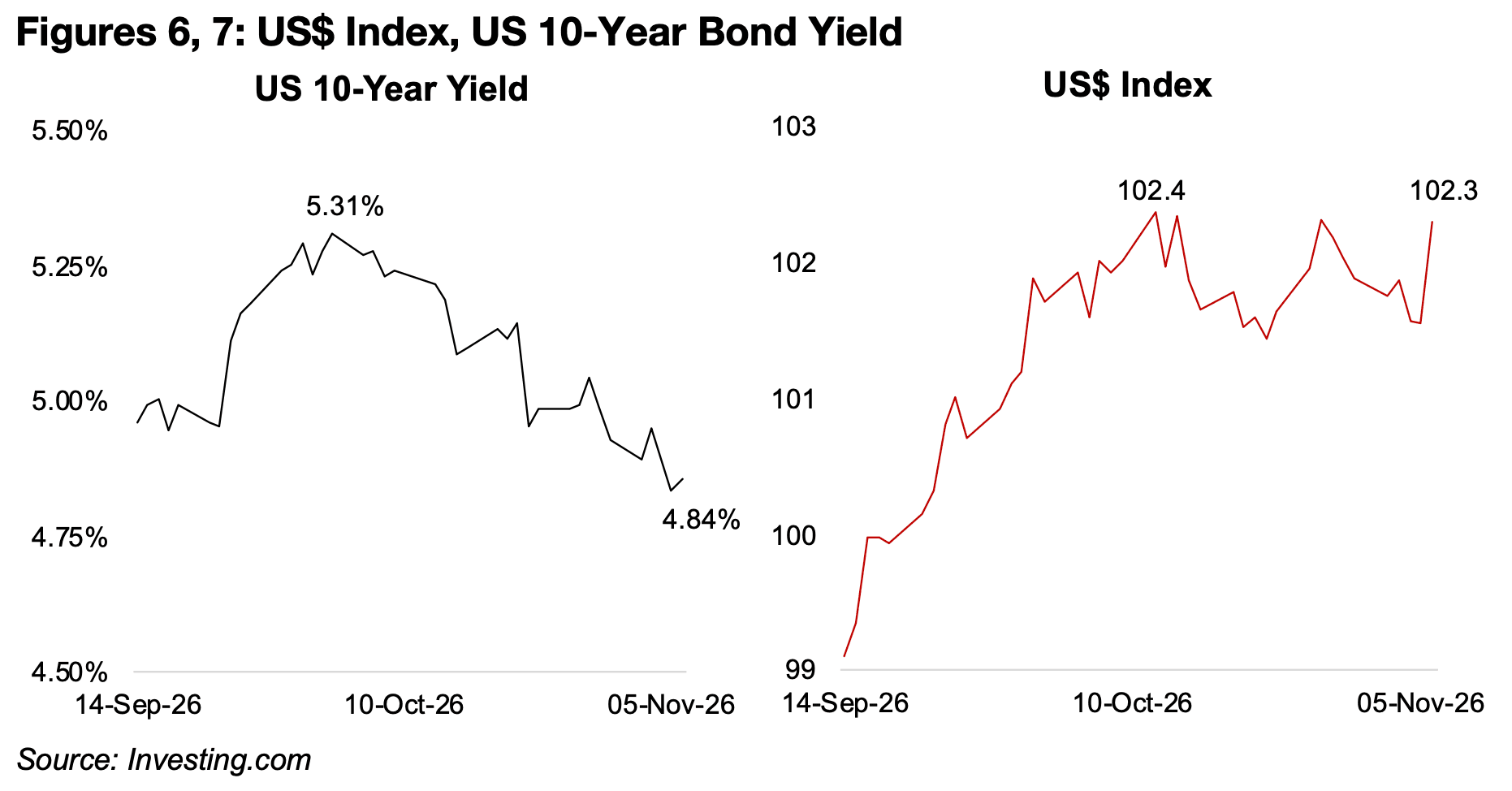
The US 10-year bond yield continued to decline, to 4.84%, although there was a
slight uptick towards the end of the week from strong employment data (Figure 6).
The US$ Index initially declined after the mid-term election results, with expectations
that it could be more difficult for the current administration to implement some of their
economic growth policies with the shift in power towards the opposition (Figure 7).
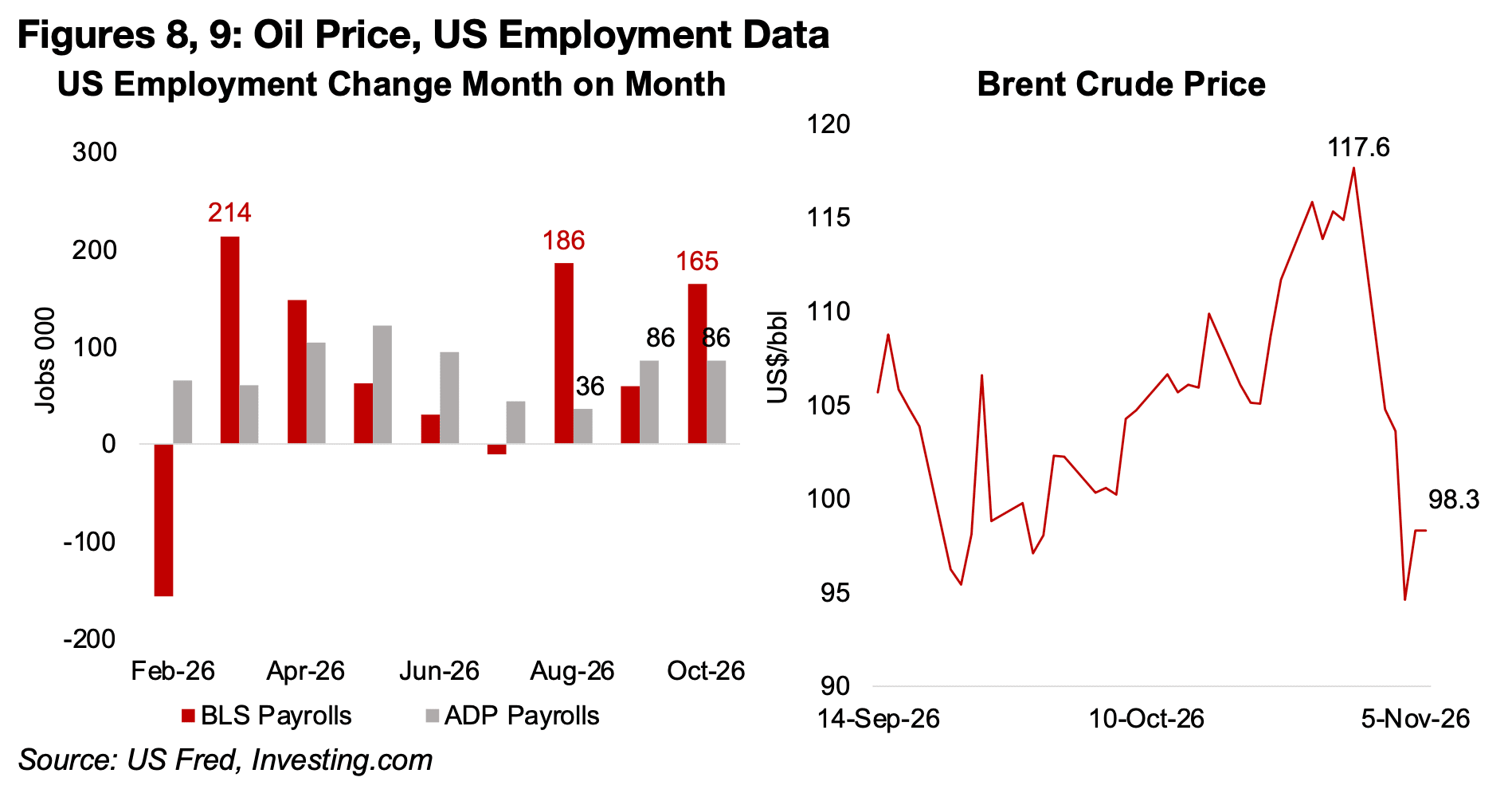
However, it rebounded significantly after the US jobs data, with the October 2026
BLS payrolls jumping mom from a muted gain in September 2026, and a rise in ADP
payrolls at a similar level to the relatively strong prior month (Figure 8).
While the gain in the US$ on the strong employment data implied increased market
expectations that the Fed could hike rates at its December 2026 meeting, the muted
gain in yields contradicted this to some degree. Another factor less supportive of a
rate hike is the extreme collapse in the oil price, with brent crude down to
US$98.3/bbl from its recent peak of US$117.6/bbl on October 30, 2026, implying a
considerable decline in inflationary pressure (Figure 9). There has also been a
significant decline in asset price inflation from the stock market decline, and with tech
valuations still elevated, there is room for further downside driven by this sector if we
assume these multiples eventually converge towards the rest of the market.
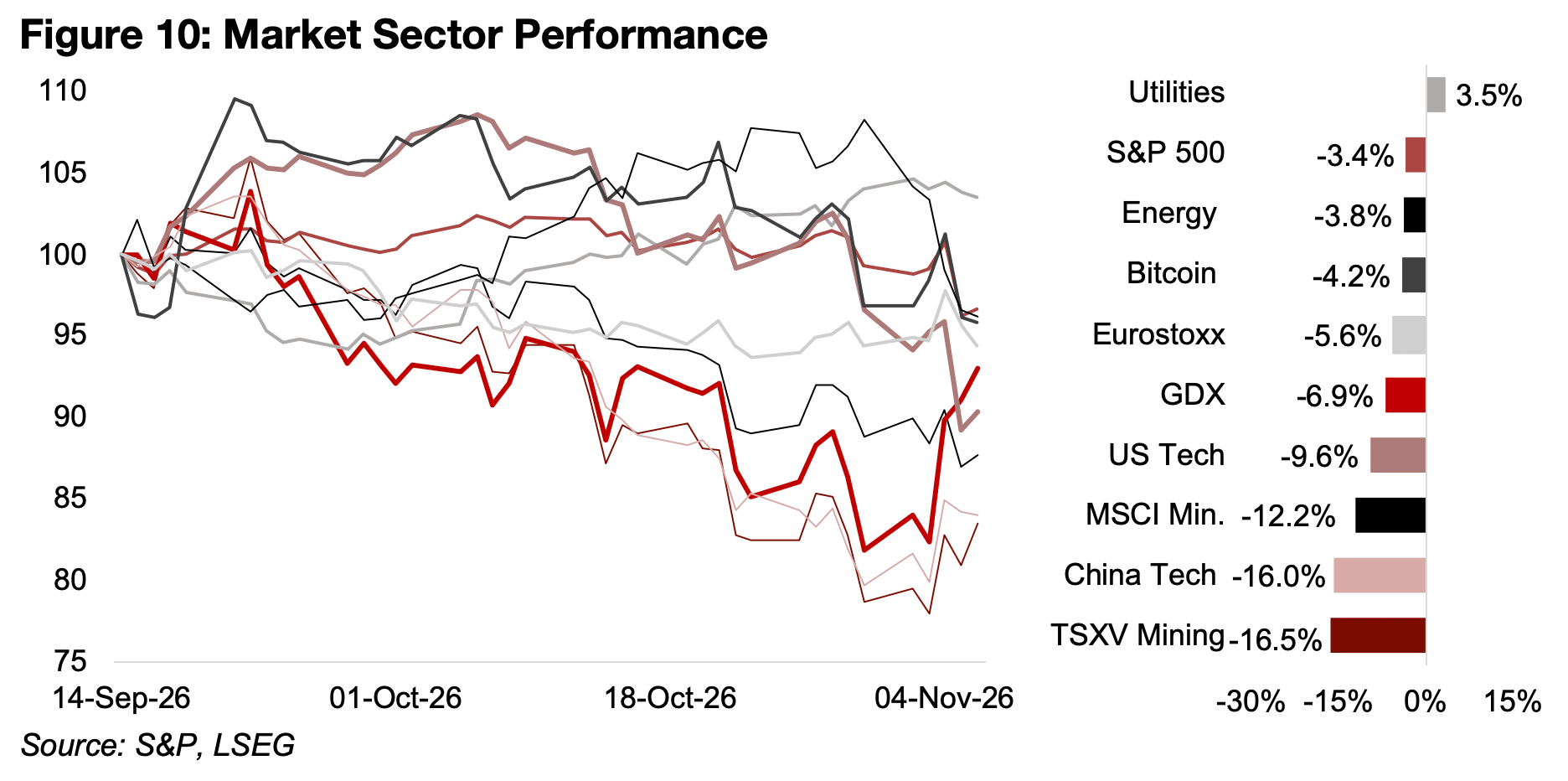
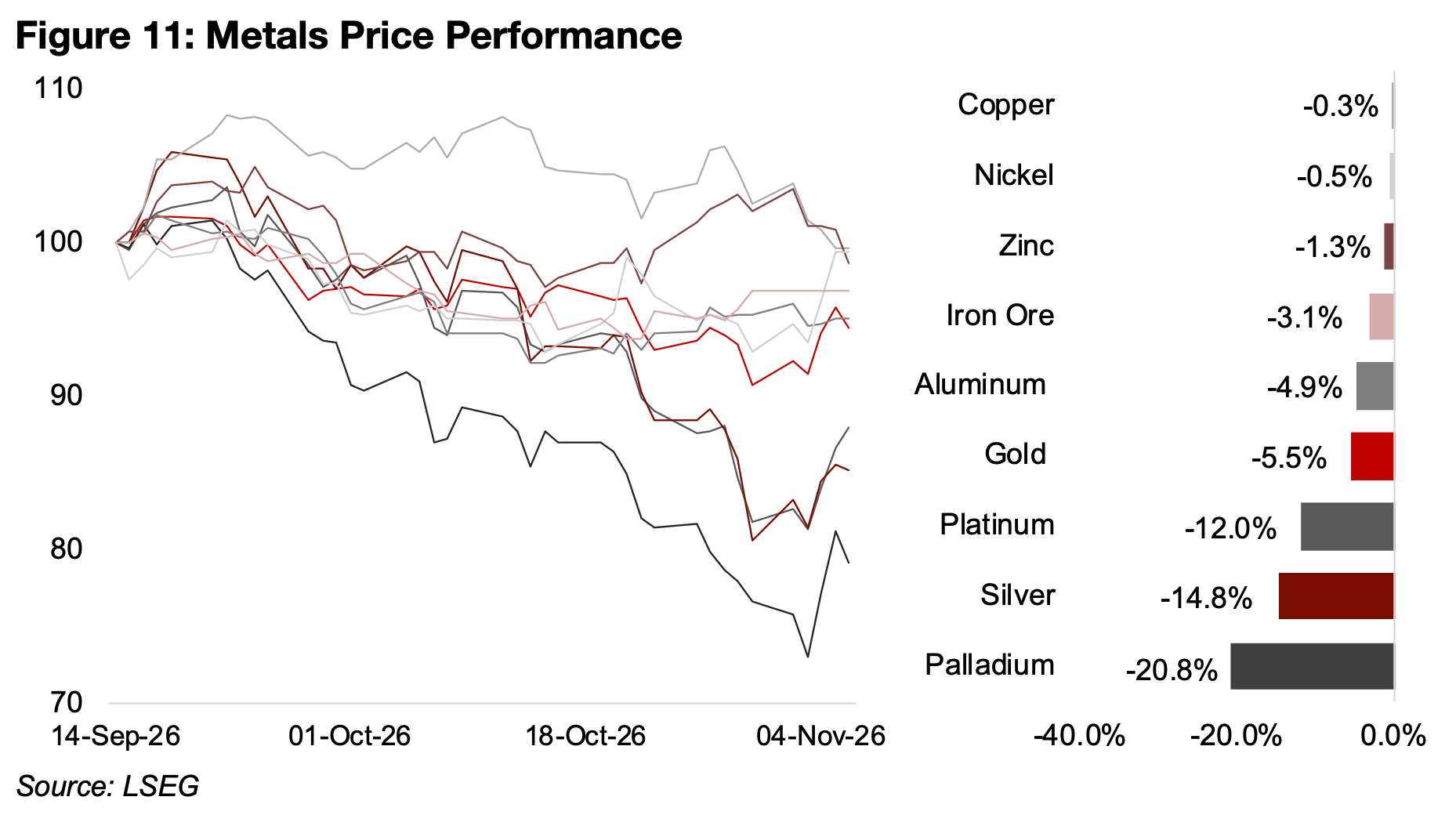
The crash has dragged down most global markets, with the S&P 500 declining -3.4% and Eurostoxx losing -5.6% since the middle of September 2026 (Figure 10). While the GDX ETF of gold stocks is down -6.9%, this has outperformed -9.6% and -16.5% drops in US and China tech. It is also ahead of the -12.2% drop in the copper and iron ore-driven MSCI Mining ETF and -16.5% decline in the TSXV mining index which has a high exposure to gold and is also comprised mainly of riskier microcaps. Gold’s performance, down -5.5%, is near the middle of the metals, ahead of the other precious metals, but underperforming the base metals, with nickel and copper the strongest of the sector, although still only near flat (Figure 11).
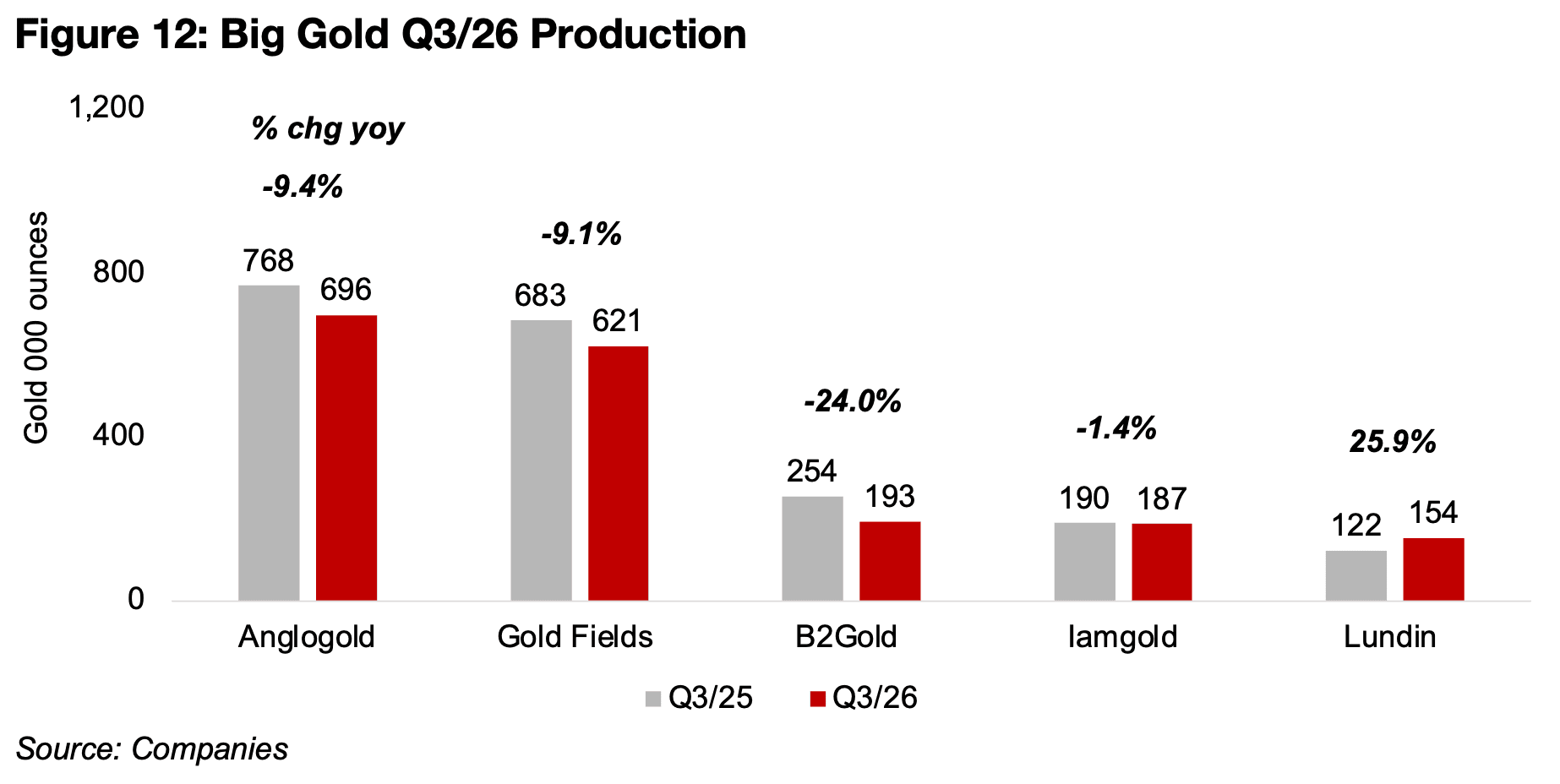
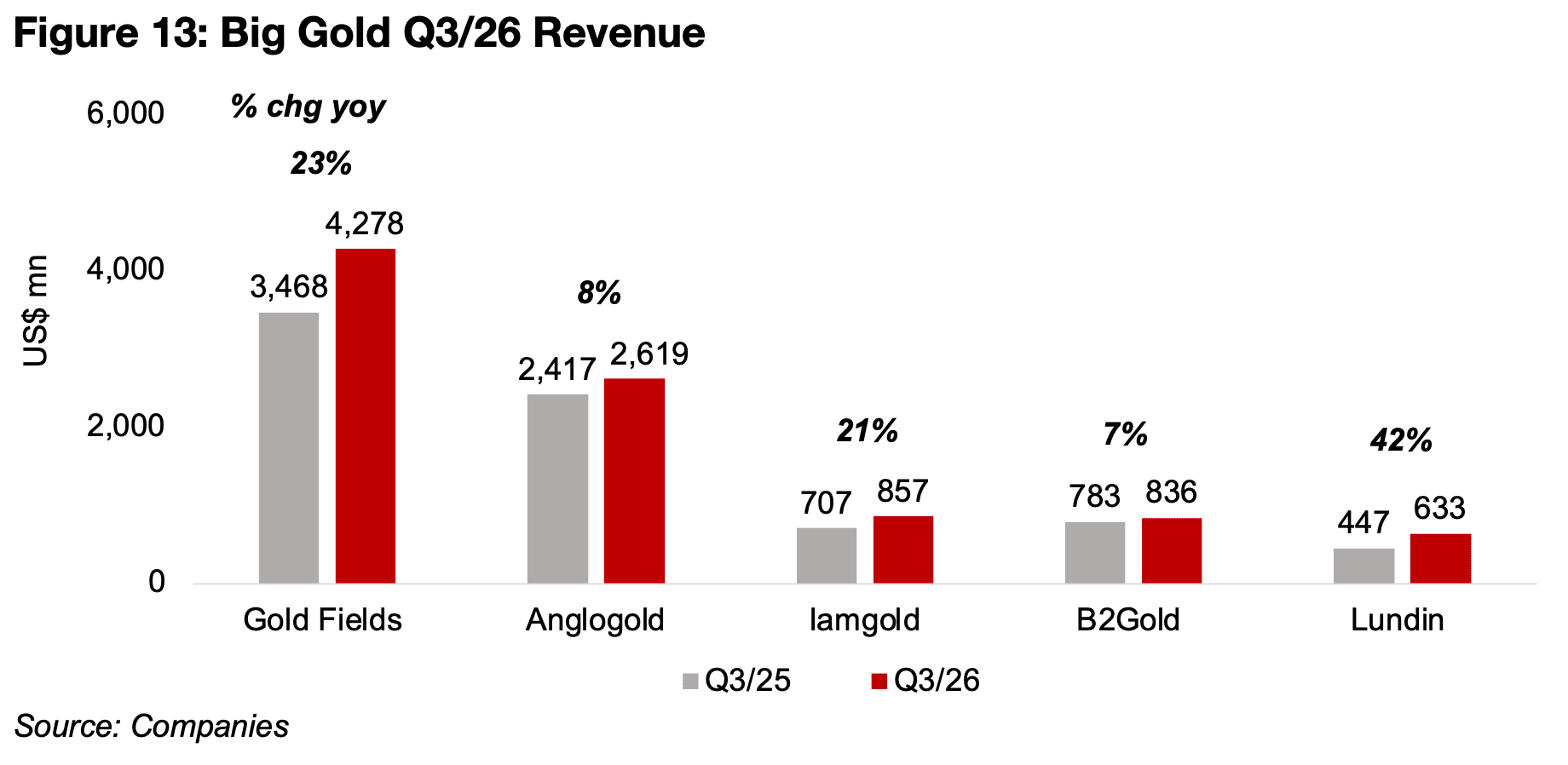
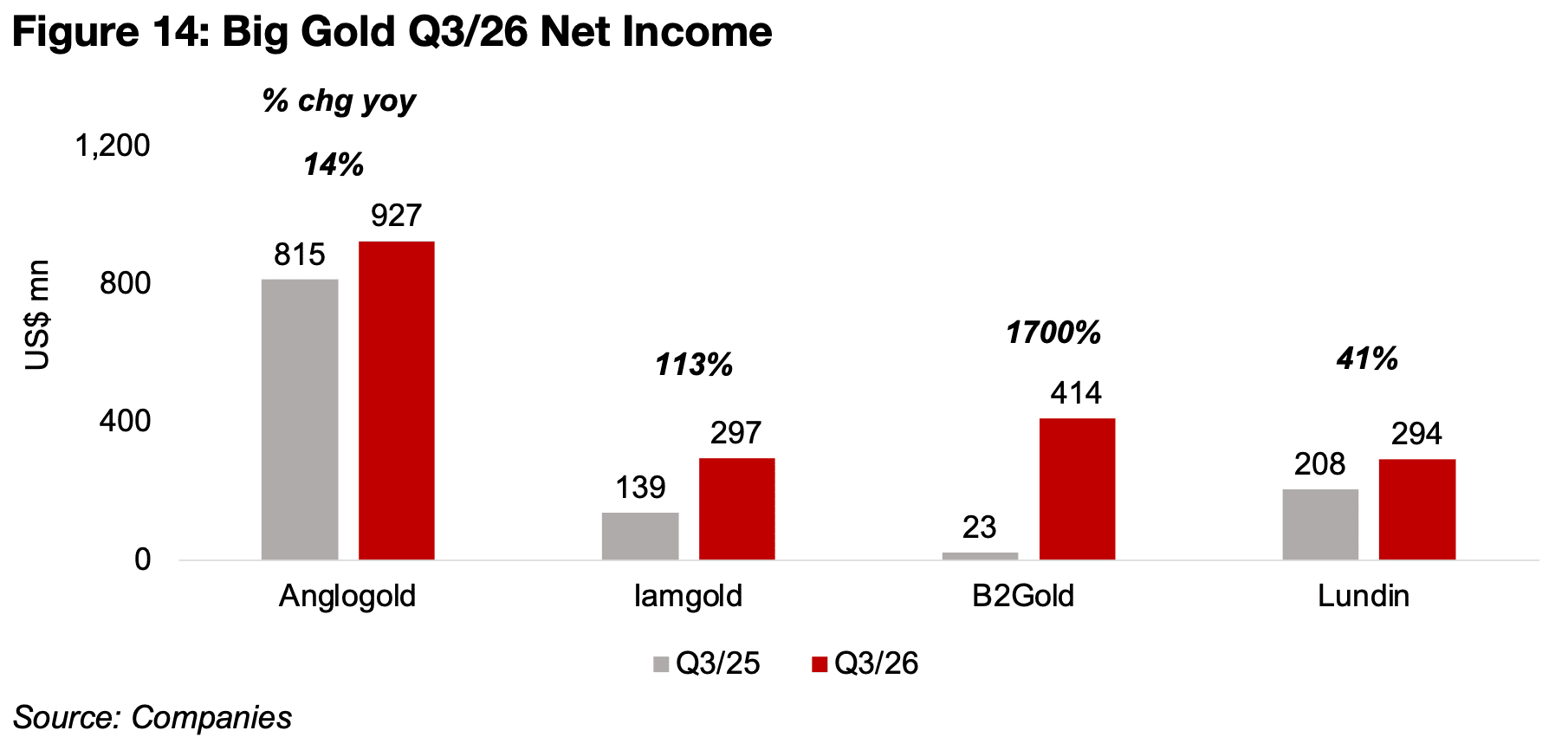
The results season for Big Gold remained strong, with Anglogold, Gold Fields, B2Gold, Iamgold and Lundin all reporting Q3/26, and only Barrick and B2Gold still left for this week. The group overall faced the issue of falling production common to most of the majors, with Lundin the main exception, with strong growth of 25.9% yoy, and Iamgold was relatively flat with only a -1.4% drop (Figure 12). However, revenue growth still rose for these majors yoy, ranging from 7% to 42%, as this was offset by the rise in the metal price (Figure 13). While these majors saw considerable increases net income, the extreme figure for B2Gold was mainly because of extraordinary items to the downside in Q3/25 and upside in Q3/26 and Gold Fields only reports its full results on the half, and only some operational data quarterly.
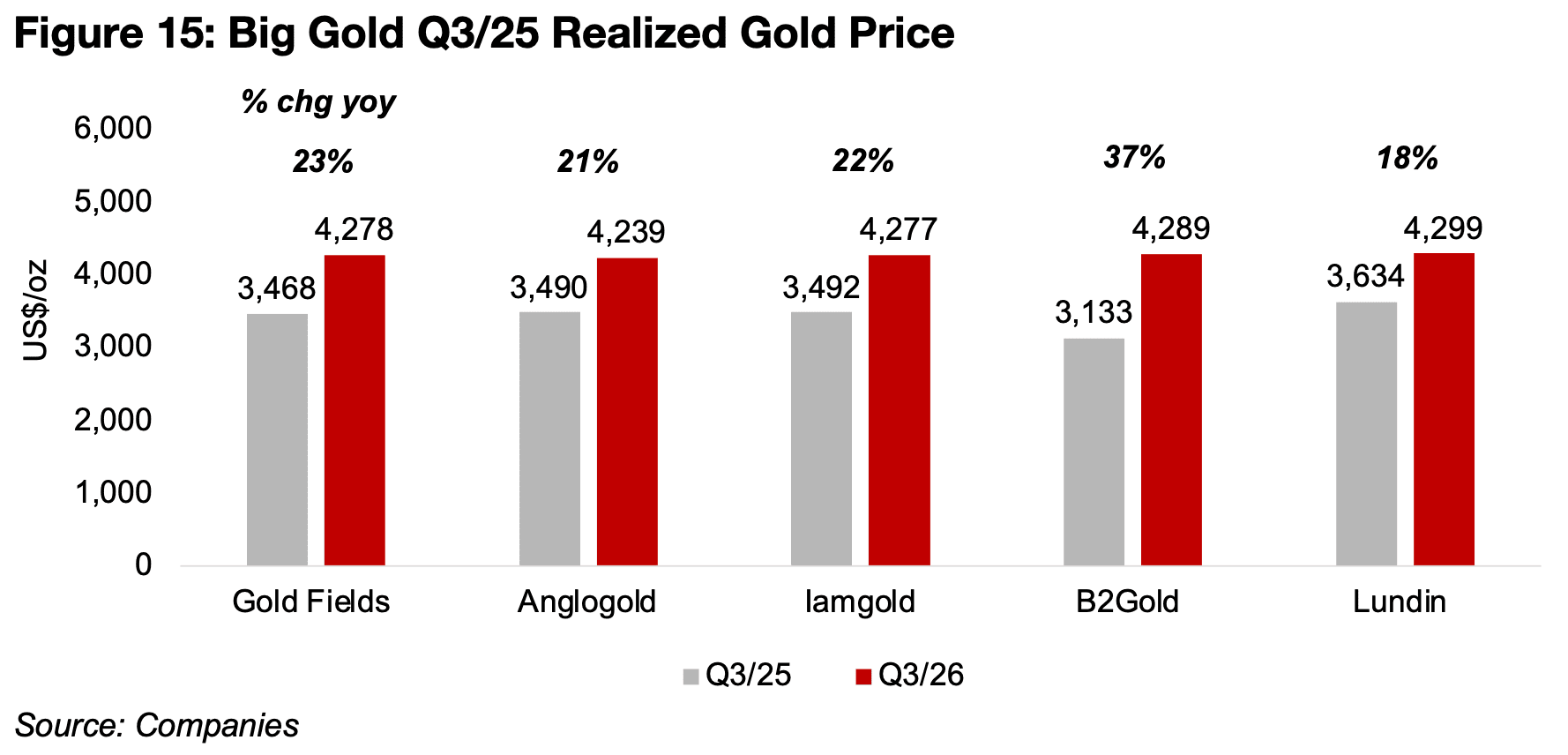
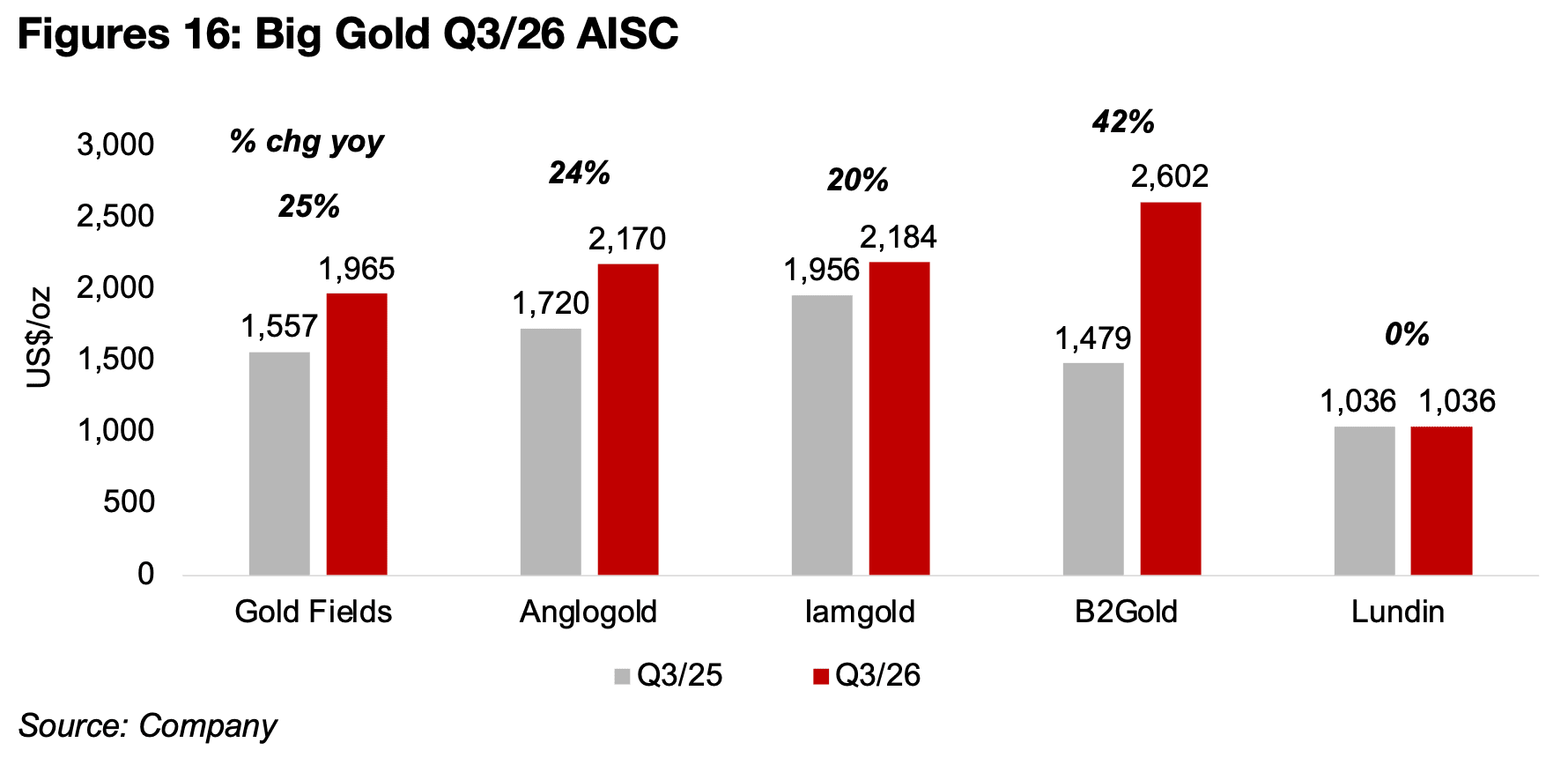
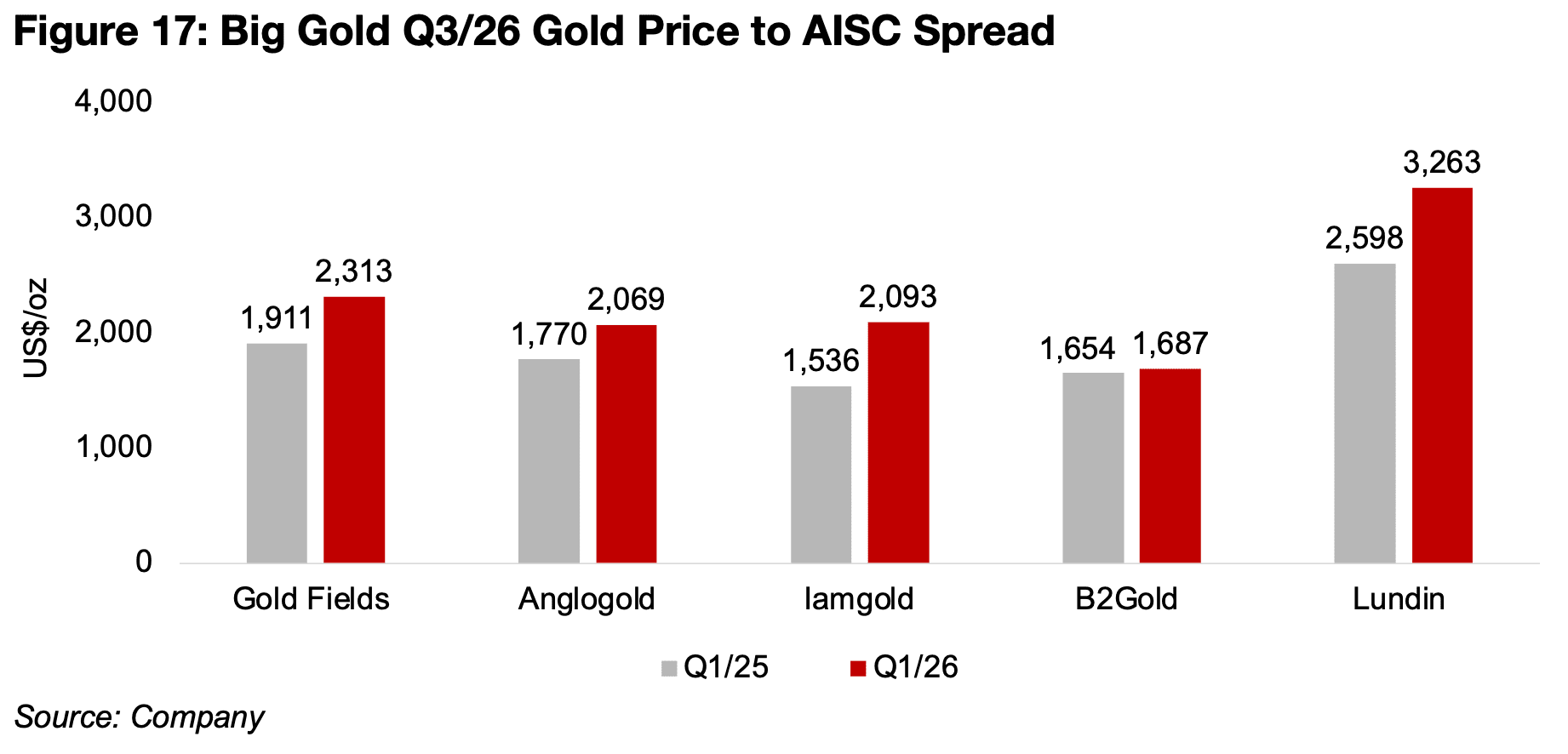
The realized gold prices for Anglogold, Gold Fields and Iamgold rose between 18% and 22% yoy, inline with what would be expected from the rise the metal’s market price. B2Gold saw a much larger 37% rise, as its realized gold price in Q3/25 was subdued because of hedging which ended at the start of this year (Figure 15). The all-in-sustaining cost jumped considerably for all the companies especially on rising energy costs except for Lundin, which stands out for an extremely low AISC at around just half the industry average (Figure 16). This gives it a much higher realized gold price to AISC spread than the group, which saw significant gains yoy, although all the other companies except B2Gold also saw a major rise (Figure 17).
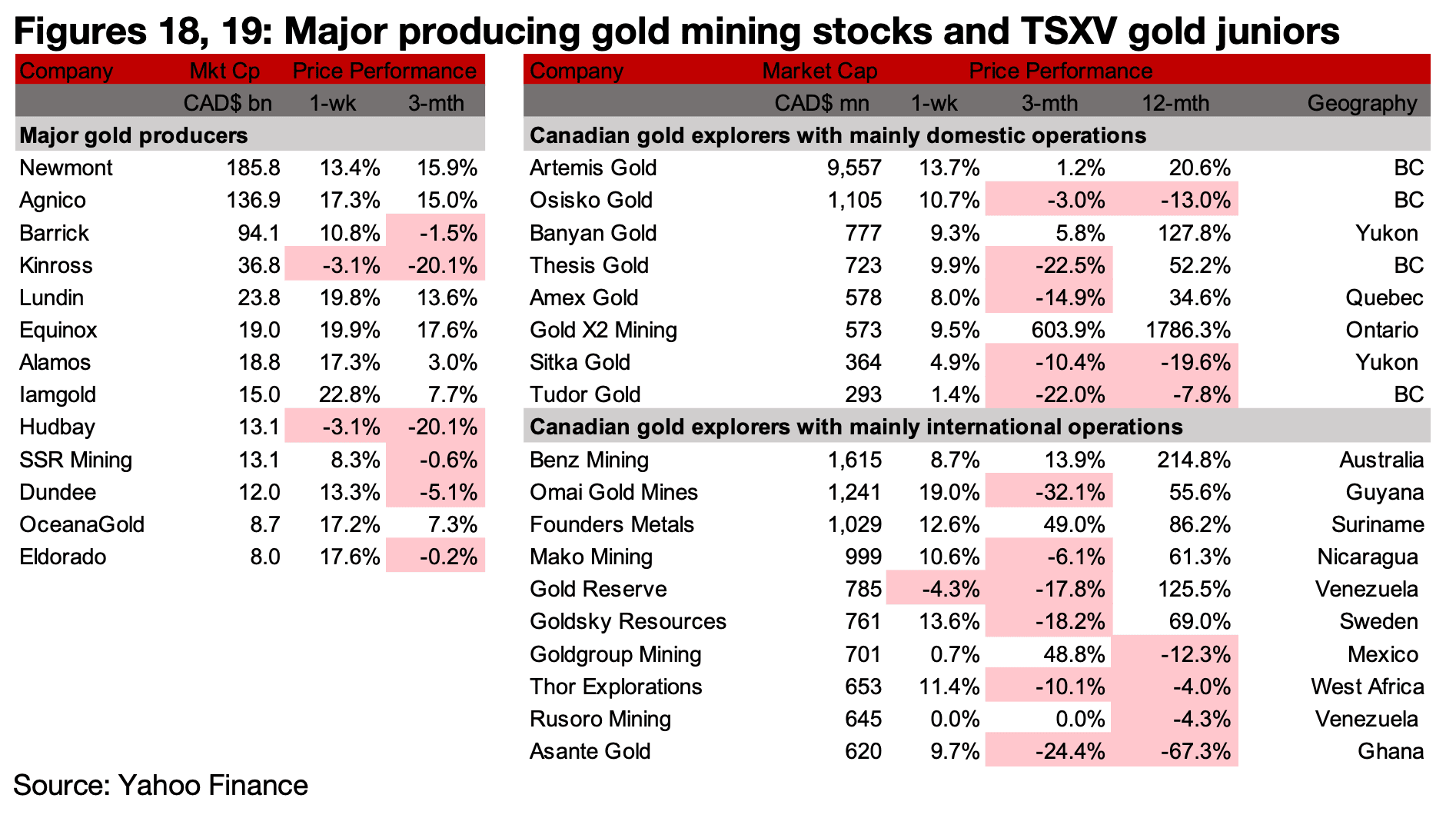
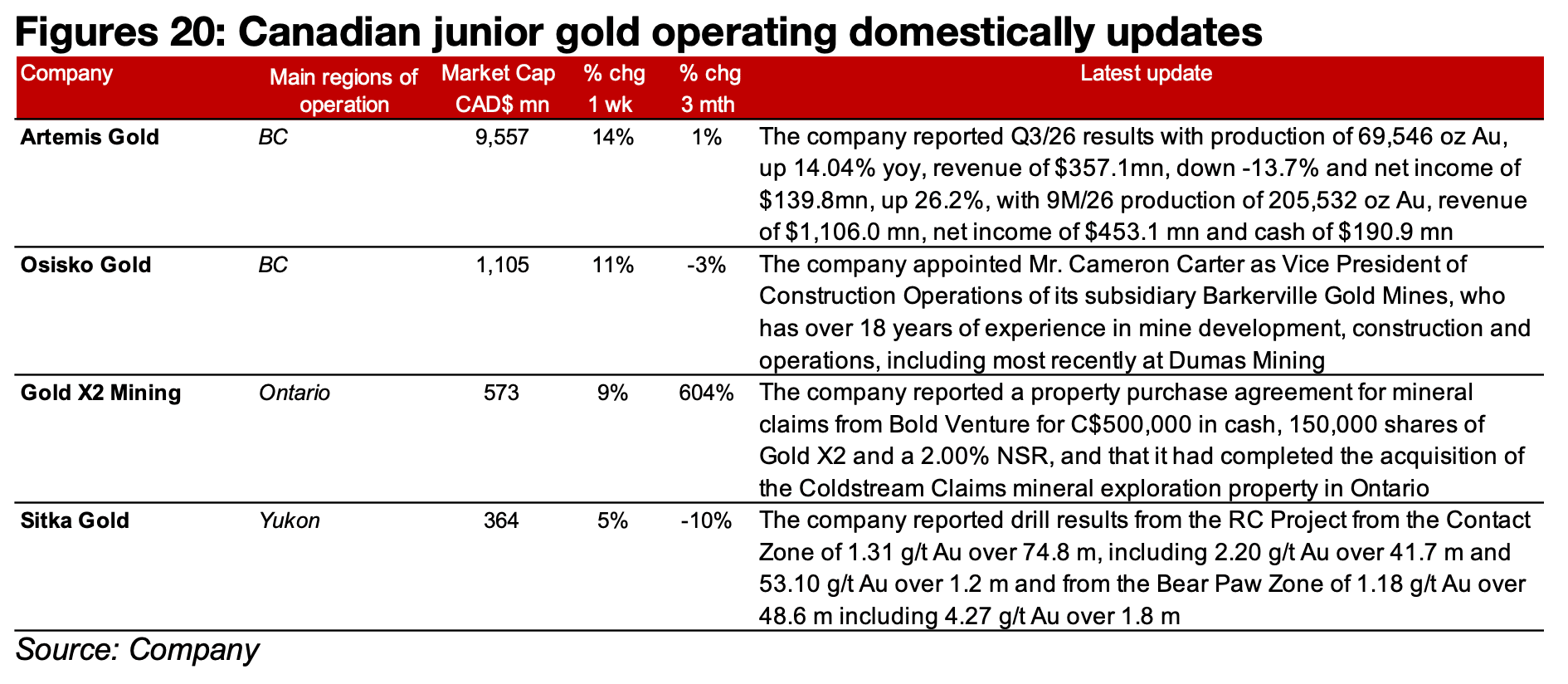
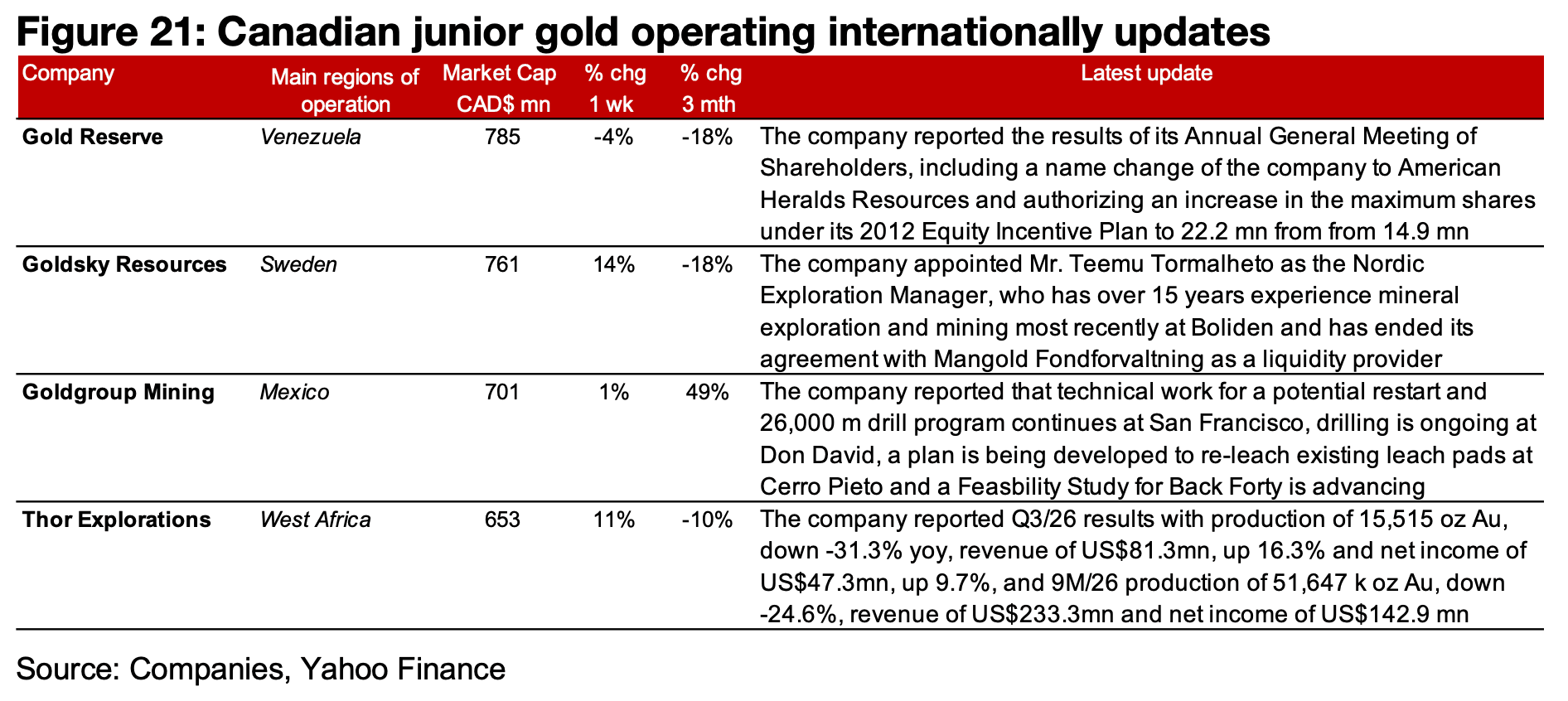
Most of the major producers and large TSXV gold saw substantial gains on the rise in the metal price (Figures 18, 19). For the TSXV gold companies operating mainly domestically, Artemis reported Q3/26 results, Osisko Gold appointed a VP of Construction for its Barkerville subsidiary, Gold X2 agreed to acquire properties from Bold Venture and completed the purchase of Coldstream Claims and Sitka reported drill results from RC Project (Figure 20). For the companies operating mainly internationally, Gold Reserve reported its AGM results, Goldsky appointed a Nordic Exploration Manager and ended an agreement with a liquidity provider, Goldgroup provided an update on four projects and Thor reported Q3/26 results (Figure 21).
Disclaimer: This report is for informational use only and should not be used an alternative to the financial and legal advice of a qualified professional in business planning and investment. We do not represent that forecasts in this report will lead to a specific outcome or result, and are not liable in the event of any business action taken in whole or in part as a result of the contents of this report.
Author
Ben McGregor authors the Weekly Roundup at CanadianMiningReport.com, providing sharp analysis of the metals and mining sector. With a talent for spotting trends, Ben distills complex market shifts into clear, engaging insights on TSXV junior miners. His weekly updates cover gold, copper, uranium, and more, blending data-driven perspectives with a knack for identifying opportunities. A vital resource for investors, Ben’s work navigates the dynamic junior mining landscape with precision.