July 27, 2026
Newmont’s Q2/26 started the gold majors’ results season strong, while the market still expects strong revenue and net income growth for the sector this year, with the gold price still far above costs and expected to offset a decline production.
The gold stocks rebounded from the lows for the year reached last week, with the GDX up 5.5% and GDXJ rising 6.1%, outpacing the drop in equities with the S&P 500 down -1.0%, the Nasdaq declining -2.9%, and Russell 2000 losing -1.3%.


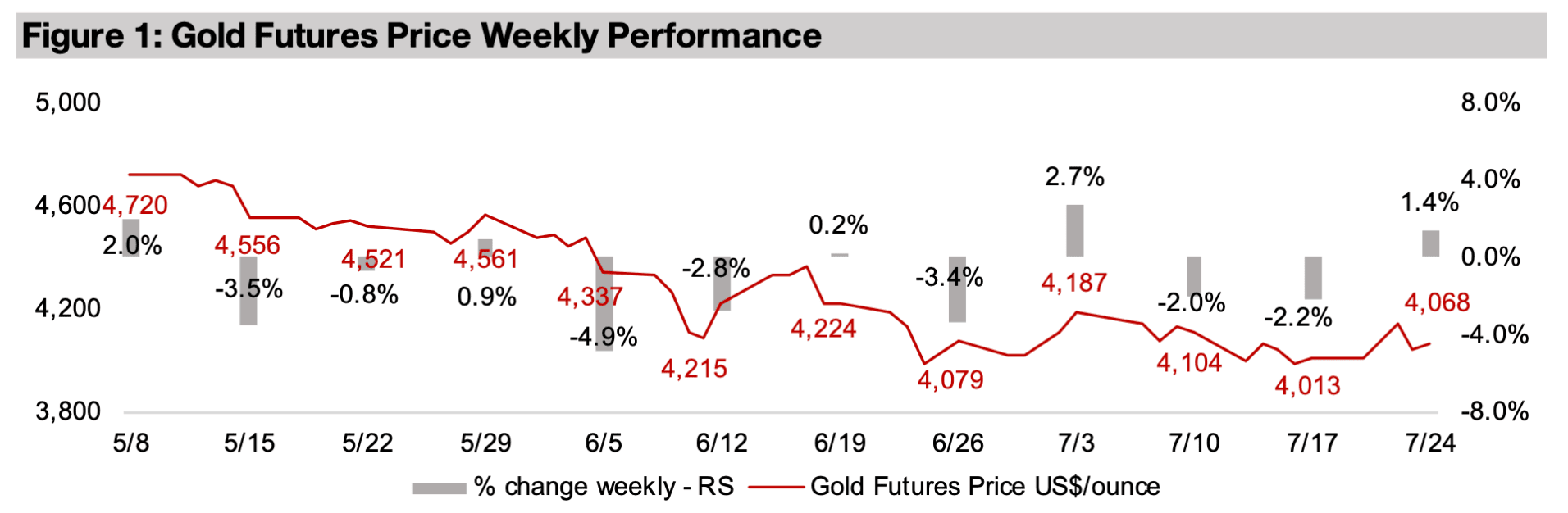
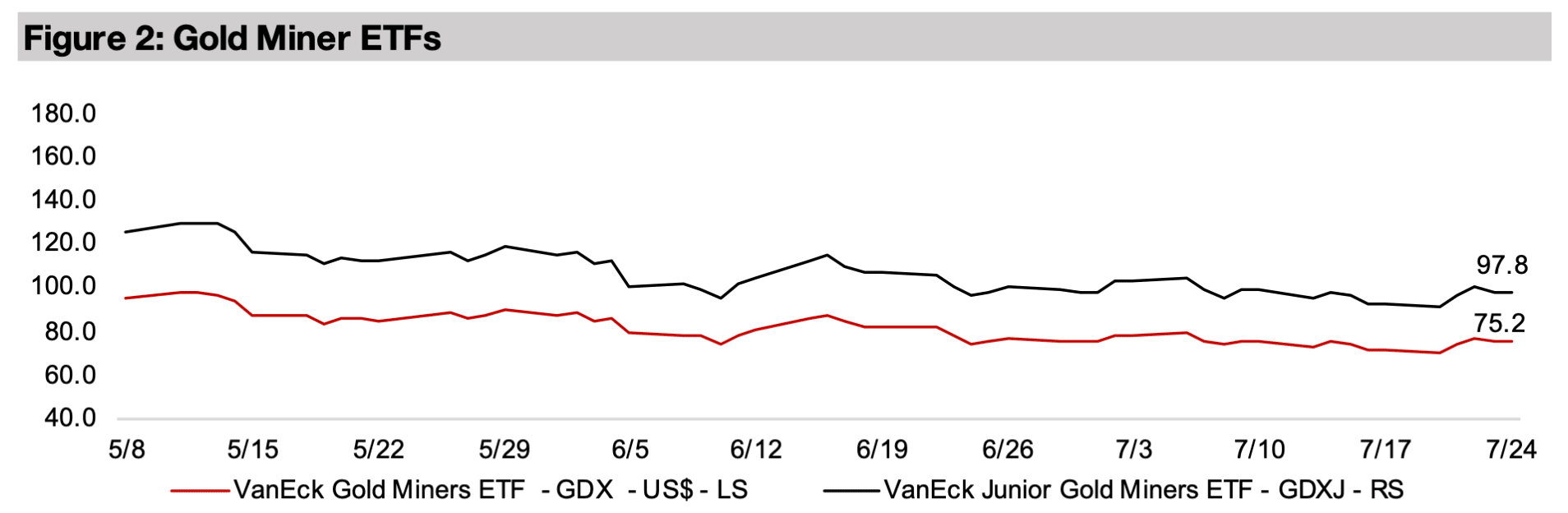
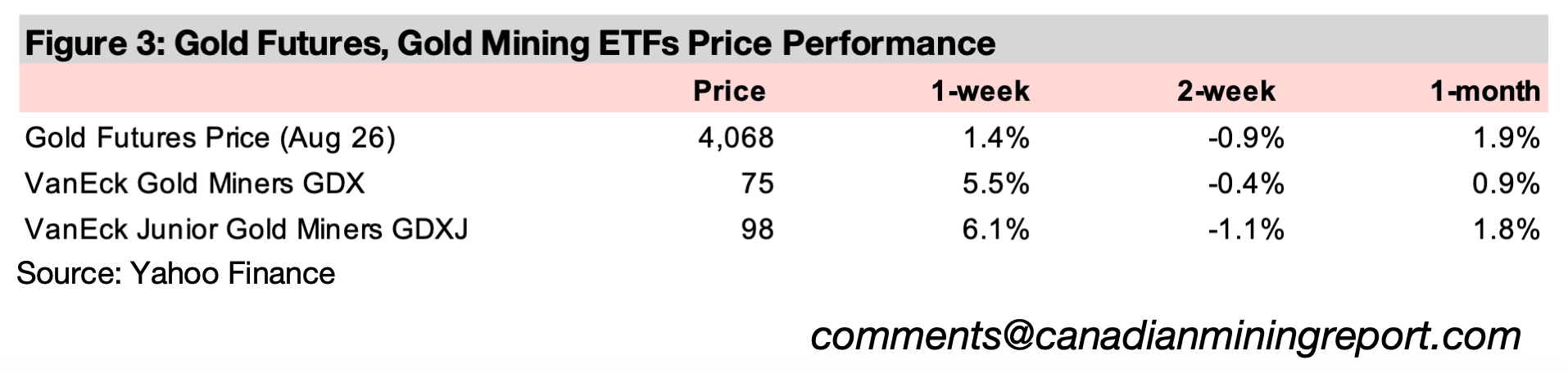
The gold price rose 1.4% to US$4,068/oz, rebounding from the lows for the year that were reached last week, which mainly seems to have been driven by new major tariffs imposed by the US, which increased broader economic risk. This offset gains in the US$ and yields, which tend to move inversely to the gold price. The new tariffs ranged between 10.0% to 12.5% on 80 countries which replaced a 10% global tariff which had expired. These were related to banning forced-labour imports, with the lower rate applied to countries viewed as making progress on this issue, and the higher rate for countries that had not. The equity markets declined on the news, with the S&P 500 down -1.0%, the Nasdaq off -2.9%, and the Russell 2000 losing -1.3%. The gold stocks rebounded substantially from lows for the year reached last week, with the GDX up 5.5% and GDXJ rising 6.1%.
Newmont, the largest global gold producer, was the first to report Q2/26 in the sector, with strong results yoy which were roughly inline with expectations. While the results declined qoq, Q1/26 was driven by a highly speculative surge in the gold price which has since reversed. The Q2/26 results could show what more sustainable earnings levels will be for the company, with the gold price having settled down to an average just above the US$4,000/oz level for two months.
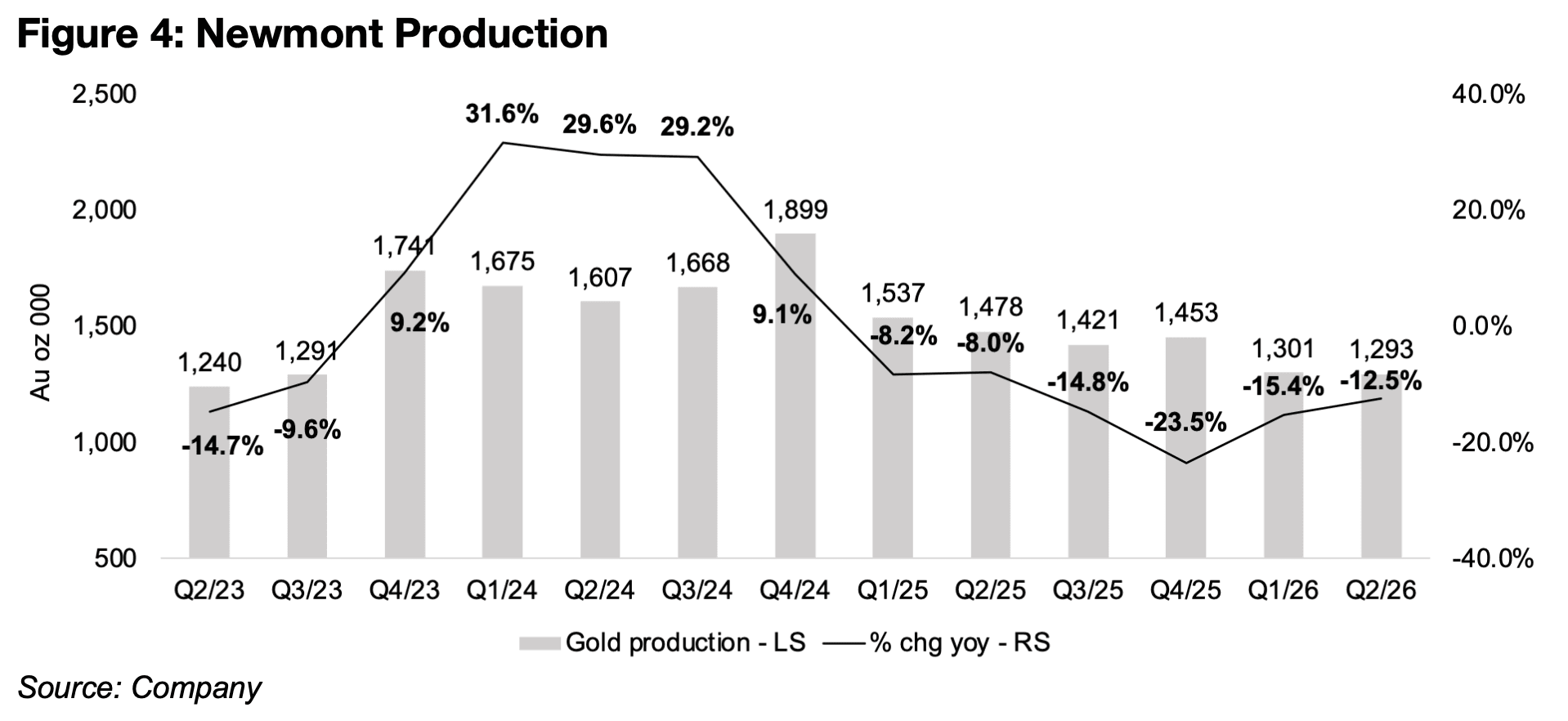
Newmont’s gold production declined -12.5% yoy to 1,293k oz, and was near flat qoq,
down just -0.6%. While output growth yoy has been negative from Q1/25, this is the
second quarter of improvement off the lows of -23.5% in Q4/25 (Figure 4). The most
recent production growth peak was from Q1/24 to Q3/24, with output rising around
30% yoy in each quarter, with the highest output of 1,899k oz Au reached in Q4/24.
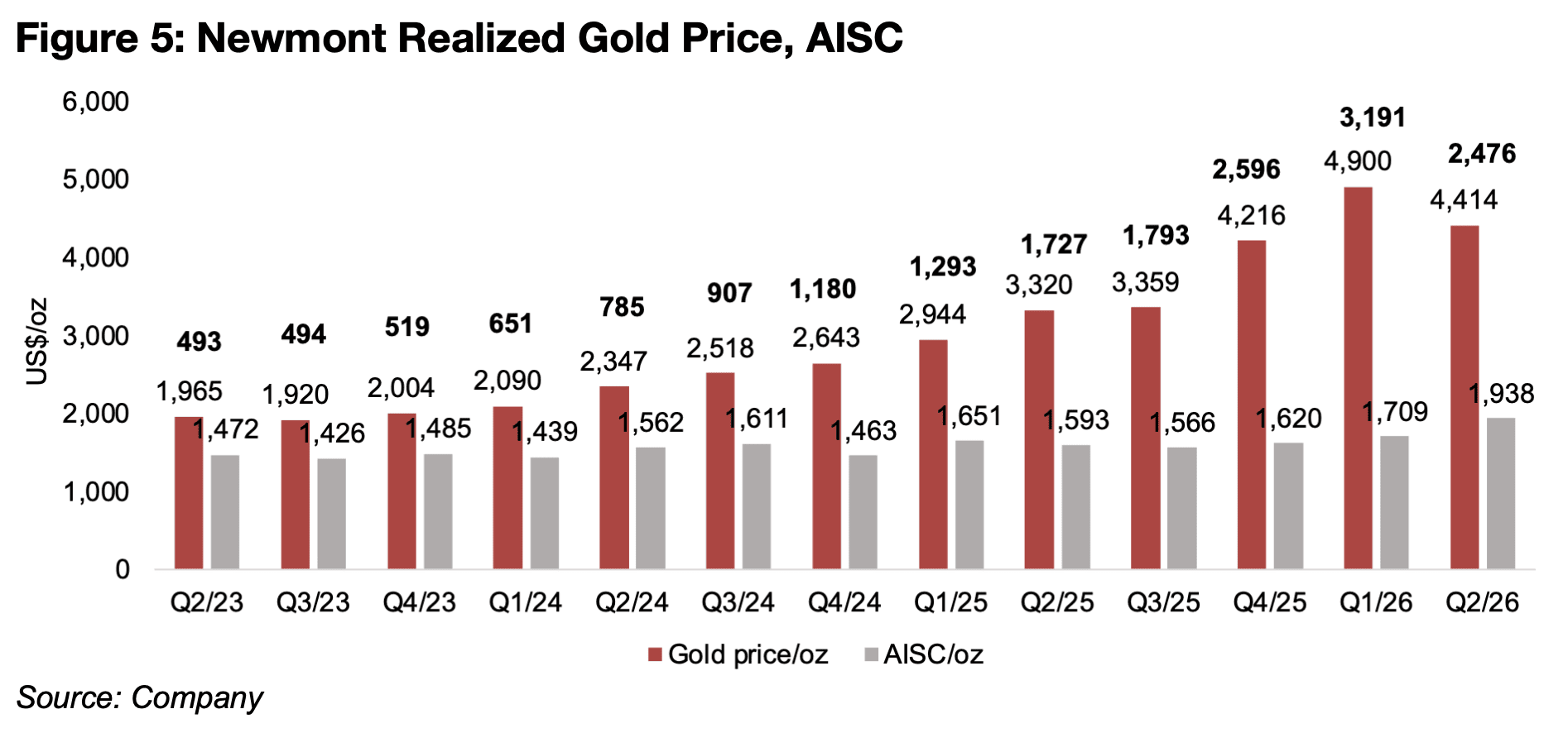
While there was major drop in the realized gold price qoq to US$4,414/oz from
US$4,900/oz, this was still above US$4,216/oz Au in Q4/25, which seems to show a
return to the previous uptrend, with Q1/26 an outlier (Figure 5). While the all-insustaining-cost jumped yoy and qoq to US$1,938/oz Au, this was driven mainly by
rising energy costs and expected by the market. The realized gold price to AISC
spread is still high, at US$2,476/oz, and while down substantially from US$3,191/oz
in Q1/26, it was only moderately below the US$2,596/oz of Q4/25 on the rise in costs.
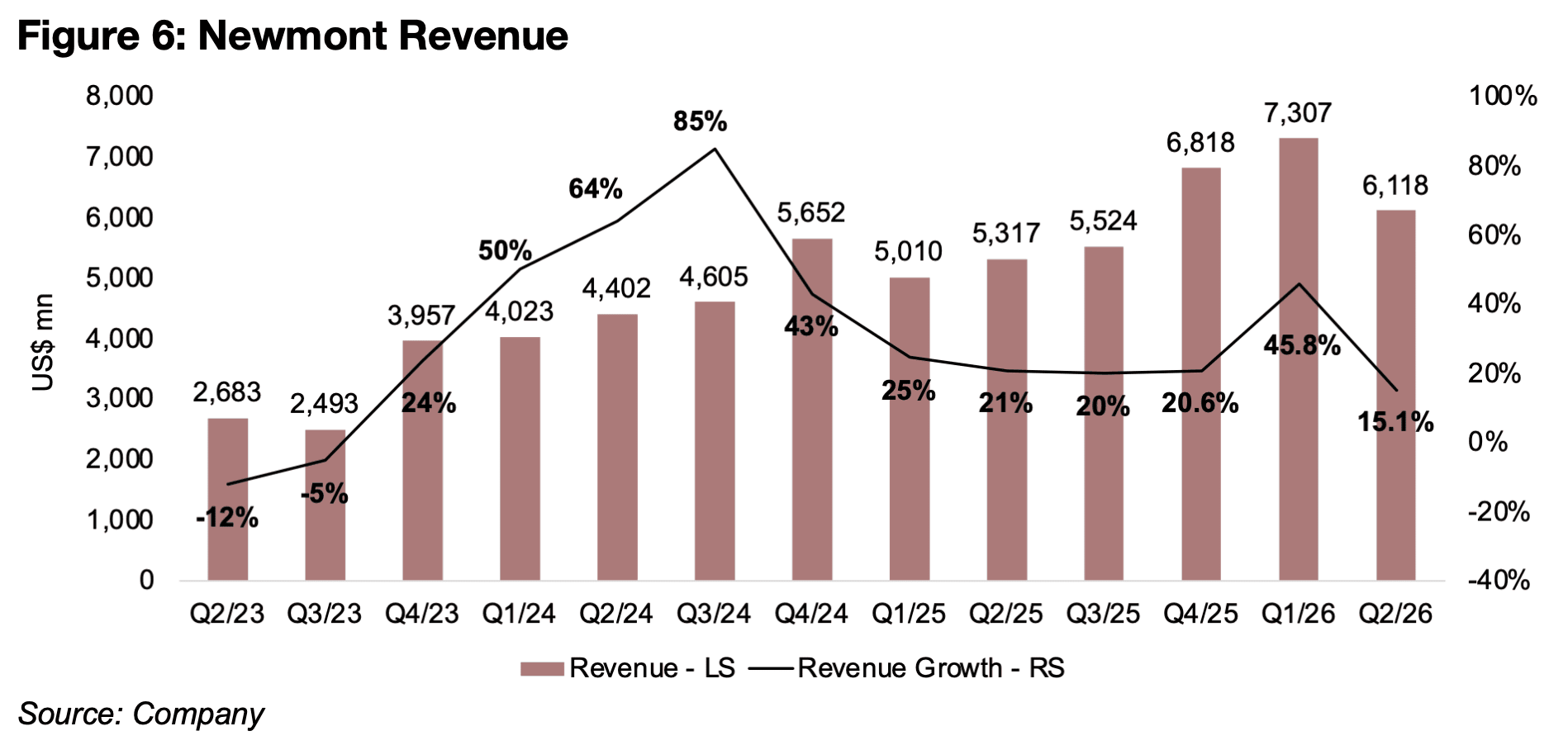
Revenue growth at 15.1% yoy in Q2/26 did decline to its lowest since Q3/23, and
was down from the previous five quarters including the jump to the most recent peak
of 45.8% in Q1/26, which had been driven by a continued rise in the gold price (Figure
6). This has seen revenue decline back to between the levels of Q3/25 and Q4/25.
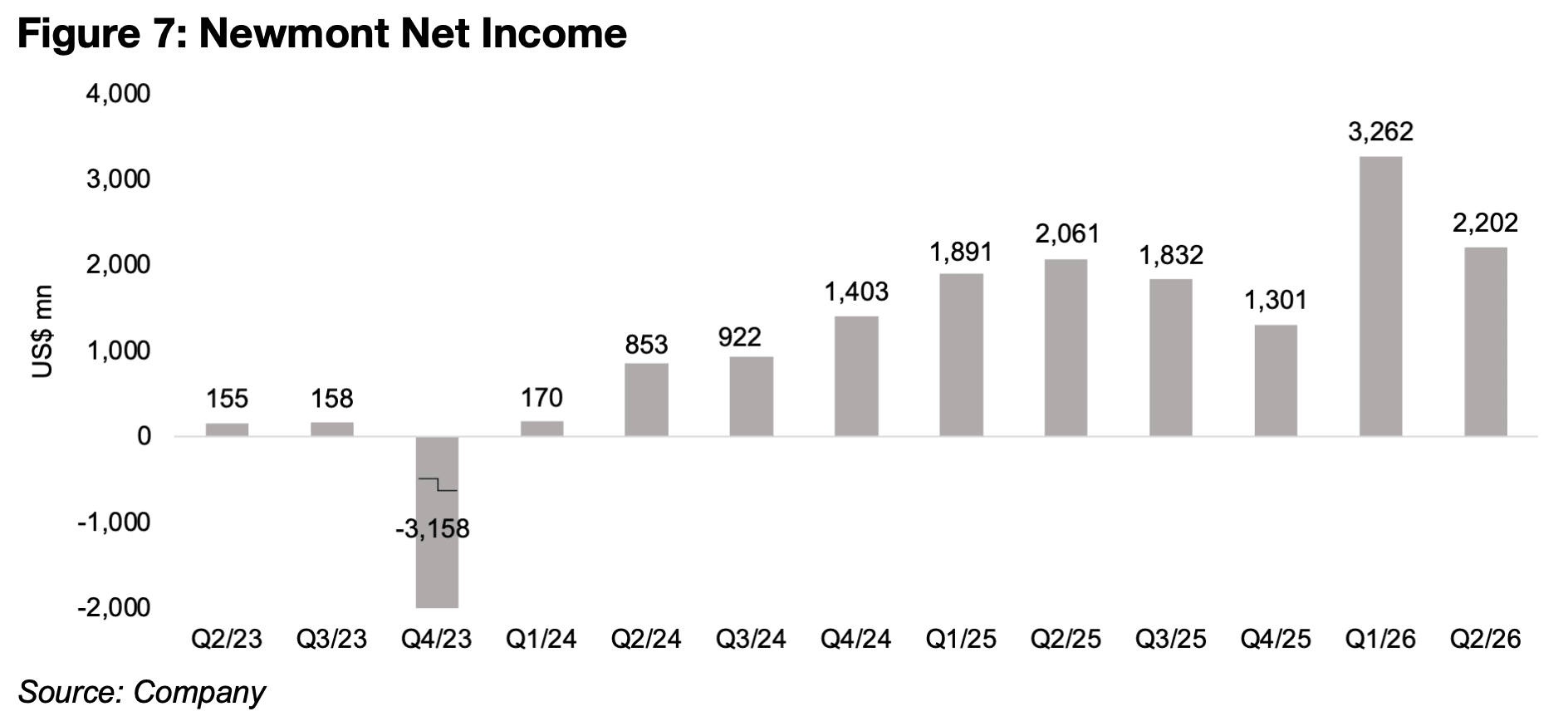
Net income was up yoy to US$2.2bn in Q2/26 from US$2.1bn in Q2/25, but
considerably down from the Q1/26 peak of US$3.3bn (Figure 7). However, this was
still the second strongest quarter ever for the company, excluding some exceptional
items that dragged down H2/25 and the Q1/26 spike, net income has seen an overall
reasonably steady uptrend since 2024.
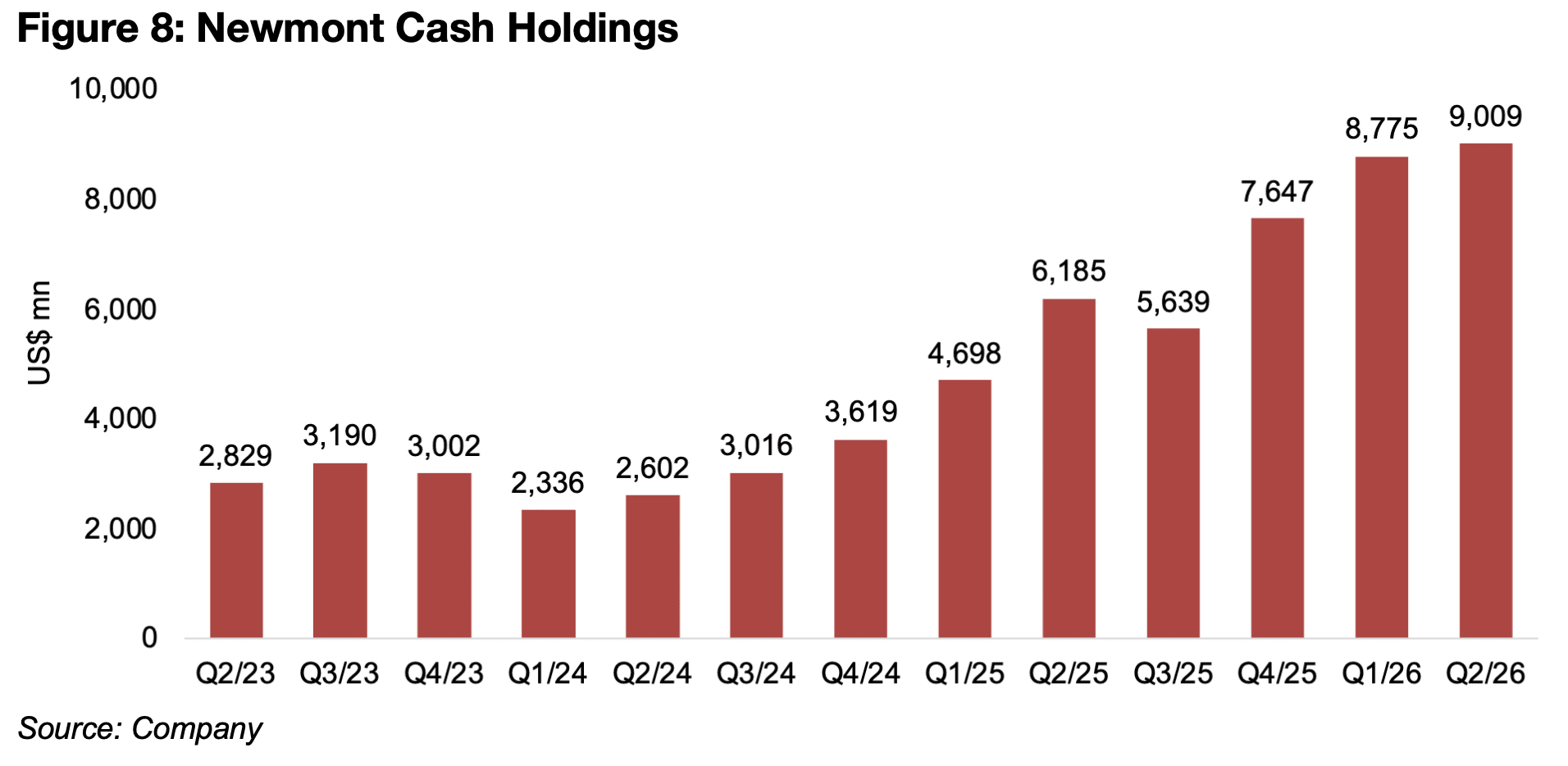
The company continues to accumulate cash with the balance rising to US$9.0bn,
only a slight rise from US$8.8bn in Q1/26, but jumping 50% from US$6.2bn in Q2/25
(Figure 8). This would allow the company to acquire one mid-sized gold producer with
markets caps of around US$5.0bn to US$10.0bn, or several of the major TSXV gold
companies which have market caps ranging from around US$300mn-US$1.0bn.
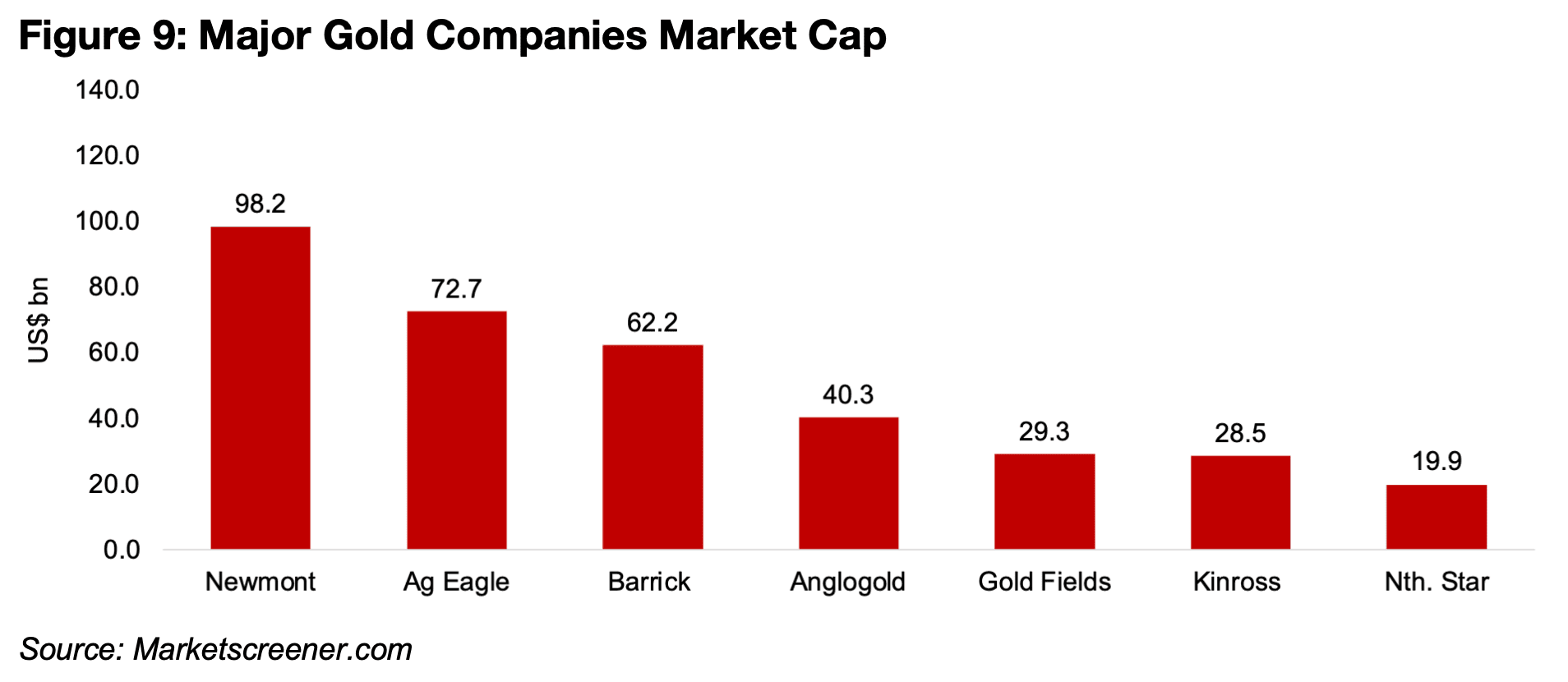
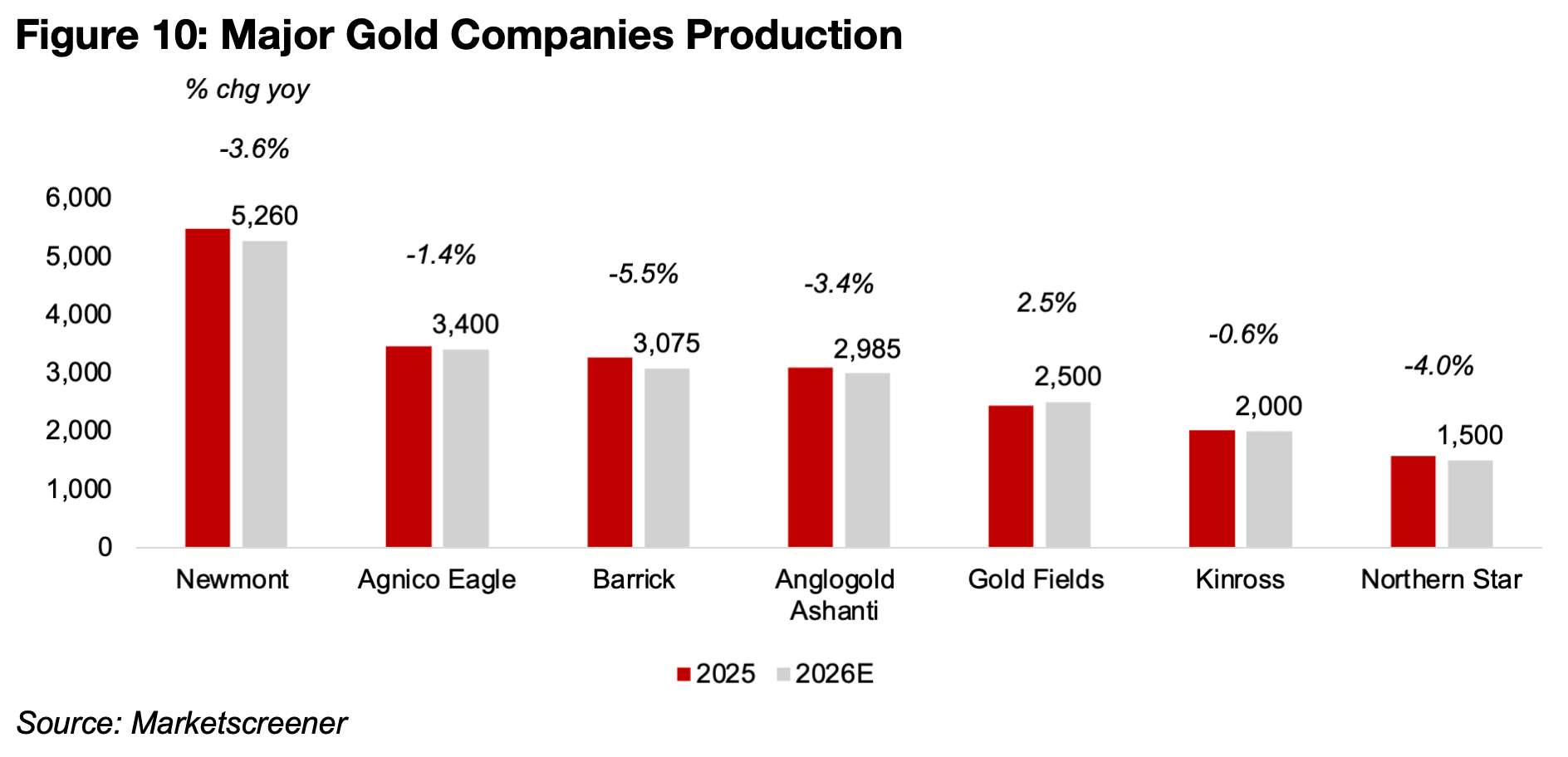
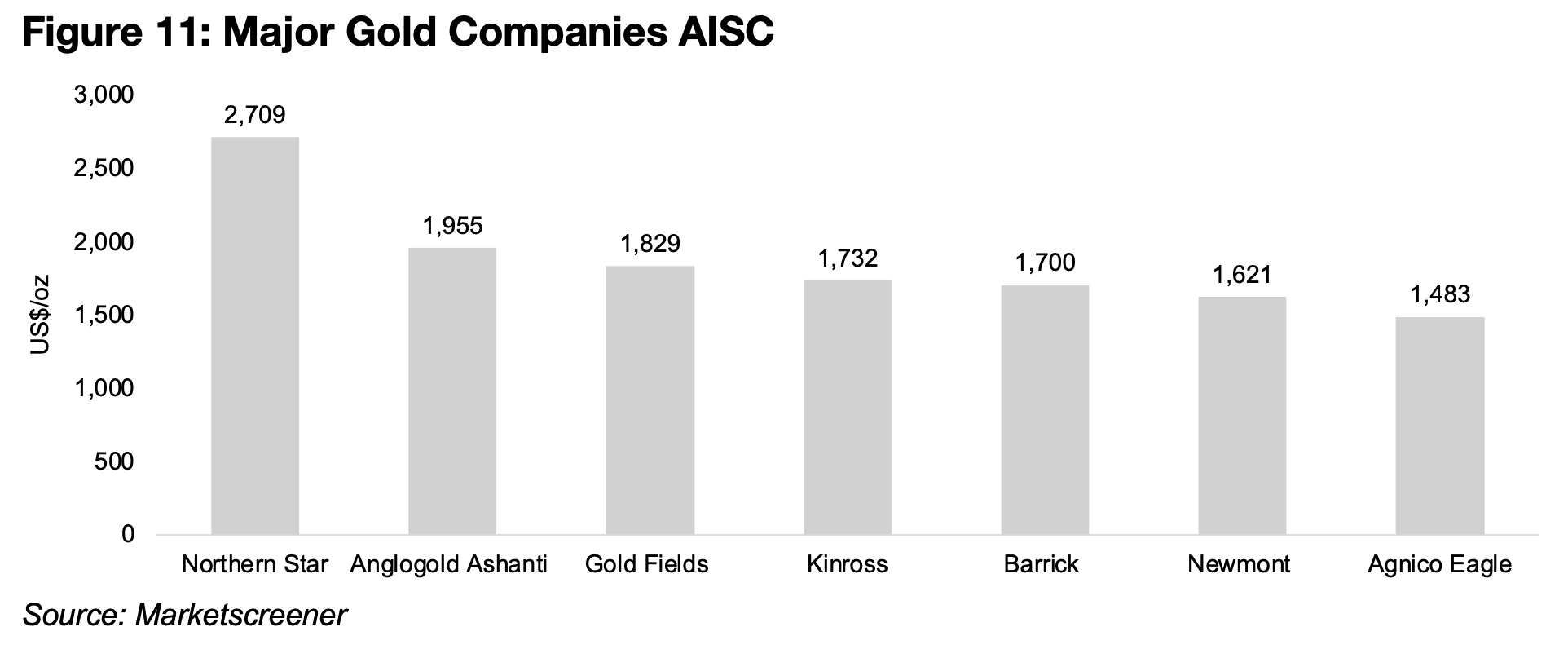
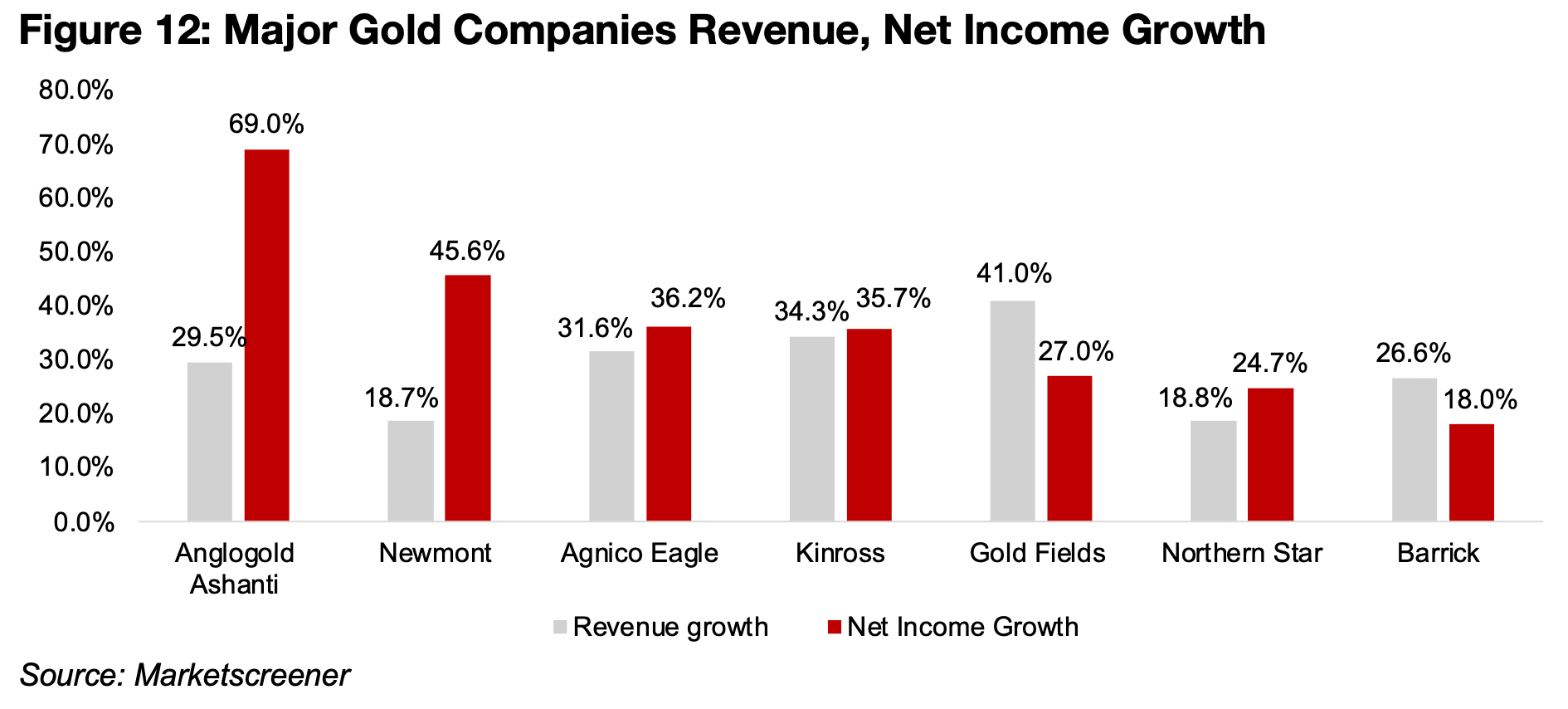
The market continues to expect strong growth for the major gold companies, even with the considerable slide in the metal price this year, as the average is still likely to increase substantially versus last year (Figure 9). The increase is not expected to be driven production growth, with guidance from most of the companies indicating around a -1.0% to -6.0% decline, except for Gold Fields, with a 2.5% rise (Figure 10). The gains are expected to be driven by a still very strong gold price averaging around US$4,000/oz recently, which is more than double the all in sustaining costs for all of the companies except Northern Star, which is around a relatively high US$2,700/oz (Figure 11). The high gold price is expected to drive up revenue by around 20%-40% for the companies, and the large metal price to cost spread is estimated to increase net income for the companies by around 20%-70% (Figure 12).
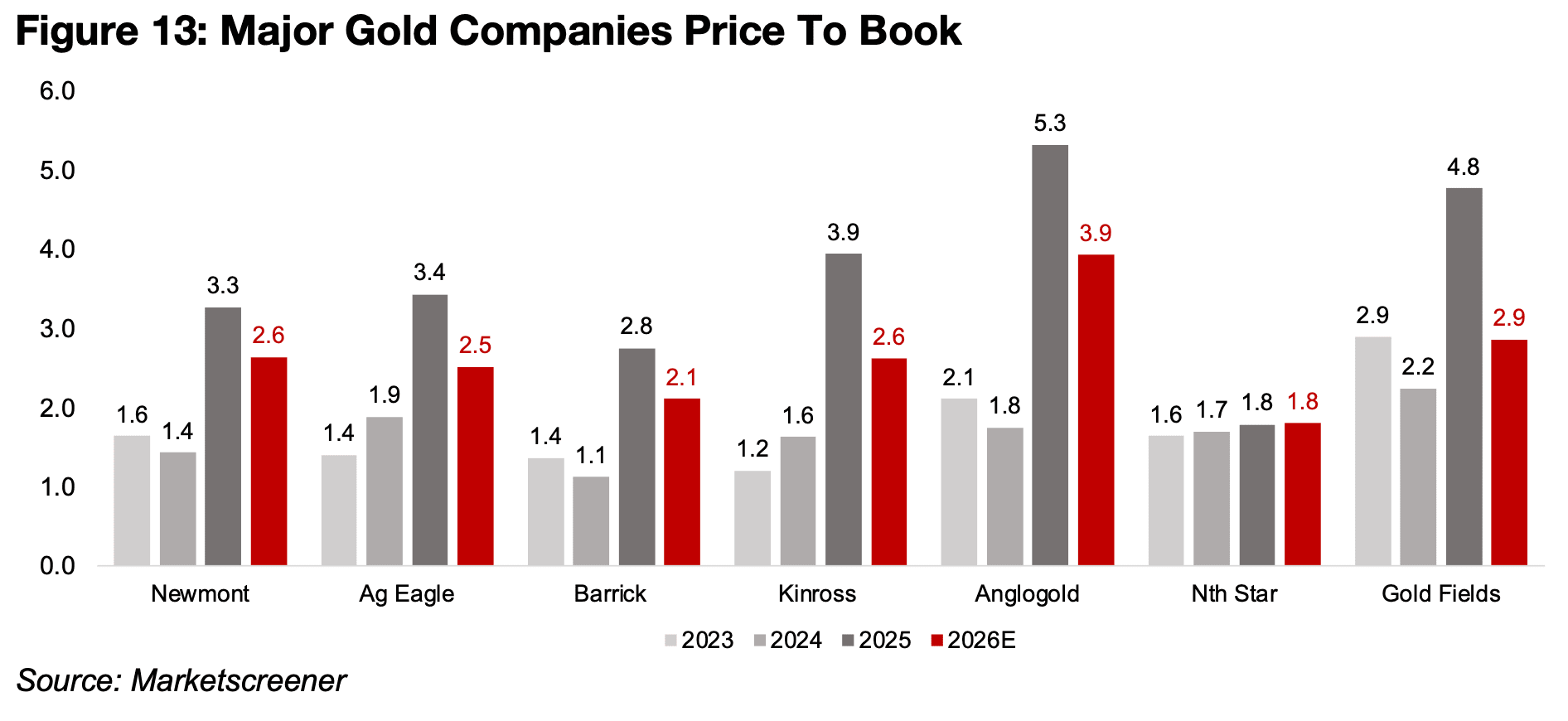
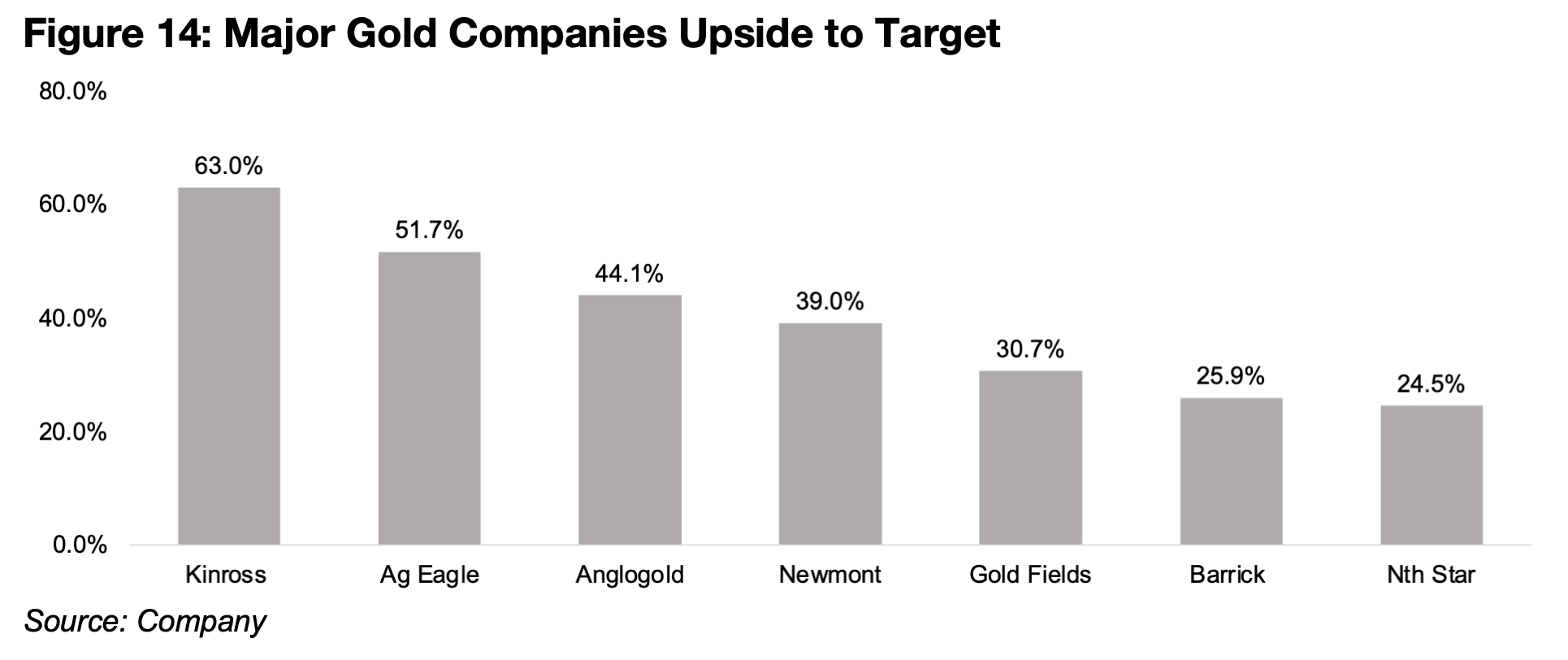
The valuations for the gold companies which had started to look somewhat high by 2025 have returned to more reasonable levels in 2026. The price to book valuations of most of the companies had risen over 3.0x, which is generally considered to be starting to become expensive, and two had even jumped to around 5.0x (Figure 13). Only Northern Star remained below 2.0x book in 2025, which is likely because of its relatively high cost versus the other major gold producers. Most of the group have declined back to multiples below 3.0x for 2026, although Anglogold is still just below 4.0x, and Northern Star has been flat at just below 2.0x. Even though the decline in the gold price has led to lower consensus targets for many of these companies, they still imply substantial upside, ranging from around 25% to over 60.0% (Figure 14).
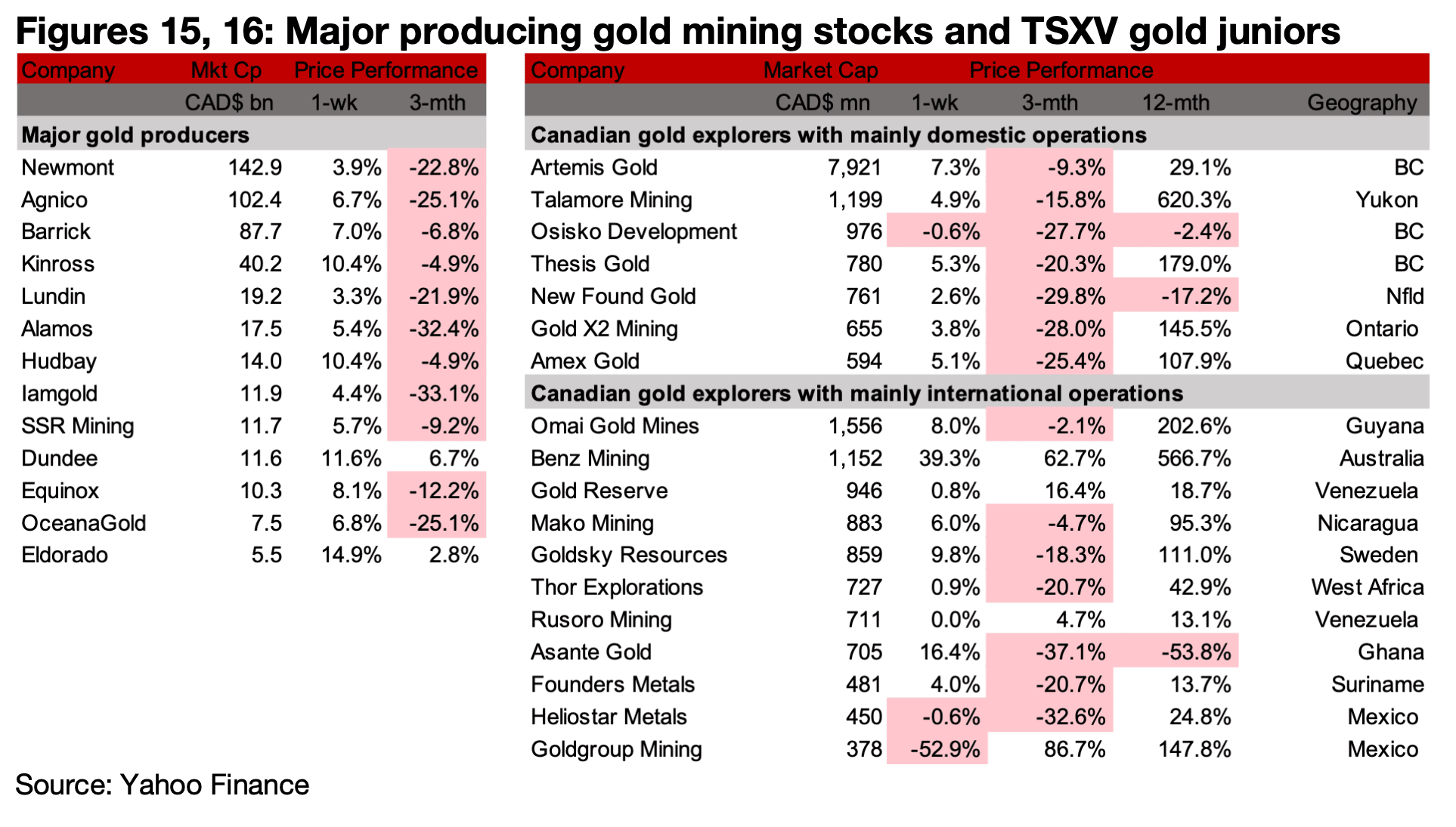
The major producers all rose, and most of TSXV gold was up on the increase in the
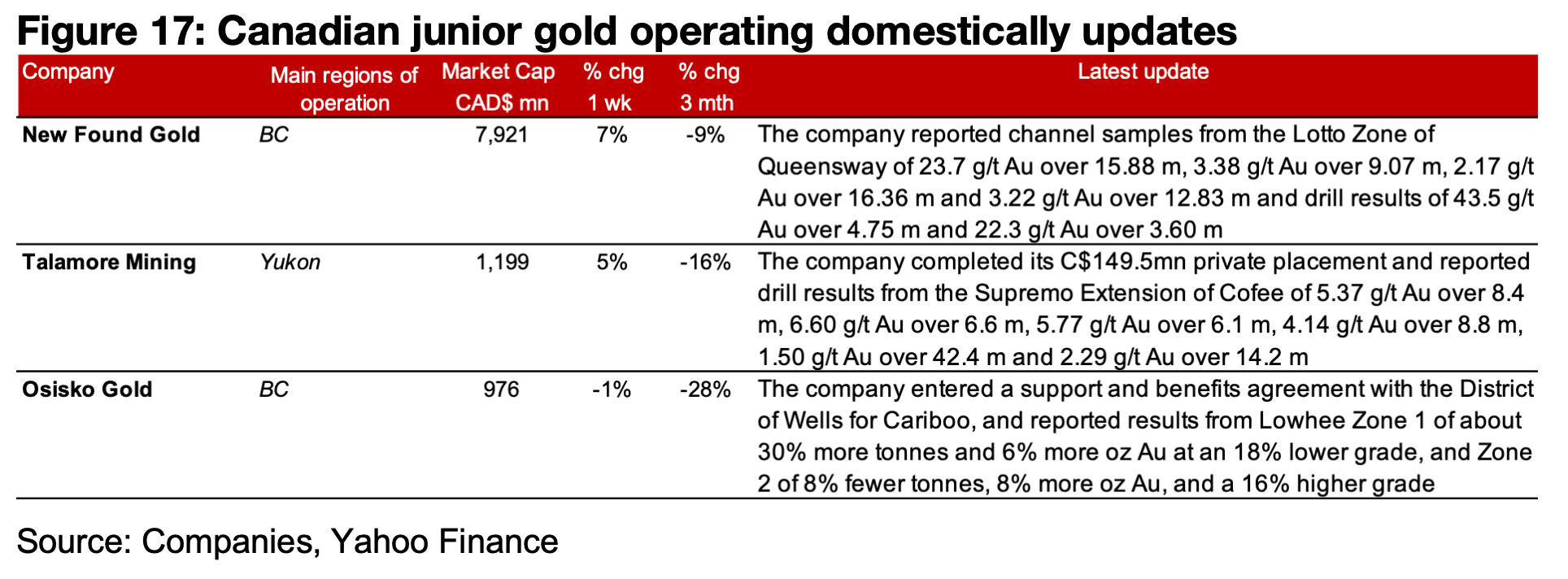
gold price (Figures 15, 16) For the TSXV gold companies operating mainly
domestically, New Found Gold reported Channel samples and drill results from the
Lotto Zone of Queensway, Talamore completed its C$149.5mn private placement
and released drill results from the Supremo Extension of Coffee and Osisko Gold
entered a benefits agreement with the District of Wells for Cariboo and announced
drill results from the Lowhee Zone of the project (Figure 17).
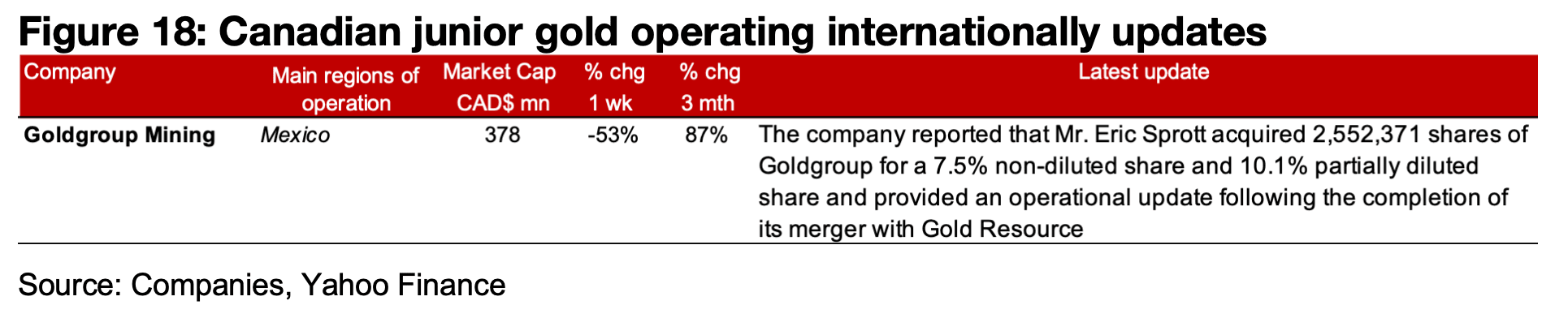
For the TSXV gold companies operating mainly internationally, Goldgroup reported
that Eric Sprott had acquired 2.5mn shares for 7.5% non-diluted and 10.1% partially
diluted share of the company and provided an operational update (Figure 18). These
were both related to the completion of its merger with Gold Resource, which appears
to have been the major driver for the -53% decline in the share price this week. This
was partly because the combined company was no longer being eligible for inclusion
in the Russell 2000 Comprehensive Factor Index after the merger as it does not meet
the nationality eligibility requirements based on its Canadian home country indicators.
The company also announced a planned listing on the NYSE, and as part of the
requirements for this completed a 4:1 share consolidation effective July 10, 2026.
Disclaimer: This report is for informational use only and should not be used an alternative to the financial and legal advice of a qualified professional in business planning and investment. We do not represent that forecasts in this report will lead to a specific outcome or result, and are not liable in the event of any business action taken in whole or in part as a result of the contents of this report.
Author
Ben McGregor authors the Weekly Roundup at CanadianMiningReport.com, providing sharp analysis of the metals and mining sector. With a talent for spotting trends, Ben distills complex market shifts into clear, engaging insights on TSXV junior miners. His weekly updates cover gold, copper, uranium, and more, blending data-driven perspectives with a knack for identifying opportunities. A vital resource for investors, Ben’s work navigates the dynamic junior mining landscape with precision.