

October 05, 2026
The gold price fell -3.7% to US$4,162/oz, down for the second week, as US employment data was mixed, not providing a clear outlook on the potential for a rate hike, but the metal likely remained under pressure from still high real bond yields.
The AOCE reported updated metal price and market balance estimates, with significant changes for the forecasts of gold, copper, aluminum, iron ore, nickel and zinc both for 2026E and over the next several years.
The gold stocks declined, with the GDX off -5.5 and GDXJ losing -6.2% on the continued drop in the metal, underperforming the flat performance of the S&P 500, at 0.0%, and Russell 2000 small cap index, up 0.2%, and 0.9% gain in the Nasdaq.


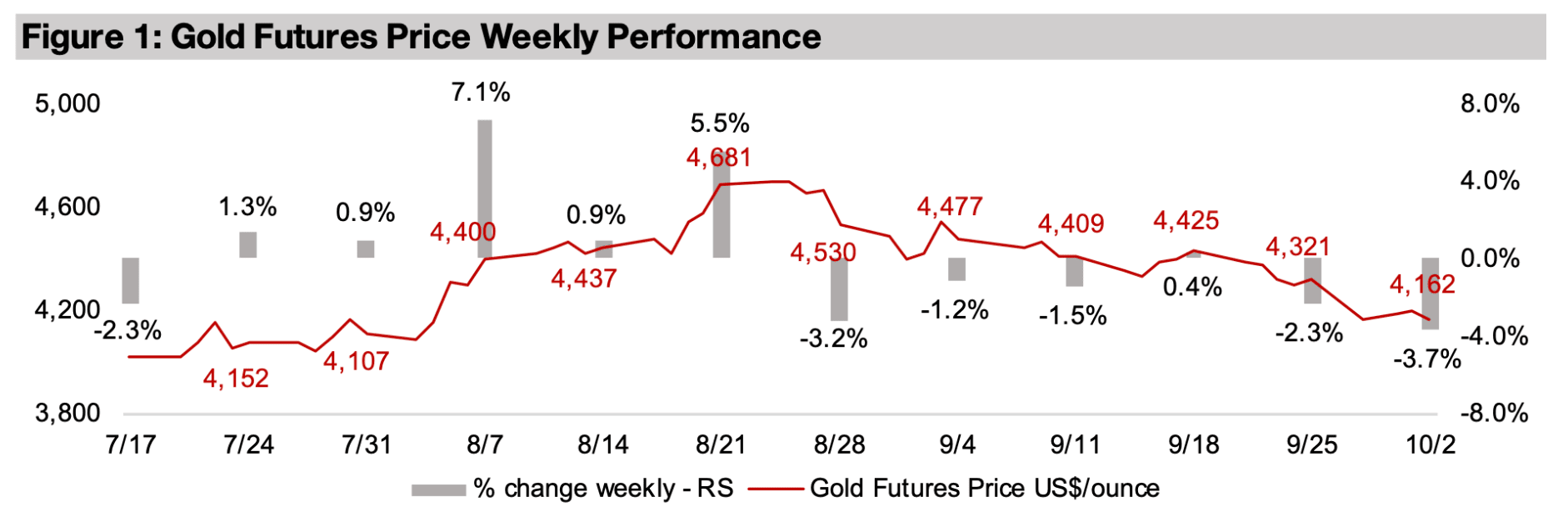
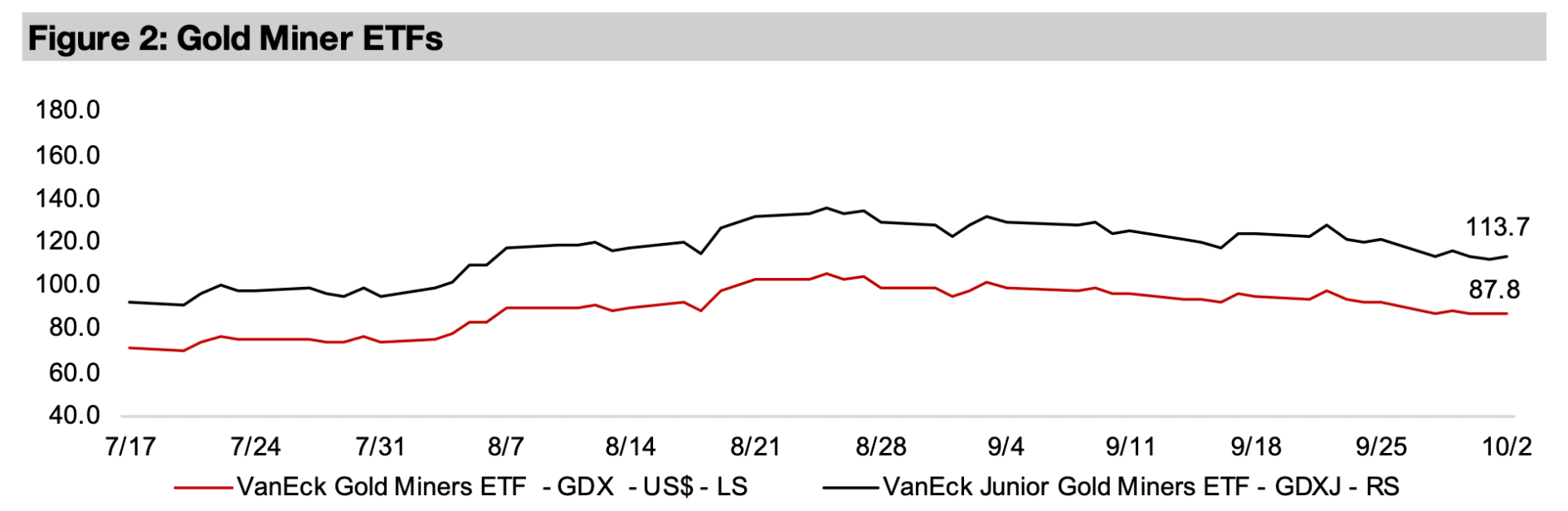
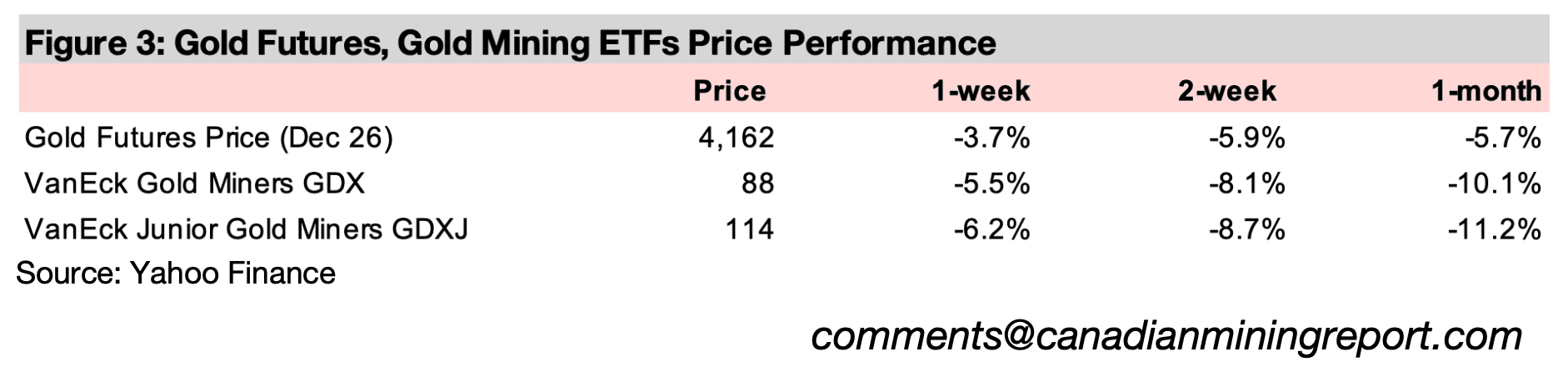
The gold price declined -3.7% to US$4,162/oz, down for the second week, with the main economic data US employment figures which were mixed overall and did not seem to indicate any clear shift in the potential for a Fed rate hike. While this also did not necessarily point to a decline in the metal, the drop was likely driven by still high real yields, which tend to move inversely to gold. The S&P 500 showed that the market was exactly neutral on the news, with a 0.0% move, while the small cap Russell 2000 index rose just 0.2%, although the tech sector still drove a 0.9% gain in the Nasdaq. The gold stocks slumped on the drop in the metal price, with the GDX losing -5.5% and GDXJ down - 6.2%.
The metals price and market balance forecasts were recently released by Australia’s Office of the Chief Economist (AOCE), one of the only widely publicly available sources that are reported quarterly and therefore can show major shifts in estimates for the sector. While the World Bank (WB) also provides regular updates on metals prices, this is only every six months, while they do not have supply and demand and the most recent April 2026 data is quite dated.
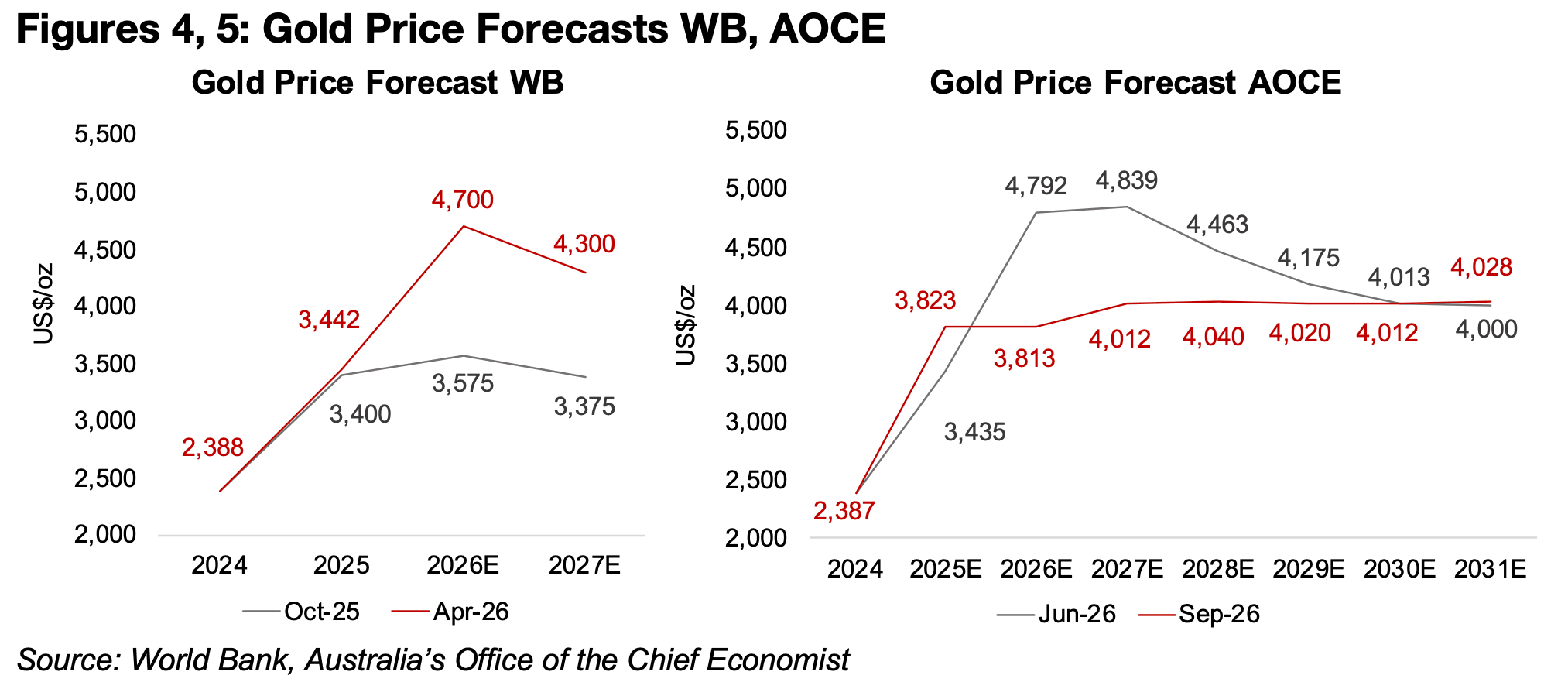
This explains why the WB gold price forecasts are still showing a significant jump to
US$4,700/oz for 2026E, and we expect this estimate will come down significantly in
the upcoming report which is likely to be released this month (Figure 4). The AOCE
has already revised down its average gold price for 2026 substantially to just
US$3,813/oz to reflect the decline in the price in recent months, far down from the
US$4,792/oz estimate in June 2026 (Figure 5). This estimate may prove to be low,
however, with the gold price already averaging over US$4,500/oz so far this year, and
it needing to slump to near US$3,000/oz in Q4/26 to reach this target.
The AOCE has also cut its 2027E and 2028E forecasts substantially from
US$4,839/oz and US$4,463/oz to US$4,012/oz and US$4,040/oz, respectively.
There has been only about a US$150/oz reduction in 2029E forecast and little change
to the 2030E-2031E forecasts, which are around US$4,000/oz. This shows the AOCE
maintaining its medium-term outlook and only adjusting the short-term outlook,
indicating that it had expected the speculative boom of late-2025 and early-2026 to
subside, just much more slowly, over a couple of years, rather than in only a few
months.
The World Bank had significantly boosted its copper price estimate for 2026 to US$5.44/lb as of April 2026, up from the previous US$4.45/lb (Figure 6). The AOCE estimates from September 2026 show that this trend of copper price forecast upgrades has likely continued, with an increase to US$6.11/lb up from US$5.76/lb in June 2026 (Figure 7). In contrast to the reduction in the gold price estimates over several years, the AOCE has boosted all of its copper forecasts from 2026E-2031E, to around the US$6.0/lb level, from the previous forecasts only around US$5.5/lb.
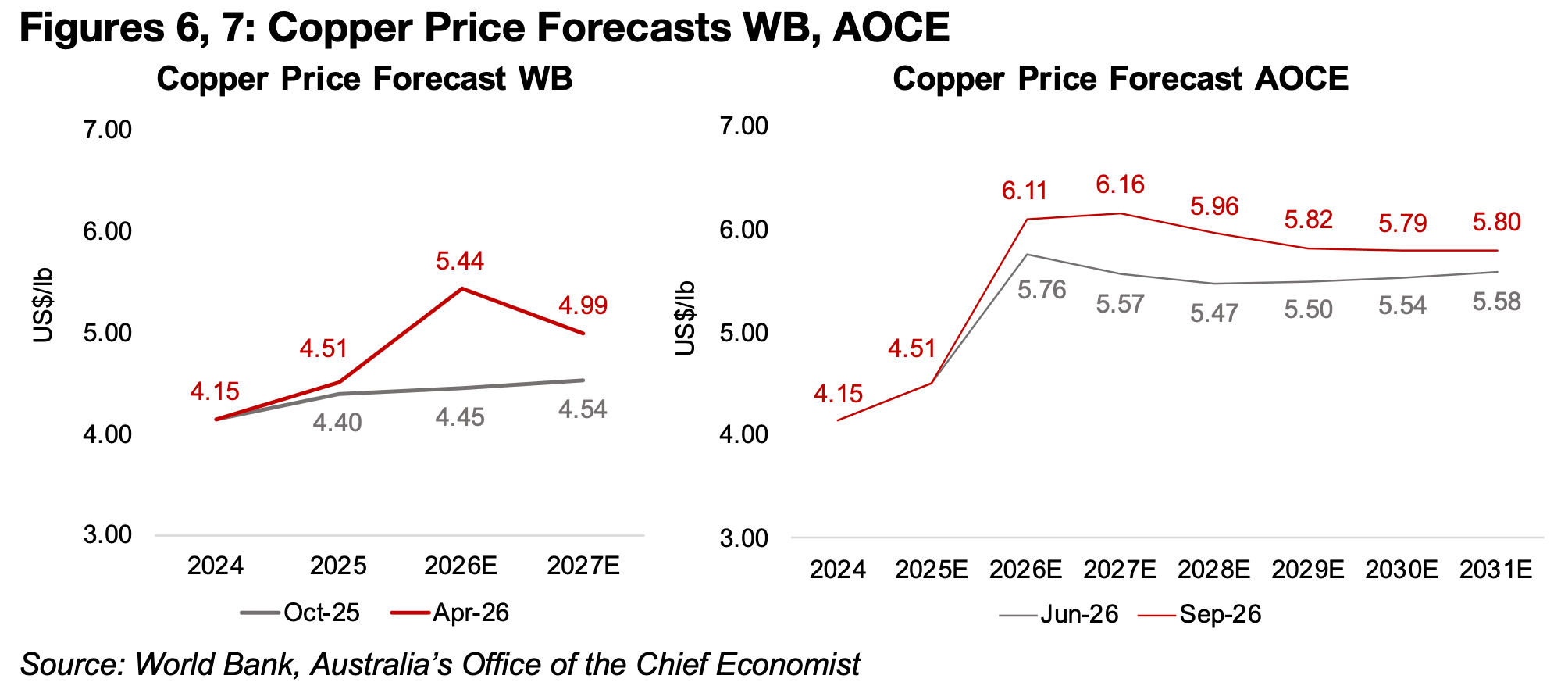
This has partly come from a substantial reduction in the expected surplus in the market, which had jumped to 651k tonnes in 2025, but is expected to decline to 249k tonnes in 2026E, with a roughly flat market balance from 2027E-2031E (Figure 8). While the expected surplus for 2026 has jumped from an expected deficit in the December 2025 and June 2026 estimates, this may have been offset by a drop in 2027E expected surplus from 173k tonnes to just 12k tonnes, or a roughly balanced market for 2027 (Figure 9). There has been substantial supply disruption from several major global mines in 2026 that is expected to carry over into next year, after flood damage to Grasberg in Indonesia and Kamoa-Kakula in the Democratic Republic of Congo, El Teniente mine damage and the political shutdown of Cobre in Panama.
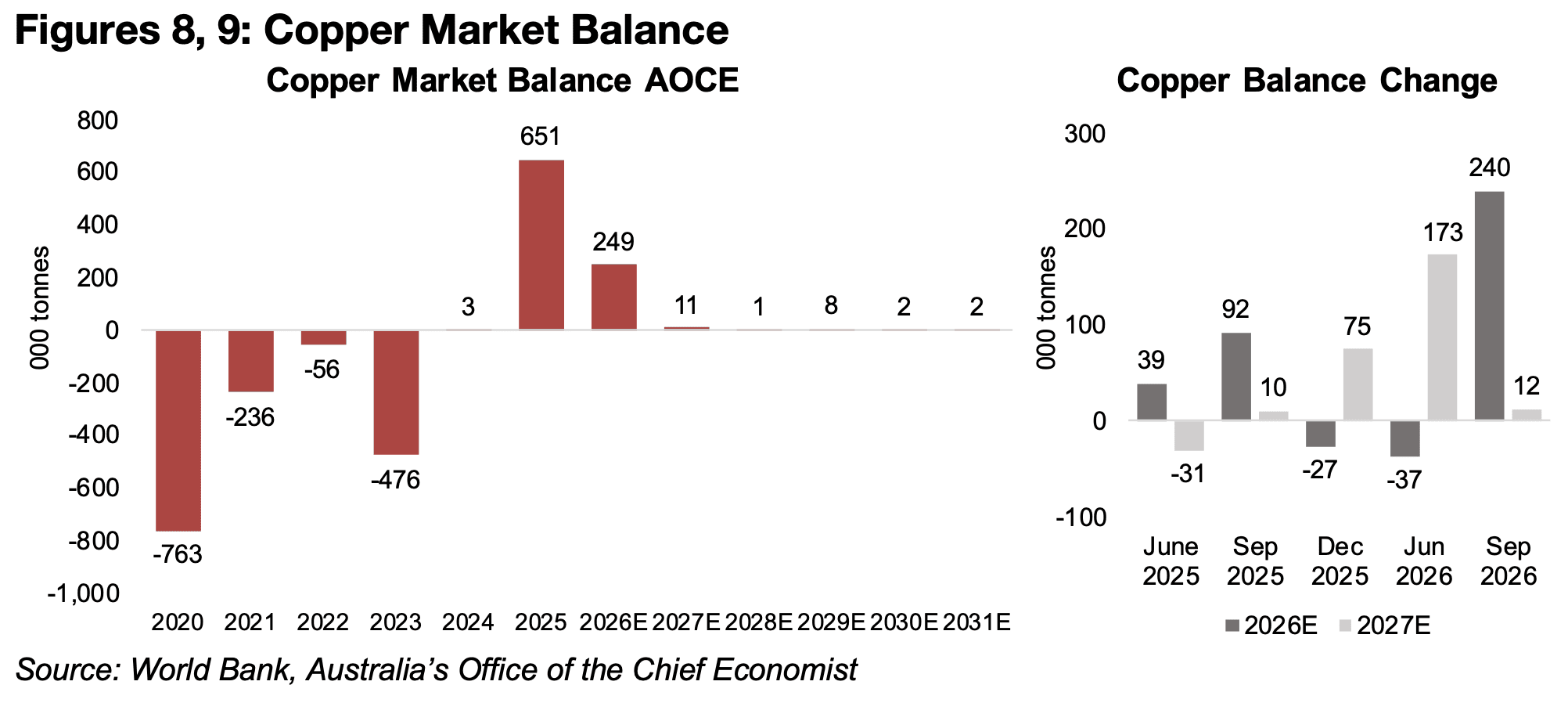
While WB did boost its iron ore price forecasts in April 2026 moderately, there is still
major decline expected over the next several years (Figure 10). The AOCE estimates
a similar long-term decline, and other than a slight upgrade for 2026E, it has cut
estimates from 2028E-2031E (Figure 11). This has been driven especially by huge
new source of global supply with the start of production at Simandou in Guinea in
late 2025, which is expected to comprise 5.0% of global supply in the next few years.
However, there has also been weakness in demand, which is almost entirely from
steel production, with growth in the sector relatively weak. This has especially been
from lower growth in China, which accounts for about half of global steel demand
and has seen sluggish property and infrastructure markets, which has not been
entirely offset by strong growth in India, the second largest global market for the metal.
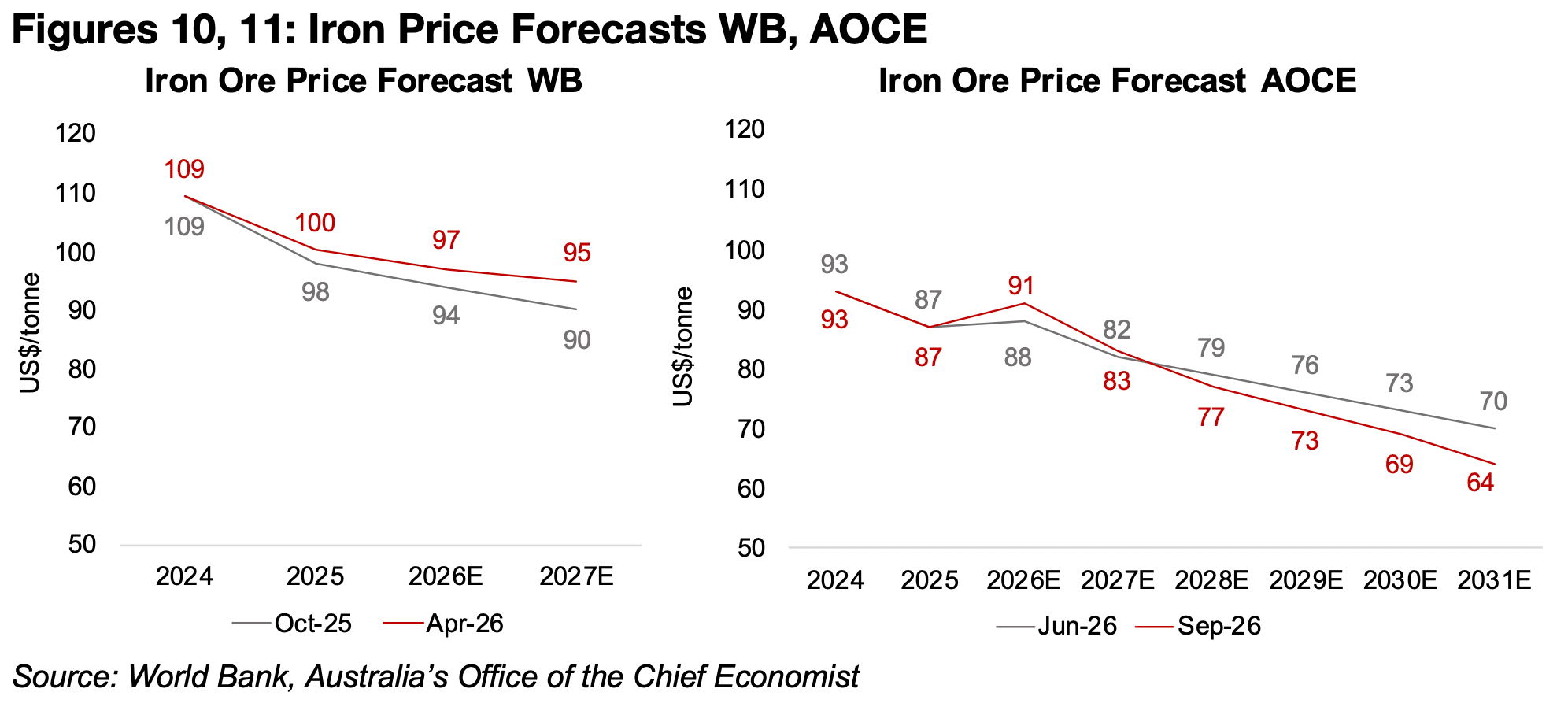
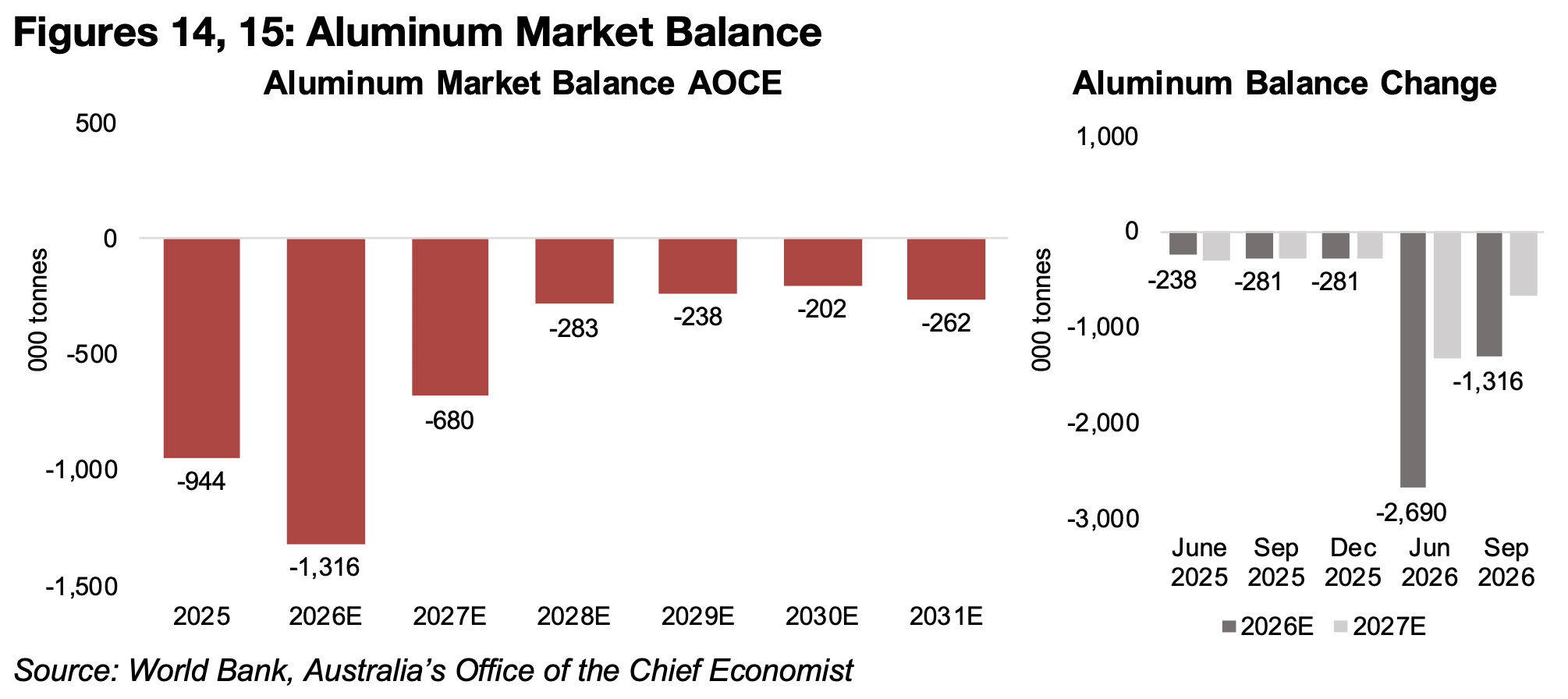
The WB did make a major upgrade in the 2026E aluminum price in April 2026 to US$3,200/tonne from US$2,600/oz, driven by the war in the Middle East, with the region accounting for nearly a tenth of global supply of the metal, and some major capacity directly hit during attacks (Figure 12). However, with this already incorporated into the AOCE estimates by June 2026, they have made relatively minimal changes to their forecasts as of September 2026. Overall the prices are expected to trend down from a peak this year at US$3,387/tonne to US$3,076/tonne by 2030E (Figure 13). This will be driven by an expected decline in the deficit from 1,316k tonnes in 2026E to just 680k tonnes in 2027E and 200-300k from 2028E to 2031E (Figure 14). The deficit has also been substantially reduced from 2,690k tonnes for 2026 from the June 2026 estimate (Figure 15).
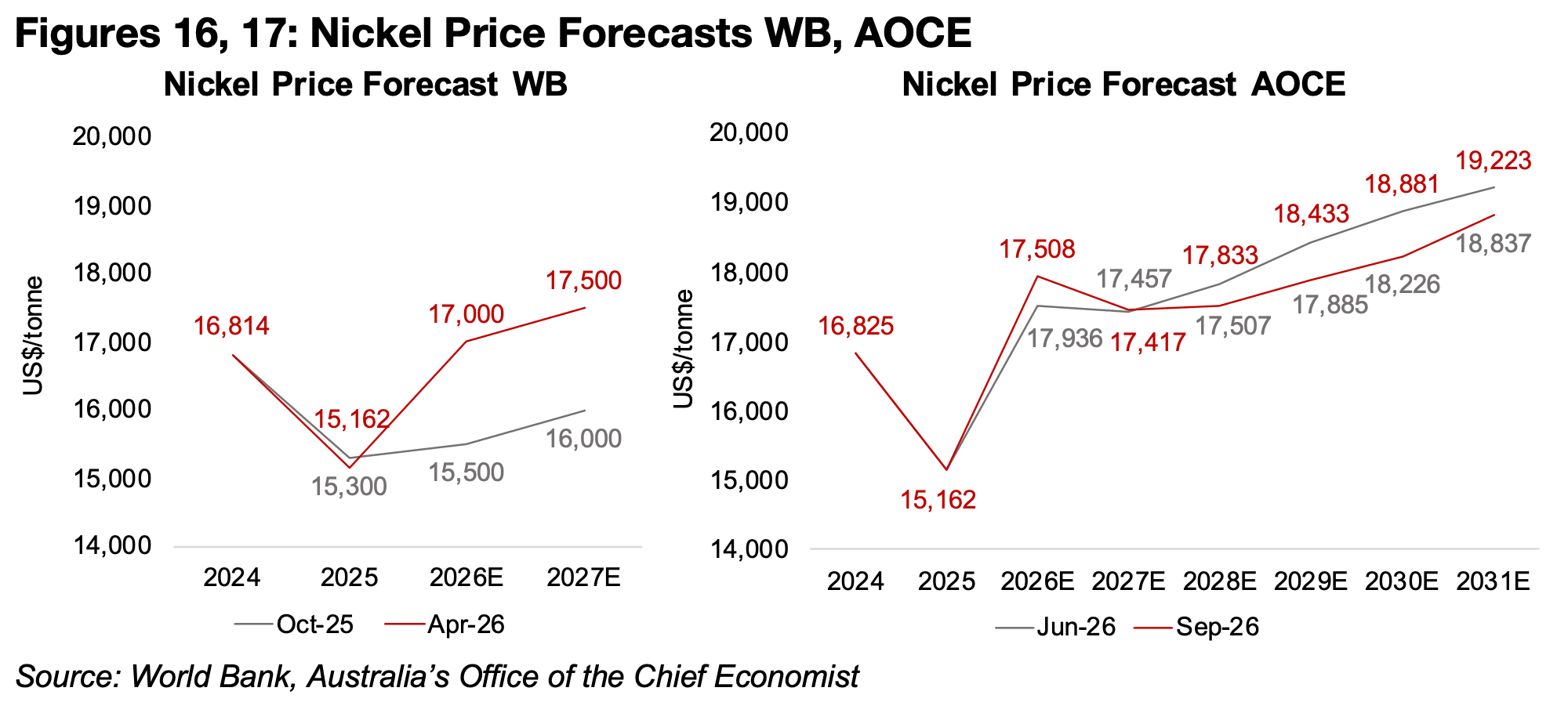
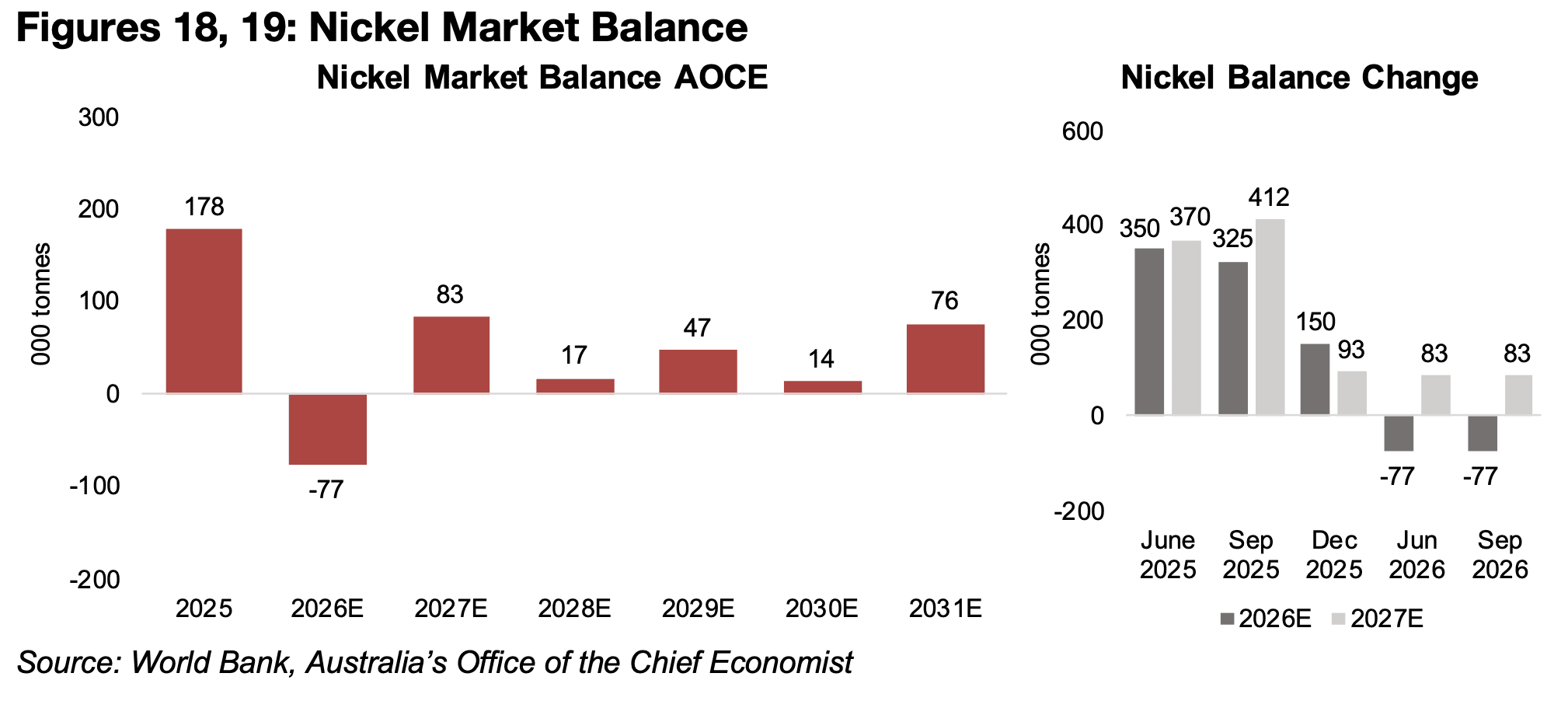
The nickel price estimates from the WB for 2026E jumped to US$17,000/tonne from US$15,162/tonne in 2025, with a major increase from the US$15,500/tonne forecast in October 2025 (Figure 16). There has been a similar jump in price yoy for the AOCE to US$17,508/tonne for 2026, with a slight pullback in 2027E, but then a continued uptrend from 2027E to 2031E, with the estimates increased for this entire period in the September 2026 update (Figure 16). This has come from the industry shifting into a substantial deficit of 77k tonnes in 2026E from a huge surplus of 178k tonnes in 2025 (Figure 18). While there is also a surplus forecast for 2027E of 83k tonnes, this is far down from estimates last year in the middle of last year for as high as over 400k tonnes. This has been driven by Indonesia, the world’s largest producer of the metal, heavily restricting further capacity expansion in the sector after the country’s huge growth in output had caused extreme oversupply for several years.
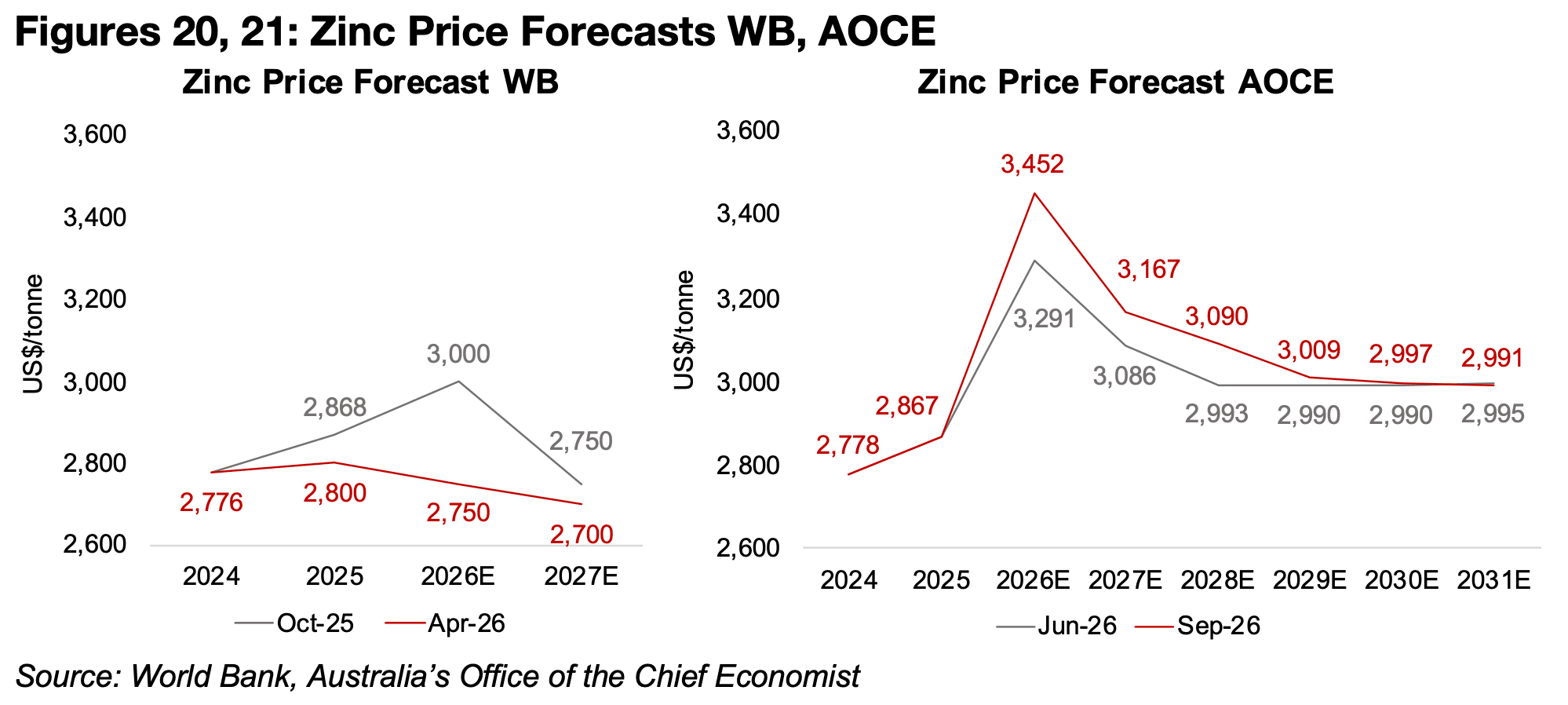
The WB forecast for zinc in 2026 was boosted to US$3,000/tonne in April 2026 from US$2,750/tonne, as there was a significant reduction in supply from some major producers and global inventories declined substantially (Figure 20). However, the WB and the AOCE expect the price to peak this year and drop substantially in 2027E. The AOCE boosted its forecast for zinc to US$3,452/tonne in 2026E as of September 2026, up from US$3,291/tonne in June 2026, and has increased the estimates for 2027E to 2029E, but still forecasts a continued downtrend in the metal for the next three years (Figure 21).
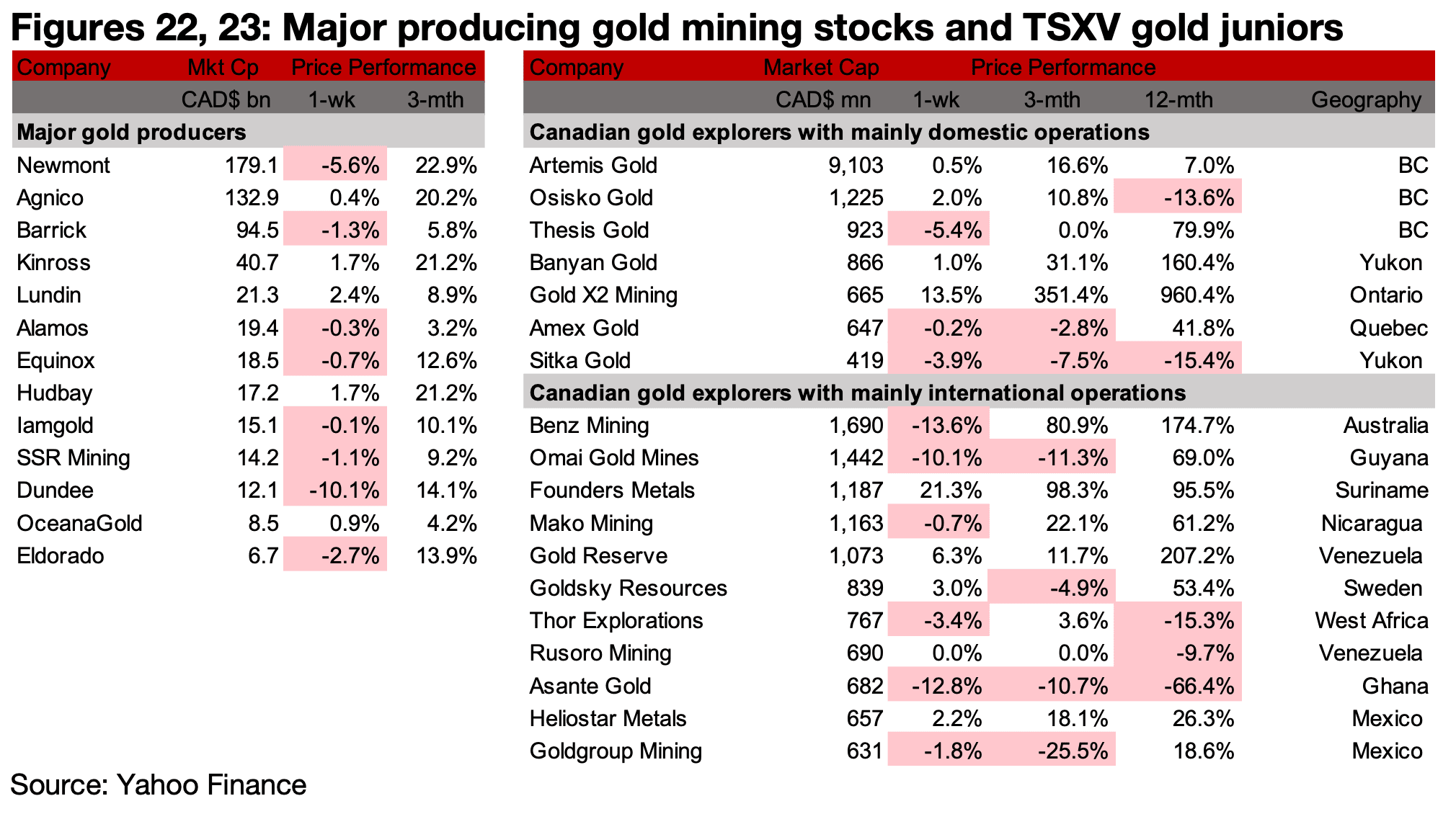
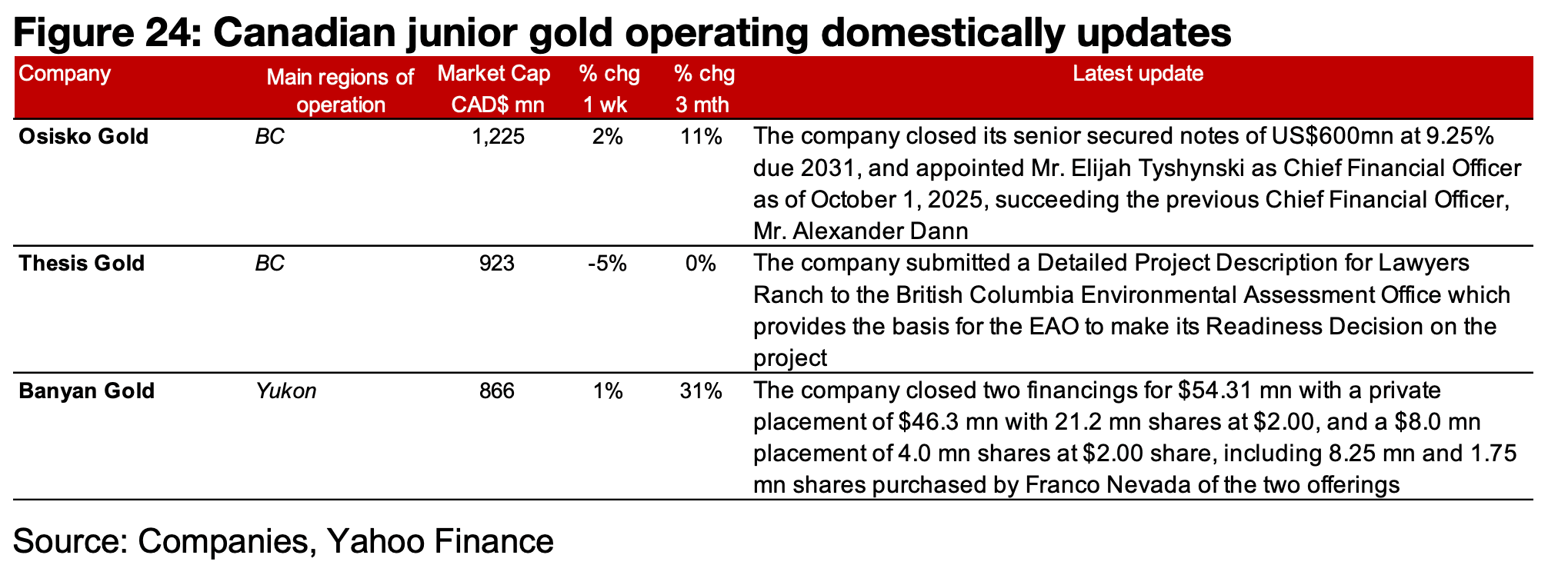
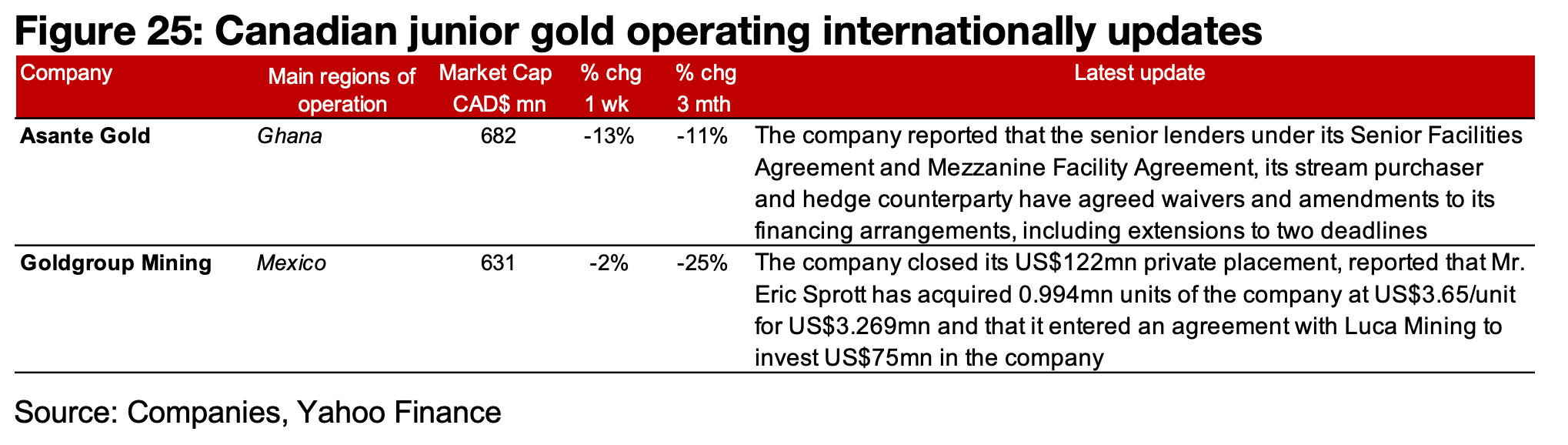
The major producers and TSXV gold most fell on the drop in the metal price (Figures 22, 23). For the TSXV gold companies operating mainly domestically, Osisko Gold closed its senior secured notes of US$600mn and appointed new Chief Financial Office Mr. Elija Tyshynski, Thesis Gold submitted a Detail Project Description for Lawyers Ranch to the British Columbia Environmental Assessment Office and Banyan Gold closed two financings for a total $54.3mn (Figure 24). For the companies operating mainly internationally, Asante Gold reported that senior lenders, its stream purchaser and hedge counterparty had agreed to waivers and amendments to financing agreements, including the extension of deadlines, and Goldgroup closed its US$122mn private placement and entered into an agreement to invest US$75mn in Luca Mining (Figure 25).
Disclaimer: This report is for informational use only and should not be used an alternative to the financial and legal advice of a qualified professional in business planning and investment. We do not represent that forecasts in this report will lead to a specific outcome or result, and are not liable in the event of any business action taken in whole or in part as a result of the contents of this report.
Author
Ben McGregor authors the Weekly Roundup at CanadianMiningReport.com, providing sharp analysis of the metals and mining sector. With a talent for spotting trends, Ben distills complex market shifts into clear, engaging insights on TSXV junior miners. His weekly updates cover gold, copper, uranium, and more, blending data-driven perspectives with a knack for identifying opportunities. A vital resource for investors, Ben’s work navigates the dynamic junior mining landscape with precision.