Educational content only, not investment advice. Mining stocks are high risk.
By Ben McGregor
Monday, November 9, 2026
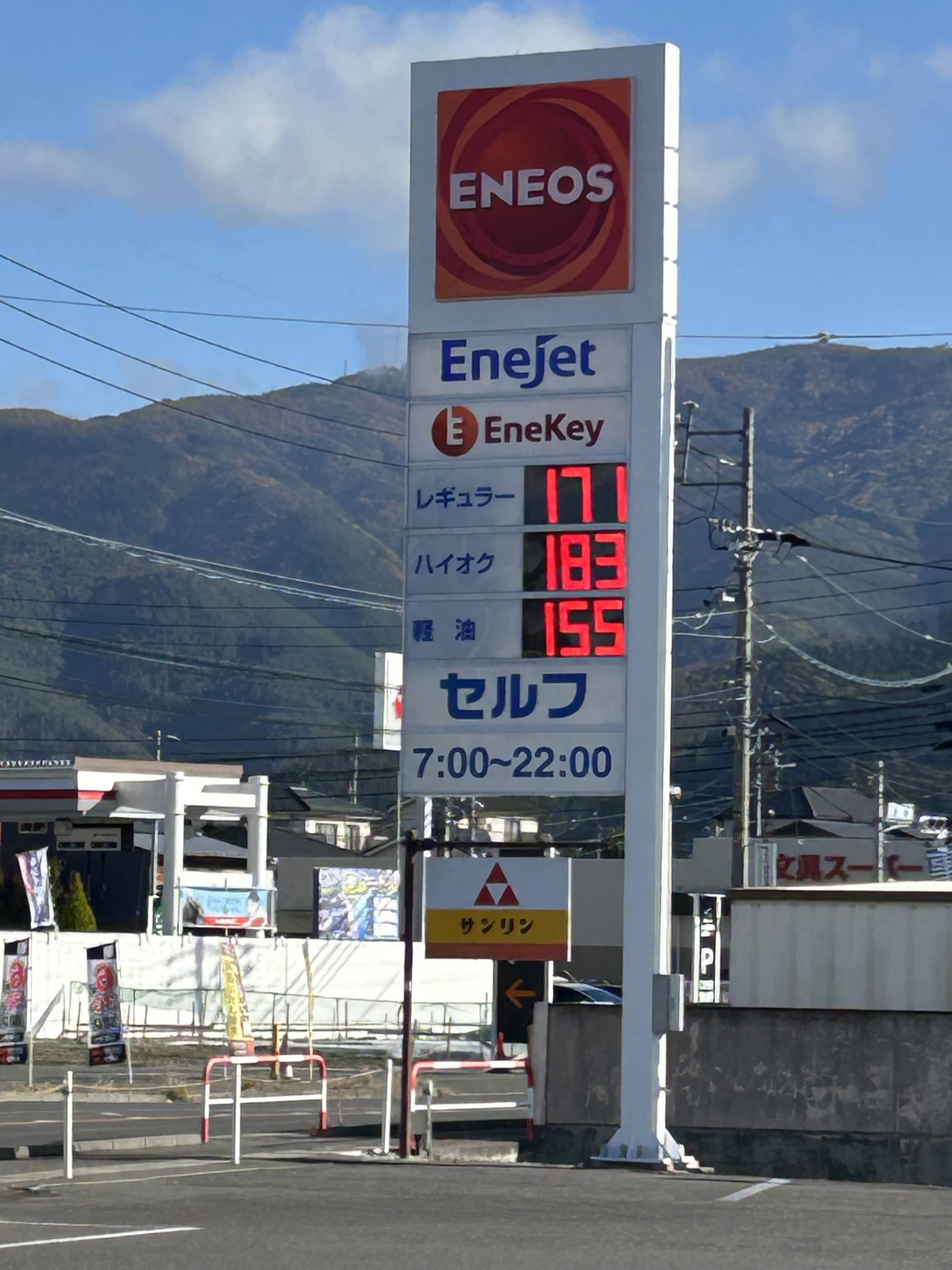
Our editor’s ENEOS photo shows diesel at 155 yen a litre, equal to C$1.38 using Friday’s Bank of Canada exchange rate. Vancouver’s September monthly average, reported by PrixEssence from Statistics Canada, was C$2.853. That gap puts diesel prices about twice as high in Vancouver, and it is a policy contrast that Canada’s resource wealth makes especially insulting.
The board posts regular at 171 yen a litre, high-octane at 183, and diesel, labelled ??, at 155. This is a self-serve ENEOS station in Japan; the editor supplied no city or prefecture.
The headline’s political verdict is this article’s argument. The board gives a price, while the tax lists and research on output make the case against governments making production too costly.
What do Japan’s posted diesel prices show against Vancouver?
The Bank of Canada’s Friday, November 6, 2026 daily average was C$0.008910 per yen. The math is 155 × C$0.008910 = C$1.38105 per litre. Rounded to cents, that is C$1.38, using the latest posted official daily rate.
The Vancouver contrast needs its own date because a monthly average and a station photo measure different things. PrixEssence’s Vancouver series reports September diesel at 285.3 cents per litre. It names Statistics Canada’s Table 18-10-0001-01 as its source, a table released on October 19.
On that reported average, the board’s litre costs 48.4% as much. Vancouver’s comparison price is about 2.07 times the converted station price. The difference works out to about C$1.47 per litre, using the unrounded conversion.
Those dates matter more than a bold claim about this morning’s street prices. The given range for current Vancouver pumps has no matching screenshot, and this article does not use it as proof.
Nor does Vancouver stand for every corner of British Columbia. The headline shortens a contrast with its largest city fuel market; the figures here keep the place names clear.
Why is diesel cheaper in Japan than in British Columbia?
Japan’s 2025 Energy White Paper says the country depends on imports for almost all its oil and natural gas. It also calls stable, low-cost supply an important issue.
The latest Agency for Natural Resources and Energy price chart puts national diesel at 159.5 yen in the November 2 survey. The photo board sits 4.5 yen below that average, a likely single-station gap rather than a national price guarantee.
The ministry’s fuel-support programme includes diesel, with a subsidy of 51.9 yen per litre. Its chart dates that payment to November 5 through November 11. Gasoline receives the same amount during that period, so there is no need to borrow a gasoline figure and pretend it belongs to diesel.
The support goes to refiners and importers to hold down wholesale prices and, through them, pump prices. It is a public expense, and the photo price cannot show how much of that payment reached this station.
The same diesel chart also marks the April 1 end of the provisional fuel tax. Part of the cheaper litre is a tax cut, not only the subsidy.
Japan has chosen to move part of the bill away from the pump. British Columbia keeps loading charges and extra rules onto fuel used in its economy. Policy, not geology, is the useful contrast here, though these papers do not split every cent of the gap between the two countries.
What a result for a resource country: owning the raw material while making the working economy pay so dearly to use it. The insult survives careful sourcing.
What tax stack still sits on a litre of BC diesel?
A motor fuel tax is a charge on fuel used to power engines. British Columbia’s published clear-diesel schedule lists 27.5 cents per litre in the Vancouver area.
Within that total, the general-revenue share is 2.25 cents and the provincial transport-funding share is 6.75 cents. The other 18.5 cents is the TransLink levy, a regional fuel charge that funds the transit agency.
The schedule lists clear diesel outside the Vancouver and Victoria regions at 15 cents per litre. The tax follows the place where ownership transfers, a key difference for fuel bought outside the region.
The province’s rate page was updated on May 23, 2025, and still shows old carbon-tax columns below its end notice. Its current summary says the provincial carbon tax ended on April 1, 2025. Those old columns do not belong in today’s bill.
Ottawa’s consumer fuel charge is also zero from April 1, 2025, according to the Canada Revenue Agency. Separate industrial carbon pricing still applies. Mixing those systems makes an easy political slogan and a bad bill.
The federal diesel excise is on pause too. Finance Canada’s October 29 statement says the pause lasts through January 31, 2027. The usual four-cent charge cannot be added to November diesel.
The rest of the cost goes beyond the tax lines you can see. The Low Carbon Fuel Standard is a provincial rule that requires lower emissions over a fuel’s life, plus a share of renewable content.
British Columbia’s March 6 requirements page sets a diesel renewable-content minimum of 8% for 2026. The cost of meeting those rules sits earlier in the supply chain, making it harder to see than a named levy.
The Canadian Taxpayers Federation’s August 2026 Gas Tax Honesty Report includes an 18-cent fuel-rules estimate in its Vancouver diesel row. That row totals 55.6 cents in taxes and extra rule costs using prices from the week of June 30.
This is the group’s estimate, and it includes federal sales tax, not a fresh November tax bill. Its assumed September federal-excise return was replaced by later law. Its older total stays tied to its own data set.
Alberta offers a cleaner policy contrast. Its current government rate table sets provincial diesel tax at zero from October 1, 2026. That table still adjusts the rate each quarter with oil prices. That says nothing about matching Japan’s pump price, but it shows that provincial fuel relief is a possible choice.
CMR’s earlier Canadian fuel-tax analysis looks at the home-front burden. This contrast starts with a Japanese station board and checks the leftover charges against current rules.
What do the productivity numbers show?
Labour productivity means the value produced per hour worked, not how worn out a worker feels at quitting time. Better tools, useful skills and fewer delays can raise it without making anyone’s shift longer.
Bank of Canada Senior Deputy Governor Carolyn Rogers gave the warning on March 26, 2024. She called weak productivity an emergency. She pointed to lagging investment and limited competition. She also reported that companies are wary of lengthy, unpredictable approvals.
McKinsey’s January 13, 2026 productivity note says investment moved toward less productive home-market sectors while chances to grow exports were missed. It reports that extractive-sector investment, meaning spending in mining and energy, fell 15% between 2010 and 2023.
The C.D. Howe Institute’s October 15, 2026 Productivity Blueprint release shows the living-standard gap. Over the decade ending in 2024, real output per person rose 3.5% in Canada against 20.2% in the United States.
Real output adjusts for inflation, so a larger population or higher price tags cannot dress up the result. The institute calls for joint tax, rule, competition and investment reforms.
The Business Council of British Columbia’s current Policy Playbook says provincial output per person was no bigger in 2025 than in 2022. It urges simpler permit rules and a pause in low-carbon fuel increases pending a cost and supply review. It also asks that provincial sales tax be taken off tools and plant that help production.
Federal Liberals own the Trudeau-era growth of spending and the thicket of rules, and their current leaders own the rules they keep. Eby’s NDP owns the provincial levies, the rising wage floor and the investment terms it chooses to keep.
The progressive habit of treating costly energy as a moral good deserves blame for those choices. Calling the resulting cost stack a productivity plan requires a high tolerance for irony.
How do fuel and labour costs reach mine sites?
Haul trucks burn fuel moving both valuable ore and waste rock. Drills, generators and delivery trucks add their own use before a mine sells any metal.
For the same litres burned, a higher delivered fuel price raises the cash bill directly. It does not by itself cut output in half, but it leaves less money for tools, upkeep and growth.
MINING.COM’s October 23 report, Diesel price surge putting mining profits to test, says production and transport costs are rising. That supports the cost process without making this a company list.
The Vancouver road-fuel stack also cannot be pasted onto every mine’s bulk delivery bill. British Columbia lists lower-tax coloured fuel for allowed uses, and contracts, freight and who qualifies for that tax treatment affect the delivered cost.
CMR’s discussion of fuel already bought by mines explains why timing matters. A pump board is a useful warning about operating costs, not a stand-in for site accounts.
Labour costs add another layer. British Columbia’s minimum wage became C$18.25 an hour on June 1, 2026. Minimum-wage indexation means the wage rises with British Columbia’s All-Items Consumer Price Index, with no cut when that index falls.
A rising floor can shrink the pay gap between entry-level and more skilled workers. Keeping that gap costs firms more, while weak productivity limits their ability to absorb the bill.
That is an economic process, not a claim that miners usually earn minimum wage. It reaches contractors, lodging, food services and other firms that support resource operations.
In a March 5, 2026 release, CFIB reported that 72% of surveyed businesses were likely to pass on some or all of the proposed professional-service tax costs to customers. That was a survey about a proposal, not proof that every planned tax was later put in place.
The BC Chamber’s December 1, 2025 business-community letter also asked that capital investment be taken off provincial sales tax. The business case is simple: taxing better tools holds back the spending behind better pay.
CMR’s building and project-delivery analysis addresses the same real test. Permits and speeches help only when work can go ahead on terms that make business sense.
What does this mean for a retirement-age reader?
Retirement removes the daily commute for some homes, but it does not remove freight from groceries or diesel from building work. Higher costs from suppliers can reach home bills even when the household never owns a diesel vehicle.
Resource businesses also help support jobs, public revenue and the economy under Canadian savings and pensions. Costly inputs can squeeze business income without creating more output or better public services.
How I read it. The converted board, leftover fuel charges and investment research expose a government habit of pushing costs up while promising better times later.
Setting a wage floor by law is a form of price-setting; it cannot write more output out of the same machine. Praising that floor while taxing new machines is an especially costly show.
The real policy case is for cuts to energy taxes, fewer extra rules and a pro-resource stance that welcomes useful investment. Canada has resources enough; making their use costly for no good reason is a political choice.
What happens next, and when?
What to watch: These dated releases and tax changes give concrete checks on fuel costs and the wider production burden.
- November 11, 2026: ANRE’s next weekly fuel-price release will update the Japanese contrast.
- November 16, 2026: Statistics Canada lists October’s Consumer Price Index, giving another household-cost check.
- November 20, 2026: Statistics Canada lists September’s Monthly Mineral Production Survey, a check on actual resource output.
- February 1, 2027: Federal diesel excise is scheduled to return at two cents a litre. That half rate is set to last through March 31, 2027. The usual four cents is then set to return on April 1.
Sources
- Daily exchange rates, Bank of Canada, November 6, 2026 observation. Web research.
- Vancouver monthly fuel prices, PrixEssence, September 2026 data, accessed November 8, 2026. Web research.
- Monthly average retail prices for gasoline and fuel oil, by geography, Statistics Canada, October 19, 2026 release. Web research.
- Energy White Paper, resource supply relationships, ANRE, 2025 edition. Web research.
- National fuel prices and support chart, ANRE, November 2 survey; November 5 to November 11, 2026 support. Web research.
- Emergency fuel support programme, ANRE, November 5, 2026 rates. Web research.
- Motor fuel tax rates, British Columbia, May 23, 2025 page update; carbon-tax columns superseded. Web research.
- Motor fuel tax and carbon tax, British Columbia, August 21, 2026 update. Web research.
- Removal of the fuel charge, FCN16, Canada Revenue Agency, March 2025. Web research.
- Legislation passes to extend fuel excise relief, Finance Canada, October 29, 2026. Web research.
- Low Carbon Fuel Standard requirements, British Columbia, March 6, 2026 update. Web research.
- Annual Gas Tax Honesty Report, Canadian Taxpayers Federation, August 2026, June 30 price dataset; PDF checked with layout preserved. Web research.
- Tax and levy rates, Alberta, October 1, 2026 effective fuel rates. Web research.
- Time to break the glass: Fixing Canada’s productivity problem, Bank of Canada, March 26, 2024. Web research.
- Canada’s productivity pinch, McKinsey, January 13, 2026. Web research.
- Productivity Blueprint release, C.D. Howe Institute, October 15, 2026. Web research.
- Policy Playbook, Business Council of British Columbia, 2026 to 2027 edition, accessed November 8, 2026; no publication day displayed. Web research.
- Diesel price surge putting mining profits to test, MINING.COM, October 23, 2026. Web research.
- Minimum wage, British Columbia, June 1, 2026 update. Web research.
- Seven in 10 small businesses say PST expansion will raise prices, CFIB, March 5, 2026. Web research.
- Open letter to the Premier, BC Chamber of Commerce, December 1, 2025. Web research.
- Petroleum product price survey results and publication schedule, ANRE, accessed November 8, 2026; next release November 11. Web research.
- Upcoming release schedule, Statistics Canada, November 6, 2026 schedule. Web research.