By Ben McGregor | October 31, 2026
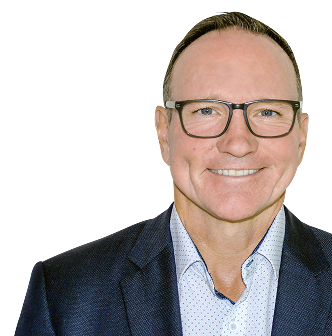
Mark Skousen told Kitco News on October 29 that the United States has entered an era of permanent inflation. The Chapman University economist and Oxford Club strategist recalled his 1980 call to sell gold and silver. He now sees similarities in elevated inflation but expects a different path under Fed Chair Kevin Warsh. The interview took place at the New Orleans Investment Conference. Skousen writes a monthly newsletter for the Oxford Club and sells books through his website.
What did Skousen predict in 1980 and why did it fail?
Skousen said that after Reagan’s election he wrote a promotion titled “The financial shock of 1981.” The envelope said “Reaganomics will work. Sell your gold and silver.” He advised buying stocks and bonds instead. “It was my very first prediction in my newsletter, but it absolutely bombed.” He attributed the failure to public opinion, which expected further highs after gold near $800 and silver briefly at $50. A 20-year bear market in the metals followed. These statements are Skousen’s recollection of his own published prediction. Historical prices from that period are well-documented market facts.
How does Skousen compare 1970s inflation with conditions today?
Skousen noted some similarities: heightened inflation and a booming economy. He said inflation is “nothing like the 70s.” The key difference is whether Kevin Warsh can act like Paul Volcker. “I’m convinced of this so that’s the real issue here can he be another Paul Volcker after this huge runup in gold and over.” He believes the Fed is better at fighting deflation than inflation. Money supply rose 40 percent after the pandemic while Powell “said we’re ignoring the money supply.” War and tariffs add to stubborn inflation. These are Skousen’s opinions. Verified data show September PCE inflation at 3.6 percent year-over-year and third-quarter GDP growth at a 3.4 percent annual rate.
Can Warsh crush inflation the way Volcker did?
Skousen said Volcker raised rates to 21 percent. “I don’t see that happening.” Deficits are larger now. “I mean $2 trillion and we’re at full employment. This is a this is a potential monetary crisis.” Gold could rally on a crisis. Yet “if interest rates on a net basis, right, uh real interest rates, if they’re going up higher than inflation, which I think is happening right now, that’s not good for gold or silver.” These are Skousen’s assessments. The Fed held its target range at 3.75–4.00 percent on October 28 under Chair Warsh. Markets have priced elevated odds of a December hike.
What does the 3.4 percent GDP growth tell Skousen about the economy?
Skousen highlighted the advance estimate of 3.4 percent growth in the third quarter, the fastest in a year. Equipment spending tied to AI was strong. He prefers watching business spending over consumer spending. “B2B spending actually increased 13.8% in real terms in the second quarter.” He called AI a financial revolution that creates labor-market disequilibrium but remains bullish on capitalism. “I’m a I’m bullish on capitalism. I think they can come through.” These are Skousen’s interpretations. The 3.4 percent figure is a verified Bureau of Economic Analysis advance estimate released October 29.
Why does Skousen call this an era of permanent inflation?
Skousen said the preferred inflation gauge came in at 3.6 percent. He sees a real possibility of a December hike. Warsh is focusing on money supply, which has slowed to 4 or 5 percent. Under Bernanke the target became 2 percent, yet the Fed cut before reaching it. “We have entered an era of permanent inflation. And every investor needs to know that you’ve got to increase your uh your portfolio, I think, by 10% a year just to keep up with taxes and inflation and all the other threats to your wealth.” This is Skousen’s opinion. The 3.6 percent PCE reading is a verified Commerce Department figure.
How do high oil prices affect the Fed’s rate decision?
Skousen noted oil over $100 on WTI and Brent near 110. He referenced a Bernanke study on oil shocks. Higher energy prices add to inflation. If the bond market pushes yields higher, the Fed will be forced to raise rates to avoid free money for banks. “So he’s he so he will be forced to raise rates.” These are Skousen’s views on market mechanics. Elevated oil prices and the Fed’s October hold are verified facts.
What role does business spending and technology play?
Skousen said business spending is almost double consumer spending. Economic growth is supply-side driven. “The solo growth model shows that 75% of economic growth is due to technology and innovation.” America attracts entrepreneurs. Limits on legal immigration could shift talent elsewhere. These are Skousen’s economic arguments. The strong equipment spending contribution to third-quarter GDP is a verified component of the BEA report.
What is Skousen’s view on the midterms and politics?
Skousen said he thinks “the Democrats are going to have a big success on Tuesday.” He cited the affordability problem and an unpopular war. He does not see super-intelligence engineering outcomes. These are Skousen’s political opinions. The midterm elections are scheduled for November 3, 2026.
Does the $50 floor for silver still hold?
Skousen said in April that $50 was a floor. He now sees it testing and possibly breaking. “I was just talking in general there’s a ratcheting up of silver and silver is an industrial metal.” Demand is in a bottoming pattern. Copper has hit all-time highs on data centers and infrastructure. “I I think we’re finally getting a a more reasonable price for silver.” These are Skousen’s views. Verified closes on October 30 placed silver near $49.13, below $50.
What does Skousen say about saving, spending, and the debt crisis?
Skousen noted that young people struggle to save because of FICA taxes. Older people fear running out of money and underspend. He supports Trump’s kids accounts and company 401ks. He sees a monetary crisis ahead. Treasury is borrowing $2 trillion in new debt plus refinancing about $13 trillion. “The interest rate on the debt is exceeding uh the deficit spending and it is growing faster and faster.” These are Skousen’s assessments of fiscal trends.
How does Skousen’s Franklin ancestry shape his debt view?
Skousen is a descendant of Benjamin Franklin. Franklin preached thrift and said a country is not fully independent until it pays off its national debt. Skousen noted Franklin advocated paper money and held little personal debt. Corporations today maintain better balance sheets than the government. These are historical and comparative observations from Skousen.
What is Skousen’s current stance on gold, silver, and stocks?
Skousen said tight money has a lag of six months to two years. Warsh opposed quantitative easing and is a monetarist and supply-sider. AI may be a bubble but has real substance. He is “one of the few people at this conference who’s rather cautious.” He recommends Franco-Nevada as a royalty company with a rising dividend. He prefers dividend-paying stocks such as Main Street Capital over bonds. “You’re staying out of bonds, but I’m staying out of bonds. Yeah, completely.” These are Skousen’s portfolio opinions and recommendations.
Why does this matter to a retirement-age reader?
Skousen’s permanent-inflation call and 10 percent portfolio-growth target address the purchasing-power risk many retirees face. His caution on gold and silver while real rates may rise offers a counterpoint to more bullish conference views. The debt and refinancing numbers he cites highlight a fiscal backdrop that could affect rates and inflation for years. Readers should treat his specific stock and royalty recommendations as one economist’s opinion.
What to watch next
- November 3, 2026: US midterm elections. Results can affect fiscal and rate expectations.
- November 6, 2026: US employment report. Strong or weak data will feed December rate pricing.
- December 9, 2026: FOMC rate decision and Summary of Economic Projections.
- Further inflation and money-supply data that test Skousen’s permanent-inflation thesis.
A dated risk from the last two weeks is the October 30 decline. Gold closed near $3,875.65 and silver near $49.13, breaking the $50 level Skousen had called a floor in April. The move occurred on higher volume amid rising hike odds. If real rates continue higher, the cautious stance Skousen described could persist.
This article is for educational purposes only and does not constitute investment advice, a recommendation, or an offer to buy or sell any security. Past performance is not indicative of future results. Readers should conduct their own research and consult a qualified financial advisor before making any investment decisions. Canadian Mining Report and its authors may hold positions in securities mentioned.
Sources
- Kitco News interview with Mark Skousen, recorded October 29, 2026, at the New Orleans Investment Conference (transcript and podcast notes)
- Bureau of Economic Analysis, GDP Advance Estimate, Third Quarter 2026, October 29, 2026: https://www.bea.gov/news/2026/gdp-advance-estimate-3rd-quarter-2026
- Reuters and CNBC reports on September PCE inflation at 3.6 percent, October 29, 2026
- Federal Reserve FOMC statement and Chair Kevin Warsh press conference, October 28, 2026
- GoldPrice.com and related closes for October 30, 2026