Educational content only, not investment advice. Mining stocks are high risk.
By Ben McGregor
Saturday, November 14, 2026
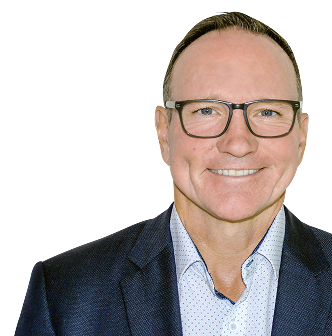
Markets were closed on Saturday, November 14, so the figures below are Friday's close. Marc Faber, the investor and publisher of The Gloom, Boom & Doom Report, spoke on site at the Precious Metals Summit Zurich. The summit ran from November 9 to November 11 at the Park Hyatt Zurich, and Mining Network posted the interview on November 13. The Mining Network interviewer is not named, and the recording date is not stated.
Faber said debt deflation may come before any hyperinflation, and several figures he and the interviewer cited check out. The 10 year yield peaked at 15.84% in September 1981. Freddie Mac put the 30 year fixed mortgage rate at 7.11% for the week of November 12. Net interest on US federal debt was $1.05 trillion in fiscal 2026, and about $11 trillion of Treasuries come due within a year.
What did Marc Faber say at the Precious Metals Summit Zurich?
The interviewer recalled two earlier Zurich talks: two years ago, he said, Faber was buying some gold while it was falling, and last year he said Faber was buying platinum. The interviewer said platinum rose a lot until January 2026 and has since fallen. Those are his recollections of Faber's past positions.
COMEX platinum futures (PL=F) set their highest close of the past two years at $2,852.40 on January 26, 2026. They closed at $1,492.20 on November 13, 47.7% below that peak, by CMR's calculation. CMR's June 6 post covered a separate Kitco interview with Faber on his earlier view.
Why does Marc Faber say the era of asset inflation is ending?
In his view there are two economies: wealthy asset owners, who did well on excess liquidity, and everyone else. He said governments everywhere have been printing money, which is his opinion. He said the last 40 to 45 years brought a long wave of asset inflation. He dated that run from the rate peak in 1980 and 1981. He also dated it from the August 1982 stock low, and put the Dow at about 800 at that low. The Dow closed at 776.92 on August 12, 1982, according to Los Angeles Times archives and the Wall Street Journal. About 800 is a fair rounding. In his opinion, that asset inflation is now coming off.
People who missed the asset gains are, in his view, unlikely to catch up from here, and his approach now is to lose the least. He said volatility has jumped in recent weeks, and he thinks holding some cash makes sense for him. He also thinks markets may move sideways at best, or down in a deflationary setting.
What did Marc Faber say about gold?
Faber's gold position is personal: he is a large, long term holder of gold, and he said he does not try to value it. Of that holding he said, "I keep it as an iron reserve" (5:02). He does not agree with putting all of one's money in gold, which is his opinion. He raised a $6,000 figure as a possibility. He said, "maybe it will go up to 6,000 by next year" (5:18). He followed that line with, "But I'm not sure." The $6,000 figure is a hypothetical he raises and then doubts, and CMR does not treat it as a forecast. CMR's two bank gold forecast post sets out labeled bank forecasts. He also said, "I think it is a possibility that a lot of assets will actually disappoint" (5:27).
Kitco's Friday market report put spot gold near $3,883.40 an ounce, up 0.18% on the session. The report was published at 5:46 p.m. ET on Friday, November 13. CMR's November 13 gold post covered the week's gold price context. Later he said, "my largest holding in life is gold" (24:22), and that it will always be.
What is Marc Faber's case for US Treasuries?
His Treasury position is also personal: he called US Treasuries his contrarian bet, and said a technician he respects is also bullish on them. He began adding them when the 10 year Treasury yield went over 5%. He said, "I started to accumulate treasuries" (6:02). He did not say on what date those purchases began, so CMR does not assign one. The US Treasury daily par yield curve put the 10 year yield at 5.15%. That print is for Friday, November 13, 2026. The Federal Reserve's daily series for that yield, published as FRED DGS10, shows 5.10% on November 12. CMR's post on real yields and the silver deficit covers this week's move in Treasury yields.
He said he was last bullish on Treasuries in the early 1980s, when some called them "certificates of confiscation." He said the 10 year yield was already at 6% in 1970. On the Federal Reserve's daily 10 year series, the yield started 1970 at 7.86%. It ranged from 6.21% to 8.22% that year. It was above 6% all year, and closer to 8% for most of it. He said the yield peaked at 15.84% in September 1981. FRED DGS10 shows 15.84% on Wednesday, September 30, 1981, the series high.
He said a long decline in rates followed, ending in August 2020, when the 10 year yielded 0.54%. The series low is 0.52% on Tuesday, August 4, 2020. The 0.54% reading was on March 9, 2020. In his opinion, the market is now in a rising long term rate cycle, like the stretch from 1942 to 1981.
He also said the 10 year yield was cut in half three times in the 1970s, before new highs. That description does not match the 10 year data. On FRED DGS10, the largest declines from a high between 1965 and 1981 were smaller than a half. The first was about 35%, by CMR's calculation. The yield fell from 8.22% on May 26, 1970. It reached 5.38% on March 23, 1971. A later drop was about 31%, by CMR's calculation. The yield fell from 13.65% on February 26, 1980. It reached 9.47% on June 16, 1980. Short term rates swung more, but he named the 10 year.
His forecast is a move from 5% to 3% over 12 months. He said, "I think we could go down to 3%" (15:18), and he also said the move may not be dramatic. CMR does not adopt that forecast.
What does Marc Faber mean by a deflationary shock in commodities?
Given a weak global economy, he sees a possible shock of falling prices in commodity markets. He said, "I think that we could have sort of a deflationary shock in commodity prices" (6:24), which is his opinion. He said that in 1973 and 1974, gold and gold shares rose as other assets fell. He tied that to gold having been fixed at $35 since 1933, then rising after the gold window closed. Private gold was called in during 1933. The Gold Reserve Act of 1934 set the price at $35 an ounce, according to Federal Reserve History. The United States closed the gold window in August 1971, according to the same source.
He said gold is high relative to wheat, corn, soybeans, sugar, and oil, and that in gold terms oil is low. As a speculator, he said he would rather own oil than gold. As an individual, he said, gold is easier to store. Those are his trading and storage views. He also expects nationalizations and expropriations, so in his view where assets are held, and in which countries, matters.
How does Marc Faber say living costs are squeezing ordinary people?
He said property taxes and home insurance have risen, and that ordinary people are squeezed. He said pensioners get about a 4% cost of living increase. The Social Security Administration announced a 3.6% cost of living adjustment for 2027. It made that announcement on October 14, 2026. In his estimate, the cost of keeping the same standard of living is rising 7% to 12% a year. That range is his own estimate, and no source was checked for it. He said tariffs and the war in Iran raised the cost of living. He said, "If you impose tariffs, of course, the cost will go up" (12:18), which is his economic claim, stated as his opinion.
How does Marc Faber see debt, interest costs and deflation?
He set out a debt deflation theory: in his telling, credit grew faster than the economy's output measured in current dollars, so the debt load rose. He said financing consumption with debt is worse than capital spending, such as today's investment in artificial intelligence, which he compared with the railroads. He called 1870 to 1900 a deflationary boom, and today, he said, the rich gain at the expense of ordinary people.
The interviewer said about $11 trillion of US government debt matures or rolls over in the next 12 months, and that interest is already over a trillion. Faber agreed it is a serious problem. Marketable Treasury debt due within a year was $10.92 trillion as of October 31, 2026. That figure comes from a 500metrics summary of the Monthly Statement of the Public Debt. Fortune reported on October 17, 2026, that more than $10 trillion of that debt matures within a year. Net interest for fiscal 2026 was $1.05 trillion. Gross interest was $1.36 trillion. Fortune reported both figures on October 17, 2026, citing Treasury data.
If rates rise, he said, governments would be forced to print money, or default, or tax foreigners, and he mentioned the old interest equalization tax. He said, "All tricks lead to another disaster" (28:35). He said the global bond market has never been this large during inflation, so losses in that market would be very large. He said US mortgage rates are over 7%, and Freddie Mac's Primary Mortgage Market Survey put the 30 year fixed rate at 7.11%. That reading was for the week of November 12, 2026. He said home sales are low as prices rise, and that many commercial properties are down 80% in the US. That 80% figure is his claim, and it was not checked, so CMR does not state it as fact. The world is leveraged, he said, so debt deflation may come before hyperinflation. He said, "I think we may end up with the debt deflation first before we go into the hyperinflation" (30:28), a sequence that is his opinion. He also said inflation acts as a tax and creates social unrest.
How does Marc Faber describe his mix of gold, Treasuries and other holdings?
Asked about the risk in Treasuries, he said he would not put all his money in them. He said, "That's why I wouldn't do it with all my money" (31:34). A 5% return is enough cash flow for him for two or three years, he said. He said, "I fully understand that I may lose money" (31:47). In hindsight, he sees a bond position and a gold position as a kind of hedge, which are his personal positions. He also holds Thai shares, which he said are up about 20% in the last 12 months. He said the dividend yield is about 6% to 7% and could be cut, figures that are his and were not verified.
How I read it. Faber's case rests on a sequence: he expects debt deflation first and money printing later. He is candid that he may be wrong on Treasuries, and he holds gold partly as a hedge against that. His gold and bond mix is his own way of handling two outcomes he cannot rank. The checked numbers show the debt and rate pressures he describes are real. Whether they resolve through deflation or inflation is the open question he leaves.
Who has a stake in these views?
Faber publishes The Gloom, Boom & Doom Report, a paid subscription newsletter. Mining Network promotes free email newsletters in the video description. Mining Network's video includes a sponsor segment, which this article does not cover.
What is on the calendar next?
- Thursday, November 19, 2026. Freddie Mac's next weekly mortgage rate survey is due, a fresh check on his claim that US mortgage rates are over 7%.
- Wednesday, December 9, 2026. This is the Federal Reserve decision after the meeting that begins December 8, according to the Fed's calendar.
- Thursday, December 10, 2026. The US consumer price index for November is due at 8:30 a.m. ET, according to the BLS schedule.
- November 2027. This is the end of the 12 month window for his 10 year yield forecast. He said the yield could fall from 5% to 3%, which is his forecast, and CMR offers no view on it.
FAQ: what are readers asking about Marc Faber, gold and Treasuries?
Why did Marc Faber start buying US Treasuries?
Faber said he started to accumulate Treasuries after the 10 year Treasury yield moved above 5%. He described that as a contrarian position of his own. The 10 year par yield closed at 5.15% on Friday, November 13. His forecast is that the yield could fall to 3% over 12 months, and he said he fully understands that he may lose money.
What does Marc Faber mean by debt deflation before hyperinflation?
Faber said credit grew faster than nominal GDP, which in his view pushed debt to GDP higher. He said the world is highly leveraged, so debt deflation may come first. He said, "I think we may end up with the debt deflation first before we go into the hyperinflation." He also said that if rates rise, governments may print money, default, or tax foreigners. CMR does not rank those outcomes.
Is this article a recommendation to buy gold, Treasuries or any other asset?
No. CMR reports Faber's personal positions and checks the figures he cited. It makes no recommendation on gold, Treasuries or any other asset. He said he would not put all his money in Treasuries, and that he may lose money.
What sources did CMR use?
- Marc Faber: Debt Deflation First, Then the Printing, Mining Network, November 13, 2026. https://www.youtube.com/watch?v=LKVwZMd6HFc
- Precious Metals Summit Zurich, November 9 to 11, 2026, Park Hyatt Zurich, event page, precioussummit.com. https://precioussummit.com/
- COMEX platinum futures (PL=F), daily data, Yahoo Finance, accessed November 14, 2026. https://finance.yahoo.com/quote/PL%3DF/
- Marc Faber interview, Canadian Mining Report, June 6, 2026. https://www.canadianminingreport.com/blog/marc-faber-on-gold-at-4-500-why-the-recent-pullback-is-a-buying-opportunity-amid-liquidity-squeeze-asset-bubbles-and-debt-driven-inflation
- The Dow's 1982 recession low of 776.92 on August 12, 1982, Los Angeles Times archive, August 12, 1992 and March 30, 1999, and Wall Street Journal, August 2009.
- $4,150 or $4,650? Two Banks' Gold Price Forecast 2026, Canadian Mining Report, November 15, 2026 page date. https://www.canadianminingreport.com/blog/gold-price-outlook-two-major-banks-predict-different-scenarios-who-will-be-right
- Gold posts steep weekly loss as Treasury yields rise and Fed tightening bets firm (Kitco NewsWire), Kitco News, November 13, 2026. https://www.kitco.com/news/article/2026-11-13/gold-posts-steep-weekly-loss-treasury-yields-rise-fed-tightening-bets
- Three Down Days: The Gold Selloff, the Dollar and Fed Odds, Canadian Mining Report, November 13, 2026. https://www.canadianminingreport.com/blog/gold-selloff-pauses-after-three-down-sessions-as-dollar-and-fed-hike-bets-rise
- Daily Treasury Par Yield Curve Rates, US Treasury, 2026. https://home.treasury.gov/resource-center/data-chart-center/interest-rates/TextView?type=daily_treasury_yield_curve&field_tdr_date_value=2026
- Market Yield on US Treasury Securities at 10 Year Constant Maturity, FRED series DGS10, Federal Reserve Bank of St. Louis, accessed November 14, 2026. https://fred.stlouisfed.org/series/DGS10
- Real Yields at 2.91%: Silver Supply Deficit Versus Rates, Canadian Mining Report, November 15, 2026 page date. https://www.canadianminingreport.com/blog/silver-prices-fall-as-rising-real-yields-outweigh-supply-deficits-what-s-next
- Gold Reserve Act of 1934, Federal Reserve History. https://www.federalreservehistory.org/essays/gold-reserve-act
- Gold Convertibility Ends, Federal Reserve History. https://www.federalreservehistory.org/essays/gold-convertibility-ends
- Social Security announces 3.6 percent cost of living adjustment for 2027, Social Security Administration, October 14, 2026. https://www.ssa.gov/news/en/press/releases/2026-10-14.html
- Treasury debt maturities as of October 31, 2026, 500metrics summary of the Monthly Statement of the Public Debt. https://500metrics.com/treasury/maturities/2026-10-31
- US debt interest payments in fiscal 2026, Fortune, October 17, 2026. https://fortune.com/2026/10/17/us-debt-interest-payments-fiscal-2026-1-trillion-federal-spending-revenue-gdp-growth-treasury-yields/
- 30 year fixed mortgage rate, Freddie Mac Primary Mortgage Market Survey, FRED series MORTGAGE30US, week of November 12, 2026. https://fred.stlouisfed.org/series/MORTGAGE30US
- Meeting calendars and information, Board of Governors of the Federal Reserve System, accessed November 14, 2026. https://www.federalreserve.gov/monetarypolicy/fomccalendars.htm
- What is it? (The Gloom, Boom & Doom Report), gloomboomdoom.com, accessed November 15, 2026. https://www.gloomboomdoom.com/gbd-report/what-is-it/
- Schedule of Releases for the Consumer Price Index, US Bureau of Labor Statistics, accessed November 14, 2026. https://www.bls.gov/schedule/news_release/cpi.htm